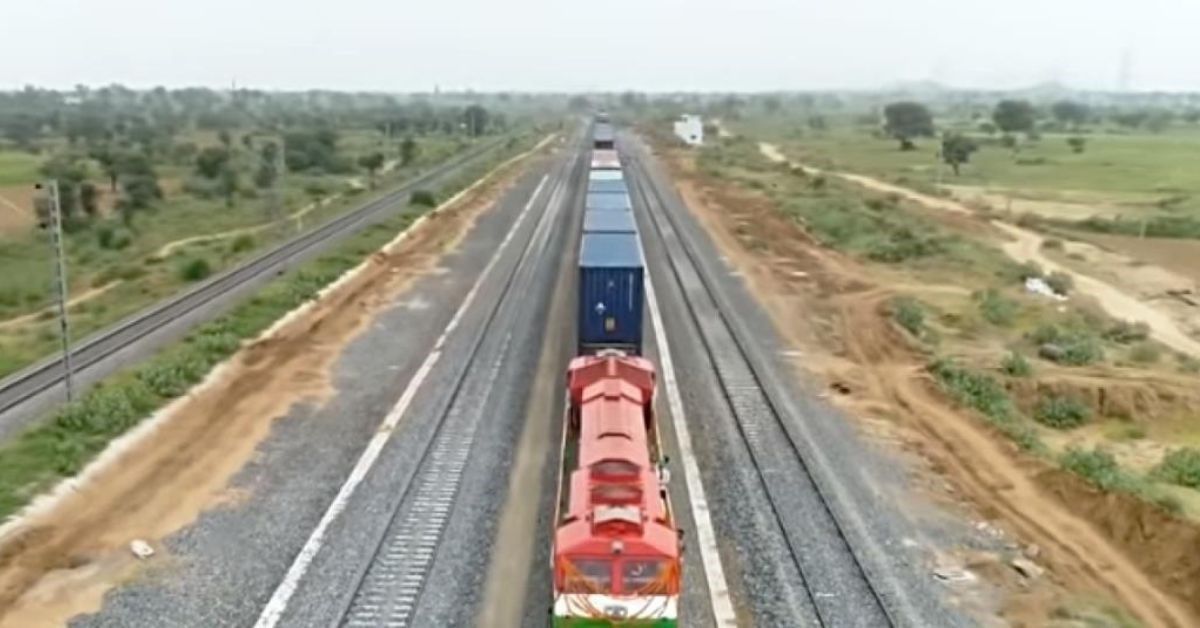

As Finance Minister Nirmala Sitharaman gears up to present the Union Budget 2026 on February 1, the railway sector is calling for a hefty ₹2.75 lakh crore allocation, surpassing last year’s ₹2.52 lakh crore outlay. This surge aims to fast-track full electrification by 2027, expand dedicated freight corridors, and ramp up capacity—moves that promise to transform last-mile connectivity to key ports like JNPT, Chennai, and Visakhapatnam, ultimately cutting container turnaround times for maritime logistics players.
Electrification tops the wishlist, with stakeholders eyeing a 20-30% drop in logistics costs through greener, more efficient rail operations that align with India’s net-zero ambitions. Bulk commodities such as coal, iron ore, and agri-exports, vital to shipping routes, stand to benefit immensely from these upgrades.
The push extends to Dedicated Freight Corridors (DFCs), with emphasis on the Eastern and Western lines plus new spurs linking to inland container depots. This could elevate rail’s freight modal share to 45% by 2030 from the current 28%, dramatically reducing port dwell times and integrating rail with coastal shipping for smoother supply chains.
Expectations also run high for over 1,000 Vande Bharat-inspired freight trains, bolstered by AI predictive maintenance and the indigenous Kavach safety system. These innovations will enable parcel speeds up to 160 km/h with real-time tracking, a boon for exporters moving perishables and high-value textiles from hubs like Hyderabad.
Sitharaman teased announcements for 50+ new passenger and freight trains, underscoring a multimodal strategy under the ₹20 lakh crore National Rail Plan. For the maritime sector, these investments could unlock ₹10,000 crore in annual supply chain savings, enhancing India’s edge in global trade.
 Join our WhatsApp channel for more updates:
 Subscribe to our YouTube channel for more updates: