



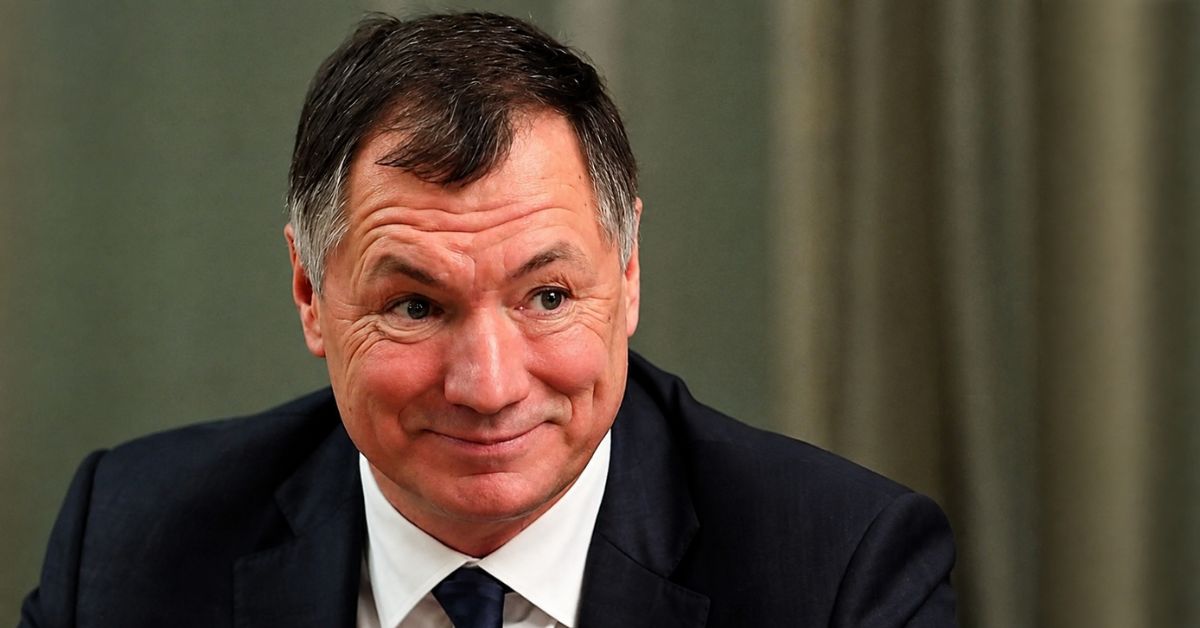

Russia must examine the feasibility of building a direct rail link to the Indian Ocean to reduce reliance on maritime corridors exposed to disruption in the Bosphorus and the Strait of Hormuz, Russian Deputy Prime Minister Marat Khusnullin said in an interview with news agency TASS.
What route options has Russia proposed?
Khusnullin said alternative transit options could run through Turkmenistan, Iran, Afghanistan and Pakistan, stressing that any corridor offering connectivity to India would be considered viable. “A rail link to the Indian Ocean should also be explored. Risks related to the Bosphorus and the Strait of Hormuz might require alternative routes: through Turkmenistan, Iran, Afghanistan, and Pakistan. Any options providing access to India are acceptable,” he was quoted as saying. If realised, the proposed network would establish direct overland rail freight access between Russia and India.
Why has the Strait of Hormuz become a pressing concern for Moscow?
The proposal comes against the backdrop of escalating maritime disruption following armed hostilities involving the US, Israel and Iran that began on February 28, 2026, when joint military strikes targeted key Iranian urban centres including Tehran. In response, Iran’s Islamic Revolutionary Guard Corps launched retaliatory missile and drone operations against Israeli positions and US military bases across Bahrain, Jordan, Iraq, Qatar, Kuwait, the UAE and Saudi Arabia, prompting Tehran to announce a maritime blockade of the Strait of Hormuz against vessels affiliated with the US, Israel and allied nations. The strait remains a critical chokepoint, accounting for roughly 25 percent of global oil trade and nearly 20 percent of worldwide LNG shipments.
Does this build on any existing rail and transit cooperation between Russia and India?
The proposal extends years of Russia-Iran-India cooperation under the International North-South Transport Corridor, a multi-modal freight network linking Moscow to Mumbai via Azerbaijan and Iran. Russia and Iran had earlier signed an agreement to build the Rasht-Astara railway, a key missing link in the corridor intended to connect Russian Baltic ports with Iranian ports on the Indian Ocean and Gulf. Cargo movement along the INSTC has typically combined rail and sea legs, moving from St Petersburg to Astrakhan by rail, across the Caspian Sea to Iranian ports, and onward to India’s Nhava Sheva port by sea, a route Khusnullin’s proposal now seeks to extend further overland.
What else did Khusnullin discuss in the interview?
Beyond international logistics corridors, Khusnullin also addressed Russia’s domestic construction sector, saying the industry currently has capacity to absorb an additional one trillion rubles annually, and that securing this level of investment over five years would allow further capacity expansion.
What would this mean for India’s trade routes if realised?
A functioning overland rail corridor to the Indian Ocean would offer India and Russia an alternative to maritime routes vulnerable to chokepoint disruptions, though the proposed corridors traverse politically sensitive and infrastructure-constrained regions including Afghanistan and Pakistan, raising significant questions about the project’s near-term feasibility despite the strategic rationale driving the proposal.
 Join our WhatsApp channel for more updates:
 Subscribe to our YouTube channel for more updates: