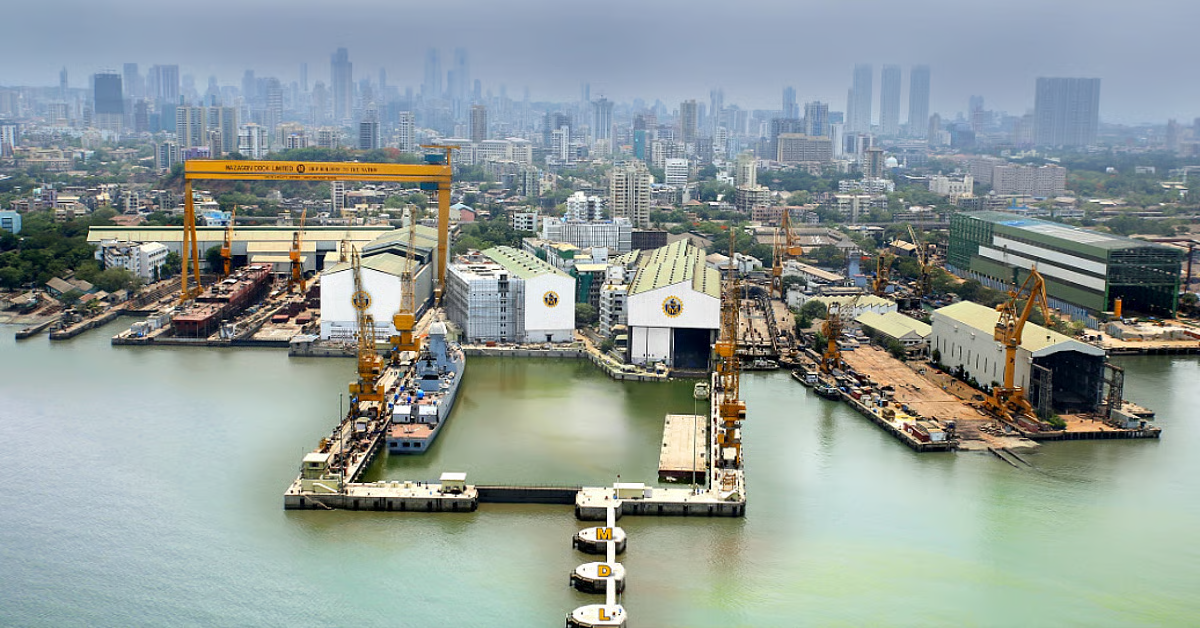

State-owned Shipping Corporation of India (SCI) has placed an order with Mazagon Dock Shipbuilders Limited (MDL) for India’s first methanol-powered dual-fuel platform supply vessel (PSV) — a landmark contract that marks a concrete step in India’s push to build a greener domestic shipping fleet aligned with international decarbonisation targets.
The contract, signed on March 18 and disclosed through a regulatory filing, covers a vessel of 3,000 deadweight tonnes (DWT) capacity, estimated to cost approximately USD 39 million. The PSV will be capable of operating on both conventional marine fuel and methanol, providing flexibility during the energy transition period as the availability and infrastructure for green fuels develops.
National Green Hydrogen Mission Alignment
The order forms part of India’s broader maritime decarbonisation strategy, which is aligned with the National Green Hydrogen Mission. The mission promotes the production and adoption of green hydrogen and its derivatives — including e-methanol and e-ammonia — as alternative marine fuels. By commissioning a methanol-capable vessel domestically, SCI is not only advancing its own sustainability agenda but also contributing to the development of local shipbuilding expertise in alternative-fuel vessel construction.
MDL as a Green Shipbuilding Pioneer
For Mazagon Dock Shipbuilders — better known for its defence shipbuilding work, including submarines and warships for the Indian Navy — the PSV contract represents an opportunity to expand its commercial shipbuilding capabilities into the emerging green vessel segment. Building a methanol dual-fuel vessel requires specialised engineering knowledge of fuel storage, handling, and engine systems, and successful execution of this contract could position MDL to attract further orders in this growing category.
Cost Challenges Persist
The USD 39 million price tag for a 3,000 DWT vessel does, however, highlight the cost challenges that India’s domestic shipbuilding sector continues to face. Equivalent vessels built at South Korean or Chinese yards can often be procured at significantly lower prices, reflecting the scale, automation, and supply chain advantages of those shipbuilding nations. India’s Maritime India Vision 2030 includes ambitious targets to grow the domestic shipbuilding industry, and contracts like this — even at a cost premium — are essential for building the skills base and track record that will be needed to compete internationally over time.
Greener Fleet on the Horizon
The SCI-MDL methanol PSV order signals that India’s shipping majors and shipbuilders are beginning to operationalise the green transition, moving beyond policy statements to actual vessel procurement. As international regulations on shipping emissions tighten under the IMO’s revised GHG strategy — which targets net-zero emissions from international shipping by or around 2050 — India’s ability to build and operate alternative-fuel vessels will be increasingly critical to its maritime competitiveness.
 Join our WhatsApp channel for more updates:
 Subscribe to our YouTube channel for more updates: