


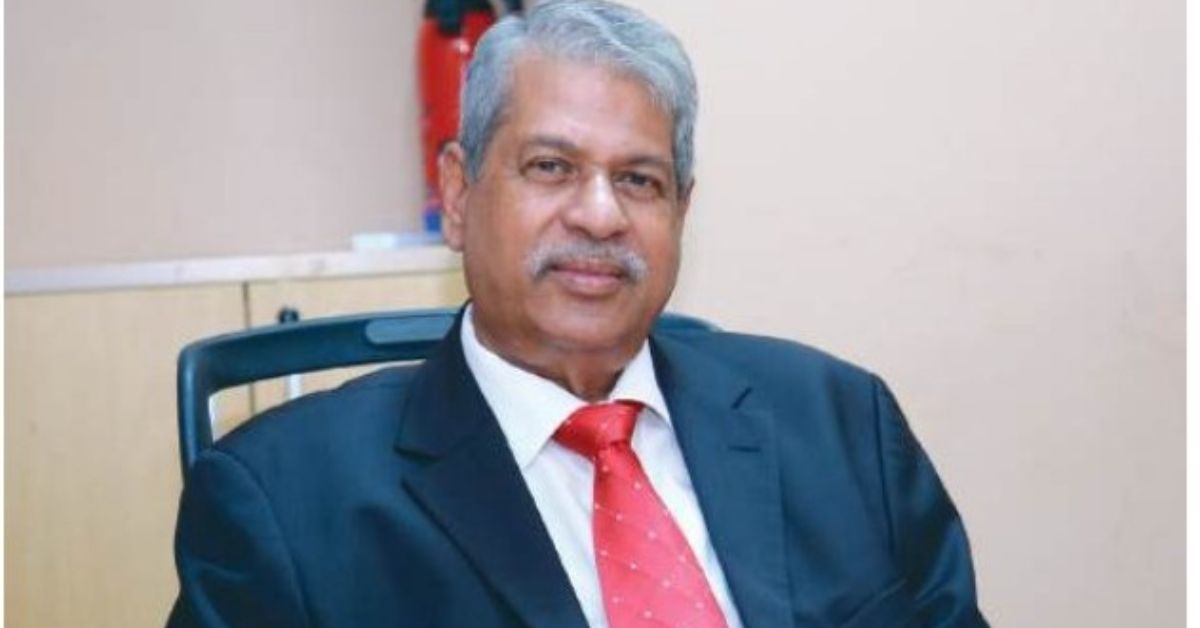

You’ve been part of several government committees and are now on the council of the India Ship Technology Centre in Visakhapatnam. How do you see the current phase of India’s shipbuilding programme?
This time, I would call it the implementation phase rather than the policy phase. We already have a robust policy framework and a clear vision, but the challenge lies in execution.
For instance, a ₹4,000 crore shipbuilding subsidy fund was created, but only ₹400 crore has been disbursed. This clearly indicates gaps between intent and delivery. The government has taken this criticism seriously and is now focused on identifying what went wrong — whether it was procedural, structural, or due to lack of communication between policymakers and industry.
True implementation requires dialogue between people who understand shipbuilding. Unless professionals with hands-on shipyard experience are part of the process, no amount of policy will help.
Where do you think the biggest bottlenecks lie in Indian shipbuilding?
Procurement is the single biggest bottleneck. Ship design depends on knowing exactly what materials, machinery, and systems will be used. When these decisions are delayed or changed midway, drawings must be redone multiple times — wasting months.
I’ll give you an example: Cochin Shipyard’s turnaround happened only after we provided them with the entire design and material package upfront. Earlier, they had built 13 ships in 31 years; after streamlining processes, they built six ships in just over three years. So, the problem was never the workers or productivity — it was lack of proper planning and engineering synchronization.
How do you assess India’s shipbuilding infrastructure today compared to global leaders like Japan, South Korea, or China?
We have the physical infrastructure — docks, workshops, and berths — but we’re not using it efficiently. Even with existing facilities, we can easily double our output.
The key is to divide shipbuilding into parallel processes: design, material procurement, and prefabrication can happen before the hull assembly. A building dock is required for only three months — just to assemble and launch the ship.
If we develop a network of subcontractors around shipyards who can fabricate and outfit modular blocks, the shipyard only needs to “stitch” them together. This is how Cochin Shipyard delivered six ships in three years — through high prefabrication and 95% block outfitting before launch.
Should India focus on building new mega yards or upgrade existing ones? What’s the ideal model?
It should be a step-by-step approach. The low-hanging fruit is improving efficiency and capacity utilization at existing shipyards. In parallel, we must develop shipbuilding clusters and eventually mega yards. All three approaches are necessary — but in that order.
Shipbuilding is a highly skilled industry. Do we have enough trained manpower in India?
Not yet. Skill development has to be undertaken on a war footing. Fortunately, the government owns several shipyards — these must become training centers for welders, fitters, planners, and marine engineers.
Training should not be seen as an expense but as an investment. I’ve personally trained hundreds of designers — it costs ₹10–30 lakhs to train one engineer, and many move abroad soon after. But as Minister Gadkari once told me: “Let them go — they’ll bring foreign exchange and global experience back to India.”
We need a similar mindset. Skill building must be rapid, continuous, and supported financially.
You mentioned China’s example earlier. How did they manage large-scale skill creation?
When China suddenly needed workers for new shipyards, they passed a rule mandating all vessels over 30 years old to be scrapped. That created massive domestic demand for small crafts and barges. Farmers became welders, and new yards mushroomed along the coast.
They started by building 1,000–5,000-ton crafts and gradually moved up. Workers from small yards graduated to medium ones, and then to large ones. That’s how they built a sustainable human capital pipeline. India must adopt a similar cascading model.
In terms of production strategy, should India focus on specialized vessels, standard designs, or green-fuel-ready ships?
We must begin with standardized designs. That’s our low-hanging fruit. At this stage, handling 15 different vessel types in one shipyard is inefficient.
Japan mastered productivity through standardization — one design, built 178 times since 1965. We should start with simpler bulk carriers, tugs, and coastal vessels before graduating to complex ships.
Green-fuel and hybrid designs are important, but they can be developed in parallel using standard templates. In fact, we already have standard hybrid designs — for example, 12 European short-sea multipurpose vessels being built at Garden Reach Shipyard.
Should India follow the Korean mass-production model or Japan’s quality-specialization approach?
Neither — India must carve its own hybrid model: build for India, build for the world.
We pay nearly USD 80 billion every year in freight to foreign shipping companies. Most of our trade is carried by foreign ships. So, first we must build our own fleet — for domestic use — and simultaneously take export orders.
Every major shipbuilding nation began by building for itself. That self-reliance brings operating experience, economic security, and credibility.
What policy actions would you recommend to accelerate India’s shipbuilding vision?
The government has a clear and ambitious goal — to be among the top 10 shipbuilding nations by 2031, and top 5 by 2047. The vision and policies are already strong; the key challenge now is implementation.
Three priority actions are essential:
- Skill development — train at scale across all trades.
- Design capability — support indigenous design houses financially and institutionally.
- Material supply chain — create a coordinated system between shipyards, steel mills, and designers.
For example, ship designers know the optimal plate sizes and grades to reduce scrap. If steel mills roll plates based on that input and a central agency procures and distributes them, everyone wins. Such practical integration is what’s missing today.
Looking ahead, what kind of vessels will dominate the next decade?
The fundamentals will remain the same — bulk carriers, tankers, and container ships will continue to dominate global trade. Green and hybrid propulsion will grow, but not overnight.
We designed India’s first LNG-fueled bulk carrier back in 2014 — well before international gas rules came into effect. So, the capability exists. The key is to scale efficiently and ensure continuity in shipbuilding programs.
Finally, what’s your message for the Indian shipbuilding community?
India has the brains, experience, and creativity to match any global shipbuilder. What we need is confidence and coordination.
We should stop assuming that European designs are superior. When I designed an LNG-fueled vessel in Kerala, the U.S. Coast Guard Commandant asked if India really had that capability. I told him: “Maybe India doesn’t, but Indians definitely do.”
If we integrate our design talent, engineering skill, and government vision, India can be among the world’s top shipbuilding nations much sooner than expected.
 Join our WhatsApp channel for more updates:
 Subscribe to our YouTube channel for more updates: