




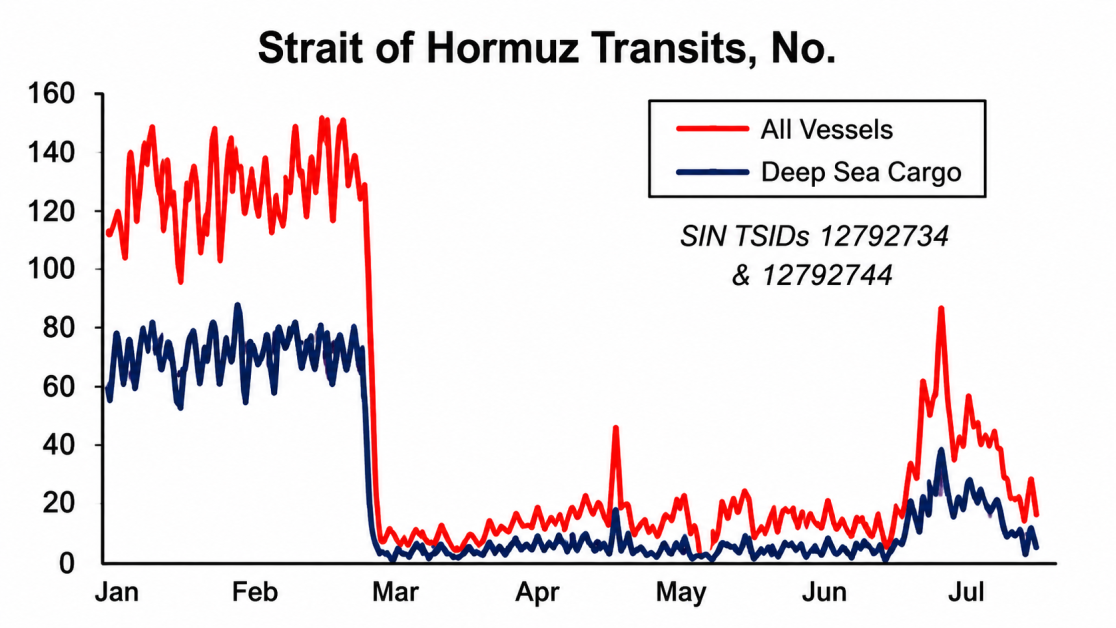
Shipping traffic through the Strait of Hormuz has collapsed to nearly 90 percent below pre-conflict levels, according to the latest update from Clarksons Research, the data and analytics arm of the Clarksons Group, which continues to track shipping markets affected by the ongoing Middle East conflict.
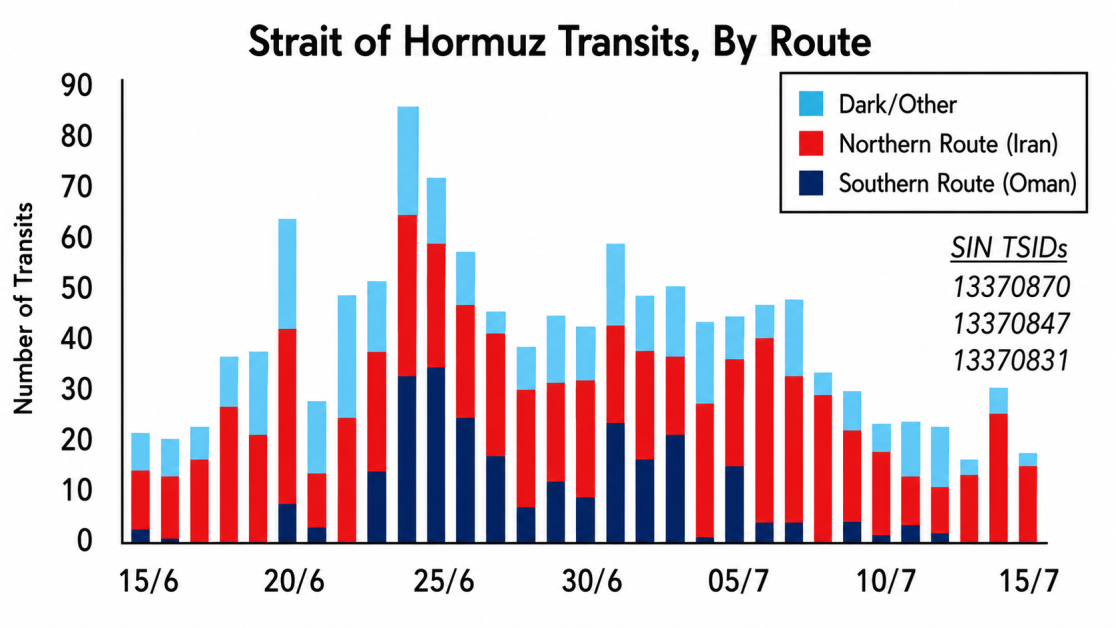
In an update issued at 10:00 am on 20 July, Steve Gordon, Global Head of Clarksons Research, said transits through the strait averaged just 12 crossings per day over the past five days, compared to 45 crossings in the first week of July, 10 during March to May, and 125 during pre-conflict conditions. Traffic remained similarly subdued over the weekend of 18 and 19 July.
In tonnage terms, transits have fallen more than 95 percent below pre-conflict levels in recent days. The flow of energy out of the Gulf has also eased sharply, with crude oil passing through Hormuz averaging around 1.5 million barrels per day over the past week, down from 10 million bpd in early July and 15 million bpd before the conflict began. No mainstream VLGCs have departed the Gulf in ten days, and no laden Qatari LNG carriers appear to have transited the strait in nearly two weeks.
The share of vessels visibly rerouting via the Oman route has dropped to just 2 percent of transits over the past five days, down from 22 percent in early July. Last week recorded the highest number of vessel attacks in the region in two months, with five incidents reported, and further attacks have occurred in the past 24 hours.
Around 385 vessels remain anchored off Oman, down 2 percent week-on-week but still 25 percent above start-of-June levels. Approximately 850 internationally trading vessels are currently positioned in the Middle East Gulf, including 6 percent of global VLCC capacity, 3 percent of product tanker capacity and 3 percent of LNG carrier capacity.
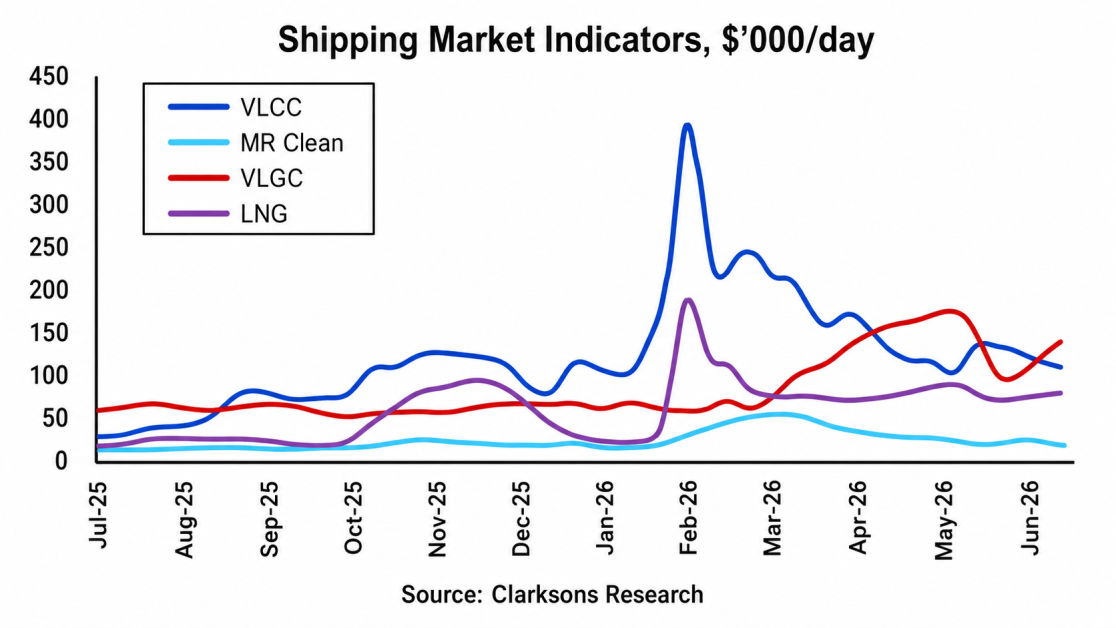
Despite the disruption, energy shipping markets remain elevated, supported by rerouting distances and mitigated volume losses. VLCC earnings have climbed to 128,000 dollars per day, up 32 percent since start-June, while Suezmax and Aframax earnings have risen 63 percent and 68 percent respectively, reaching 148,000 dollars and 109,000 dollars per day. Product tanker markets have stayed comparatively stable, with MR Clean rates at 25,000 dollars per day.
Gas carrier rates have also strengthened on favourable arbitrage dynamics, with VLGC rates rebounding to 145,000 dollars per day and LNG rates holding steady at more than twice pre-conflict levels.
 Join our WhatsApp channel for more updates:
 Subscribe to our YouTube channel for more updates: