


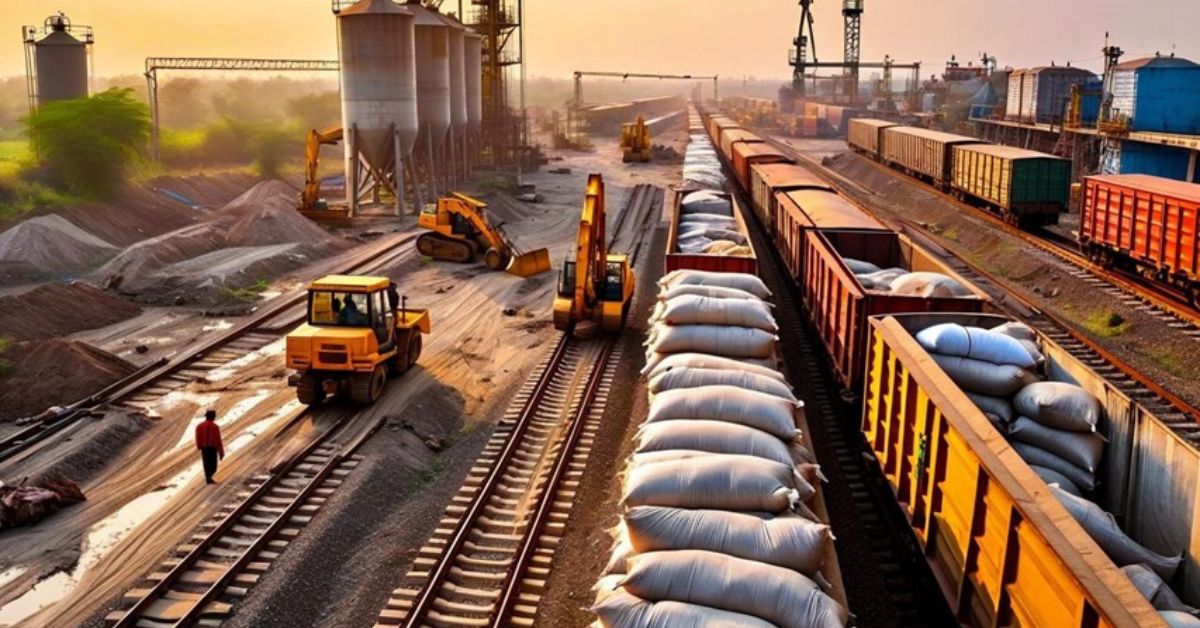

South Western Railway (SWR) is pioneering a game-changing shift in India’s cement logistics landscape by rolling out specialised tankers—modelled after oil transport wagons—to enable bulk cement movement, promising up to 30% reductions in freight expenses and faster delivery timelines for manufacturers and builders across the Deccan region. This initiative addresses longstanding pain points in the industry, where traditional bagged cement transport via 50kg sacks has relied heavily on costlier, emission-intensive road haulage due to rail’s complex slab tariffs and manual handling bottlenecks, pushing average logistics costs to uncompetitive levels for short-to-medium hauls under 300 km.
The tankers will accommodate massive volumes in loose form, with cement firms tasked to install dedicated pipelines at terminals for rapid, mechanised unloading that minimises labour needs and turnaround times. Backed by dual railway reforms—a rationalised freight policy introducing a flat Rs 90 per tonne-kilometre rate based on actual gross tonne-kilometre (GTKM), scrapping unpredictable distance-weight slabs that previously averaged Rs 1-1.5—and a bulk cement terminal policy encouraging private infrastructure investment, SWR has already floated expressions of interest, drawing bids from major producers like UltraTech, ACC, and JK Cements operating in its network. Senior IRTS officer Mukul Saran Mathur described it as a “fundamental transformation,” moving from labour-heavy open wagons to containerised, pollution-free multi-modal systems that rival road efficiency while cutting carbon footprints significantly.
Retail cement prices could drop by Rs 20-30 per bag as savings cascade through the supply chain, spurring construction booms in Karnataka, Goa, and southern Maharashtra where SWR serves steel giants like JSW, Mormugao Port, NMDC, and BMM Ispat alongside cement hubs. Chief Public Relations Officer Manjunath Kanamadi confirmed strong industry interest, noting the policy’s volume-centric pricing and terminal frameworks will unlock direct and indirect economies, making rail the preferred mode for bulk commodities and easing road congestion on key freight corridors. This aligns with national Dedicated Freight Corridor expansions and Gati Shakti multimodal goals, positioning SWR as a logistics innovator amid India’s infrastructure surge, with potential replication across other zones handling 150+ million tonnes of cement annually.
 Join our WhatsApp channel for more updates:
 Subscribe to our YouTube channel for more updates: