
Washington moves to economically isolate Iran’s arms suppliers hours after brokering a fragile two-week truce
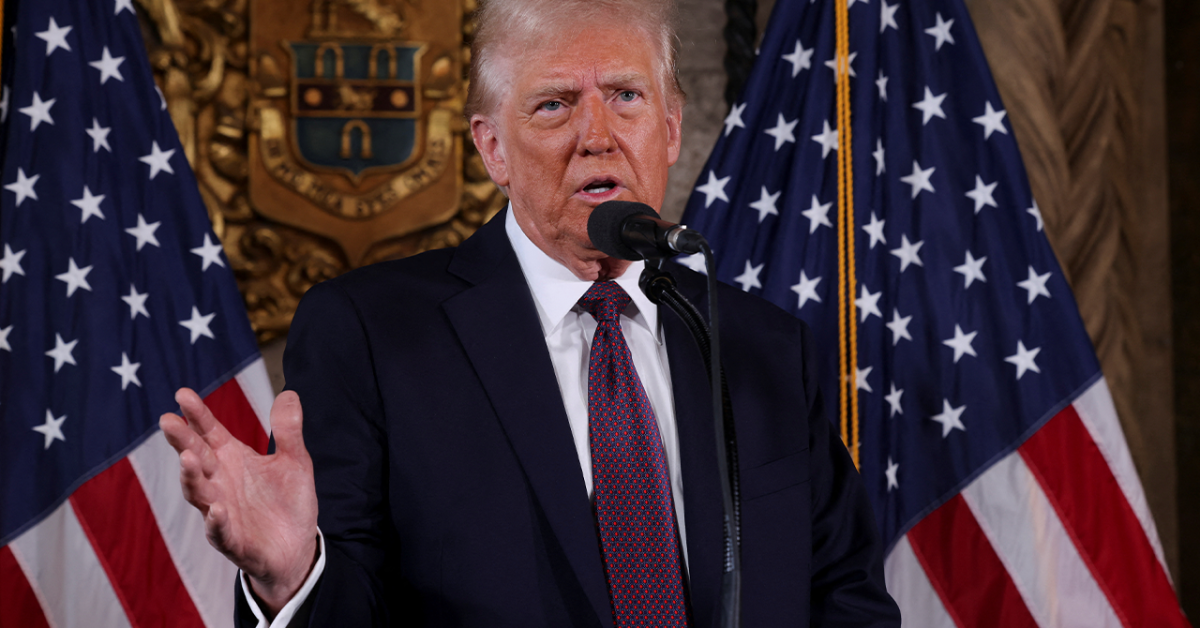
In a sweeping escalation of economic pressure, US President Donald Trump announced on April 8, 2026 that any country supplying military weapons to Iran would face immediate 50% tariffs on all goods exported to the United States — with no exclusions or exemptions.
The announcement came just hours after the US and Iran agreed to a two-week ceasefire, signalling that Washington intends to pair diplomatic outreach with sharp economic deterrence. Trump made the declaration via his Truth Social platform, writing: “A Country supplying Military Weapons to Iran will be immediately tariffed, on any and all goods sold to the United States of America, 50%, effective immediately. There will be no exclusions or exemptions!”
A Dual-Track Strategy: Diplomacy and Economic Pressure
Trump paired the tariff threat with an offer of nuclear talks and post-war cooperation with Tehran, framing the move as part of a broader peace framework rather than an isolated punitive measure. He described the moment as a “big day for World Peace” and indicated that many of the 15 points in a US peace proposal have already been agreed upon, with discussions on tariff and sanctions relief now on the table.
The ceasefire itself, brokered with Pakistan’s mediation just before Trump’s deadline to avoid strikes on Iranian civilian infrastructure, is set to hold until around April 22, 2026, with peace talks scheduled for April 10. Under the deal, Iran agreed to the complete and safe reopening of the Strait of Hormuz — a critical chokepoint for global oil shipping — while Trump stated there would be “no enrichment of uranium.”
Who Is in the Crosshairs? China and Russia Watch Closely
While Trump did not name specific countries in his tariff announcement, the message was widely understood as directed at China and Russia. Both nations have helped Iran build military capacity to counter US and Israeli pressure, supplying missiles, air defence systems, and technology intended to bolster deterrence, though both Beijing and Moscow have denied supplying any weapons recently.
Trump’s tariffs on Chinese goods over nearly eight years have already cut US imports from China sharply, from a peak of $538.5 billion in 2018 to $308.4 billion in 2025, with further declines recorded in early 2026. A fresh 50% tariff on Chinese exports — if enforced — could trigger another significant shock to bilateral trade flows.
As for Russia, US imports of Russian goods have already fallen sharply since the invasion of Ukraine in 2022 and the wave of financial sanctions that followed, with the trade now dominated by palladium, fertilisers, and enriched uranium for nuclear reactors.
Legal Questions Cloud Enforcement
The announcement raises serious legal questions. Trump’s Truth Social post did not specify which legal authority he would invoke to impose such tariffs, as the Supreme Court in February struck down his use of the International Emergency Economic Powers Act (IEEPA) to impose broad global tariffs, prompting a lower court to order refunds of some $166 billion collected over the course of a year.
An alternative — Section 232 of the Cold War-era Trade Expansion Act of 1962 — allows sector-specific tariffs on national security grounds, but using it would require a new months-long investigation and public comment period, making it unsuitable for the “immediate” enforcement Trump promised.
Supply Chain and Shipping Implications
Since the US and Israel launched military strikes on Iran in February, the conflict has spurred logistics challenges for supply chains and sparked a surge in fuel prices, pressuring shipping rates and weighing on contract negotiations between carriers and shippers. The ceasefire and Strait of Hormuz reopening offer some relief, though market analysts caution that significant uncertainty remains about long-term stability in the region.
For global traders and shipping operators, the key near-term question is whether the April 10 peace talks produce a durable framework — or whether Trump’s tariff ultimatum becomes the next flashpoint in an already volatile geopolitical and trade environment.
 Join our WhatsApp channel for more updates:
 Subscribe to our YouTube channel for more updates: