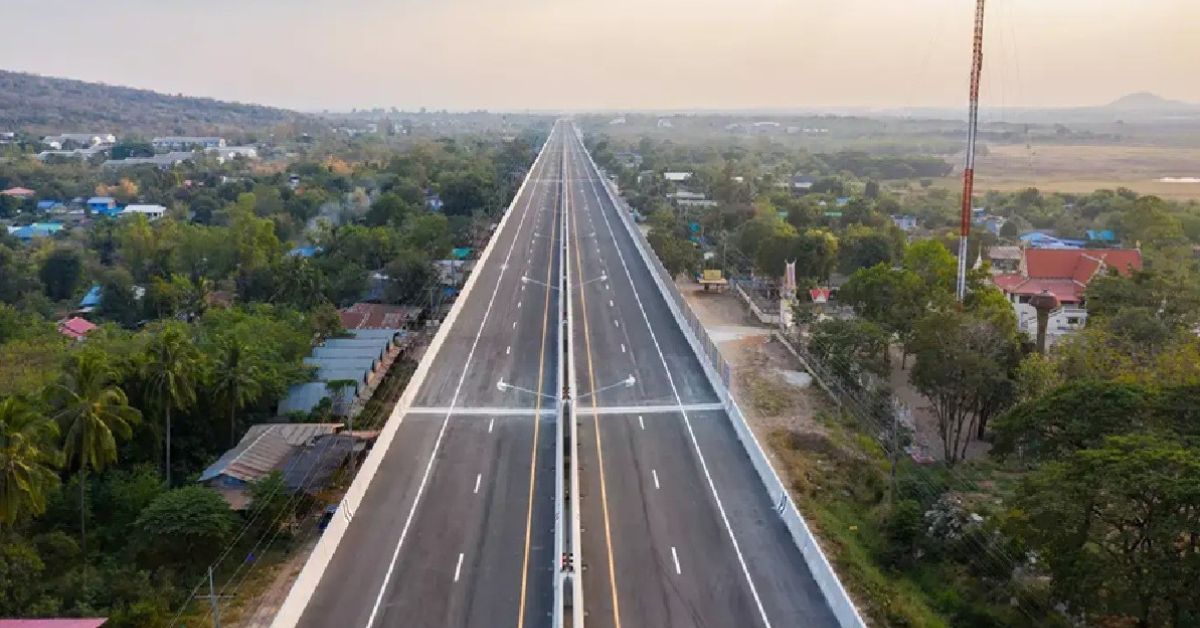

The Union Cabinet has given its approval for the construction of a six-lane, access-controlled greenfield highway linking Nashik, Solapur and Akkalkot, marking a major boost to Maharashtra’s road infrastructure network. The 374-km corridor has been sanctioned at an estimated cost of ₹19,142 crore and will be developed under the build–operate–transfer (BOT) model.
The decision was taken by the Cabinet Committee on Economic Affairs, chaired by Prime Minister Narendra Modi, as part of the Centre’s push to strengthen integrated transport connectivity under the PM Gati Shakti framework.
Welcoming the approval, Maharashtra Chief Minister Devendra Fadnavis thanked the Prime Minister and the Union Cabinet, saying the project would significantly enhance mobility, economic activity and regional integration across the state.
According to the official release, the new highway will pass through and connect key urban and economic centres such as Nashik, Ahilyanagar and Solapur before extending to Akkalkot near the Maharashtra–Karnataka border. Designed for a top speed of 100 kmph, the corridor is expected to support an average operating speed of around 60 kmph, enabling faster and safer movement of both passenger and freight traffic.
The corridor will also provide seamless integration with several major national highways and expressways, including the Delhi–Mumbai Expressway via the Vadhvan Bandar interchange, the Agra–Mumbai corridor (NH-60 near Adegaon, Nashik), and the Samruddhi Mahamarg near Pangri in Nashik district.
In addition, the project is set to complement ongoing work on the four-lane Chennai–Hasapur corridor, which spans nearly 700 km. Once both routes are fully operational and integrated, the combined network is expected to shorten travel distance by about 201 km and reduce journey time by nearly 17 hours. This would cut overall travel time by almost 45%, bringing it down from roughly 31 hours to around 17 hours.
Officials say the Nashik–Solapur–Akkalkot corridor will play a crucial role in improving logistics efficiency, boosting regional development, and strengthening long-distance road connectivity across western and southern India.
 Join our WhatsApp channel for more updates:
 Subscribe to our YouTube channel for more updates: