



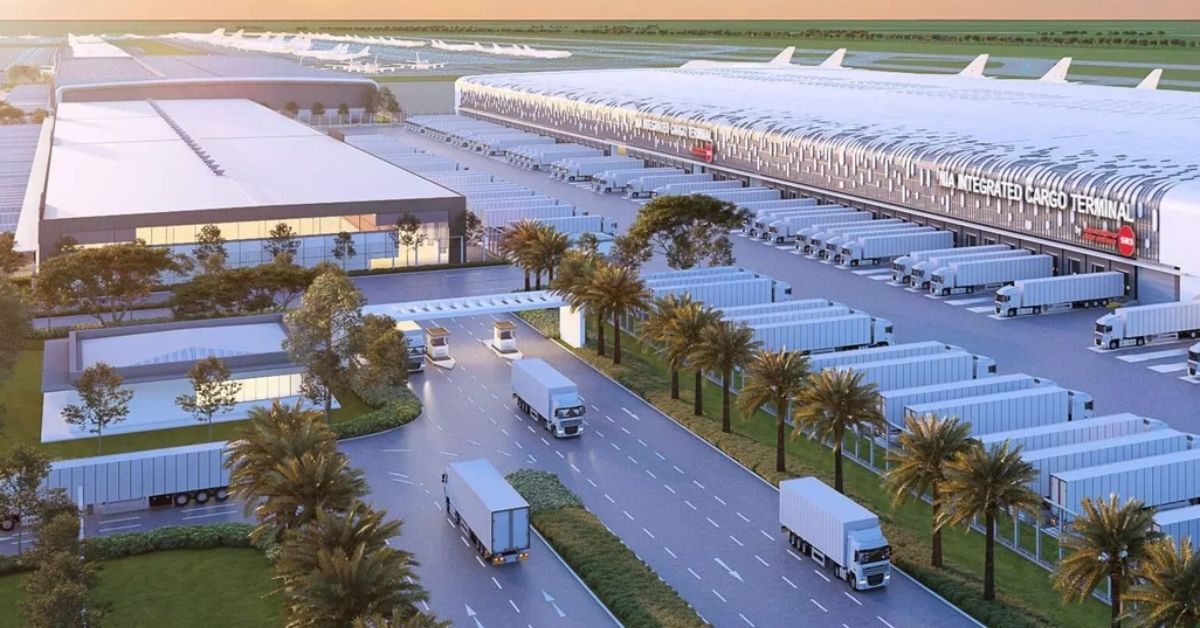

The Uttar Pradesh government, under the leadership of Chief Minister Yogi Adityanath, is rolling out an expansive connectivity and infrastructure plan to develop the Yamuna Expressway Industrial Development Authority (YEIDA) region into North India’s largest multi-modal transport and logistics hub.
At the centre of this strategy is the upcoming Noida International Airport at Jewar, which is being positioned as a major aviation, cargo and logistics gateway for northern India. The integrated development model is designed to make Uttar Pradesh a globally competitive destination for investment, manufacturing, trade and large-scale employment generation.
YEIDA Chief Executive Officer Shailendra Kumar Bhatia said the state government is focused on creating seamless five-mode connectivity across the region, covering air, road, rail, rapid rail transit system (RRTS) and expressways. This approach is aimed at ensuring smooth movement of passengers and cargo while reducing logistics costs.
As part of the plan, the eight-lane, access-controlled Yamuna Expressway has been directly linked to the Jewar airport, significantly improving travel time to Delhi and western Uttar Pradesh. Connectivity to neighbouring states will be strengthened through the Eastern Peripheral Expressway, offering direct links to Haryana and Uttarakhand. In addition, the Delhi–Mumbai Expressway, via the Ballabhgarh interchange, will connect the airport to India’s most important industrial and commercial corridor, providing a major boost to long-haul logistics.
To support high-volume air cargo operations, the state has proposed dedicated North and East Access Roads for freight movement. These corridors will enable heavy cargo vehicles to access the airport directly, bypassing urban areas and ensuring faster, safer and more efficient logistics operations.
Further integration is planned through the proposed linkage of the Ganga Expressway and National Highway-34 with YEIDA sectors and the Yamuna Expressway, improving regional connectivity across eastern, central and western Uttar Pradesh. The proposed RRTS network will connect Delhi and the wider NCR with YEIDA and the Noida International Airport, introducing a new layer of high-speed urban transport.
Rail infrastructure is also being expanded, with plans to provide direct rail connectivity to industrial zones and the airport, including links to the Delhi–Howrah and Delhi–Mumbai rail corridors. This enhanced rail network is expected to lower freight costs and support export-oriented industries.
Alongside connectivity upgrades, YEIDA is witnessing strong industrial investment driven by the state’s pro-industry policies. In the electronics and semiconductor segment, the HCL–Foxconn group, through Vama Sundari Investments, is setting up a semiconductor testing facility, while companies such as Havells India, Dixon Technologies, Aditech Semiconductors and Ascent Circuits are establishing major manufacturing units.
The automobile and electric mobility ecosystem is also expanding rapidly, with investments from Escorts Kubota, Minda Corporation and Ninjas Electric. Renewable energy and green manufacturing projects by SAEL Solar, Amber Enterprises and the Electric Vehicle Manufacturers Welfare Trust are further strengthening the region’s sustainability credentials, while Pine Valley Venture and Deki Electronics are adding depth to the textile and electronic components sectors.
The state government expects that the convergence of world-class connectivity, modern logistics infrastructure and a supportive policy framework will generate employment for lakhs of youth in the YEIDA region. The initiative is seen as a key driver in Uttar Pradesh’s ambition to achieve a one trillion-dollar economy, while firmly establishing YEIDA as a premier industrial and logistics hub in North India.
 Join our WhatsApp channel for more updates:
 Subscribe to our YouTube channel for more updates: