



The closure of the Strait of Hormuz has set off a cascading chain of congestion effects across Asia’s major container ports, with vessel bunching and extended waiting times spreading from the Persian Gulf outward to key transhipment and gateway hubs including Singapore, Shanghai, and Busan — even as the direct impact zone remains the Gulf itself.
According to BIMCO Chief Shipping Analyst Niels Rasmussen, approximately 130 container ships representing around 1.5 per cent of global fleet capacity have been stranded in the Gulf since the onset of attacks on February 28. The suspension of Hormuz transits has effectively immobilised nearly 3 per cent of global container volumes, translating into a direct impact on about 5 per cent of global ship demand — a figure that captures both the stranded vessels and the knock-on effects of schedule disruption, repositioning delays, and missed connections across the wider network.
Asian Hub Ports Under Pressure
The vessel congestion rippling outward from the Gulf is creating real operational strain at Asian hub ports. Ships diverted from Gulf routes, delayed in completing Gulf voyages, or waiting for updated routing instructions are creating vessel bunching at Singapore, Shanghai, Busan, and Colombo — ports that ordinarily manage tight schedules with minimal slack. Longer dwell times at these hubs are stretching yard capacity, increasing container handling costs, and generating the kind of systemic schedule unreliability that multiplies costs across entire supply chains.
COSCO Shipping Lines’ decision to resume accepting dry container bookings from Gulf region shippers this week provided a partial relief signal, with the Chinese carrier reopening booking channels that had been suspended during the height of the crisis. Yang Ming has simultaneously updated routing on its GS2 service to account for Middle East operational constraints, while Maersk has highlighted the growing food security pressures facing Middle East markets dependent on imported grain, edible oils, and processed goods — a reminder that the human cost of supply chain disruption extends well beyond commercial logistics.
Kamarajar Port: 5,711 Export Vehicles and Counting
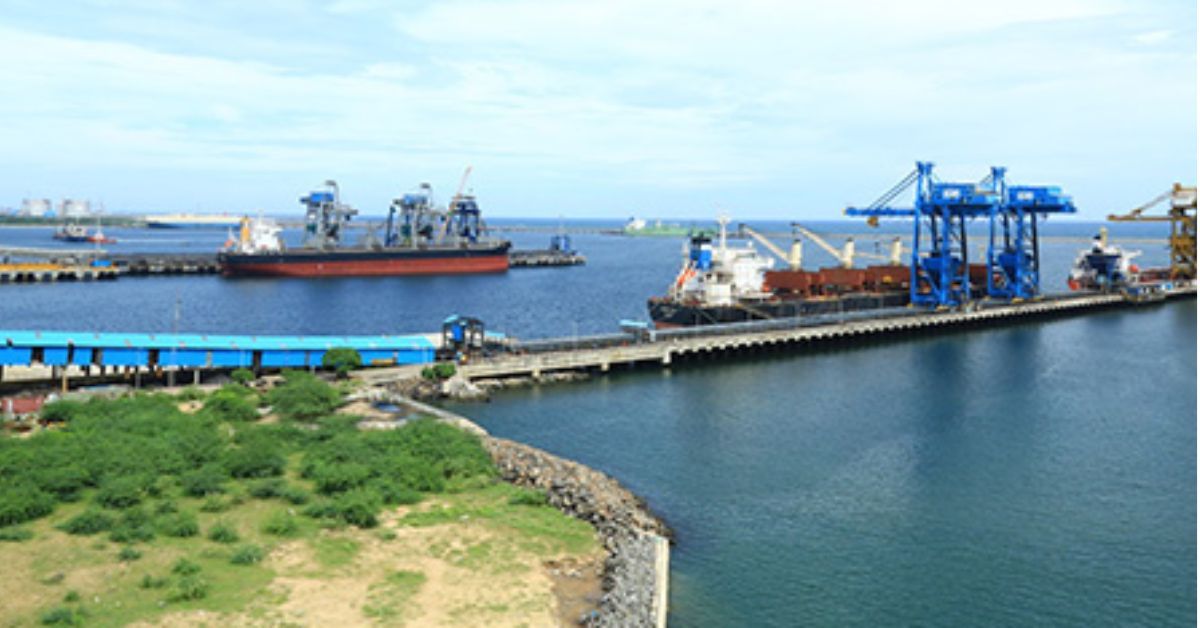
The automotive export sector is among the most visibly affected by the Hormuz disruption, and Kamarajar Port in Tamil Nadu has become a focal point for the crisis in India’s vehicle export supply chain. The port has received 5,711 export vehicles that cannot be despatched to Gulf destinations due to suspended shipping services, and has earmarked approximately 100,000 square metres of storage space to manage the overflow. Capacity is currently being created for nearly 7,000 transhipment vehicles, reflecting the scale of the backup in India’s automobile export pipeline.
DBGT Records First 100% Transhipment Call
In a silver lining, Dakshin Bharat Gateway Terminal (DBGT) in Tamil Nadu recorded its first-ever 100 per cent transhipment vessel call this week, with the MSC Krystal berthing on March 26 to handle approximately 1,307 TEUs of pure transhipment containers. DBGT has been actively facilitating the movement of crisis-affected and stranded cargo, positioning itself as an alternative routing hub during the disruption. The milestone highlights how India’s newer, smaller terminals are finding commercial opportunity in the operational gaps created by the Gulf crisis.
 Join our WhatsApp channel for more updates:
 Subscribe to our YouTube channel for more updates: