



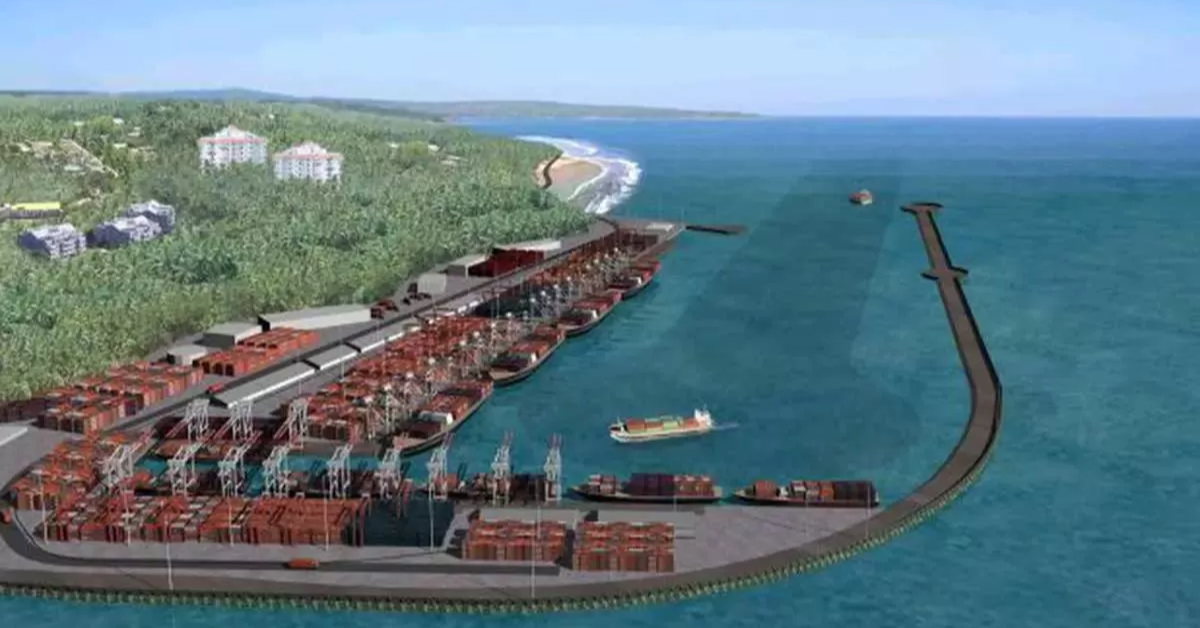

Vizhinjam International Seaport has secured final Customs approval to commence export-import cargo operations, marking a major milestone for the Kerala port that has so far functioned exclusively as an international transshipment hub.
What has Customs approved for Vizhinjam port?
Vizhinjam International Seaport Ltd said the Central Board of Indirect Taxes and Customs has granted final clearance for the port to officially begin EXIM cargo operations from August 18, 2026. According to a CBIC order dated July 24, Customs regulation of EXIM cargo will be coordinated with agencies including VISL, AVPPL, the Mercantile Marine Department, the Port Health Organisation, the Bureau of Immigration, Coastal Police, authorised banks and port security agencies.
What restrictions apply in the absence of a Container Freight Station?
Since no Container Freight Station is currently attached to the port, CBIC has imposed several conditions on cargo handling. Import operations will be limited to Full Container Load containers eligible for Direct Port Delivery, which must move directly from the port terminal to the importer’s premises within 48 hours of landing. No Less-than-Container Load cargo, loose cargo, or containers requiring de-stuffing or CFS examination will be permitted until a designated CFS becomes operational. Exports will similarly be restricted to Direct Port Entry of factory-stuffed, self-sealed or Customs-sealed FCL containers, with loose stuffing or in-yard examination not allowed. Road transshipment between Vizhinjam and other notified Customs stations, including Inland Container Depots, CFS, SEZs and Land Customs Stations, will also begin, with all operations required to comply with the Sea Cargo Manifest and Transhipment Regulations, 2018.
How significant has Vizhinjam’s growth been so far?
Developed under a public-private partnership between the Kerala government and Adani Ports and Special Economic Zone, Vizhinjam has emerged as one of the world’s fastest-growing container ports, handling two million TEUs within 18 months of starting commercial operations and receiving some of the world’s largest container ships. The EXIM launch is expected to be a key milestone for Kerala’s Mission Samudra initiative, which aims to position the state as a leading maritime and logistics hub by integrating ports, logistics, manufacturing, inland waterways and multimodal connectivity.
What infrastructure is being planned to support EXIM growth?
Adani Ports plans to build a 100-acre Container Freight Station near the port to handle EXIM containers once cargo volumes pick up, a facility officials describe as essential for screening, sorting and repacking goods. Until the CFS is ready, only full-load containers will be permitted, moved either by ship or road, since mixed cargo bound for multiple destinations cannot be handled without container unpacking facilities. Around 30 percent of the port’s containers are expected to be EXIM cargo, initially moved by road and later by rail once a 10 km rail link connecting the port to the main network is completed within four years. The Kerala government is also constructing a CFS, warehouses and logistics infrastructure at Vizhinjam, with land acquisition underway and MoUs signed with public sector undertakings to support import-export facilities.
Who stands to benefit from the port’s EXIM launch? MSME clusters in Coimbatore, Tiruppur and Tirunelveli are expected to leverage Vizhinjam for exports, offering an alternative to the time-consuming road and rail routes currently used to reach distant ports.
 Join our WhatsApp channel for more updates:
 Subscribe to our YouTube channel for more updates: