




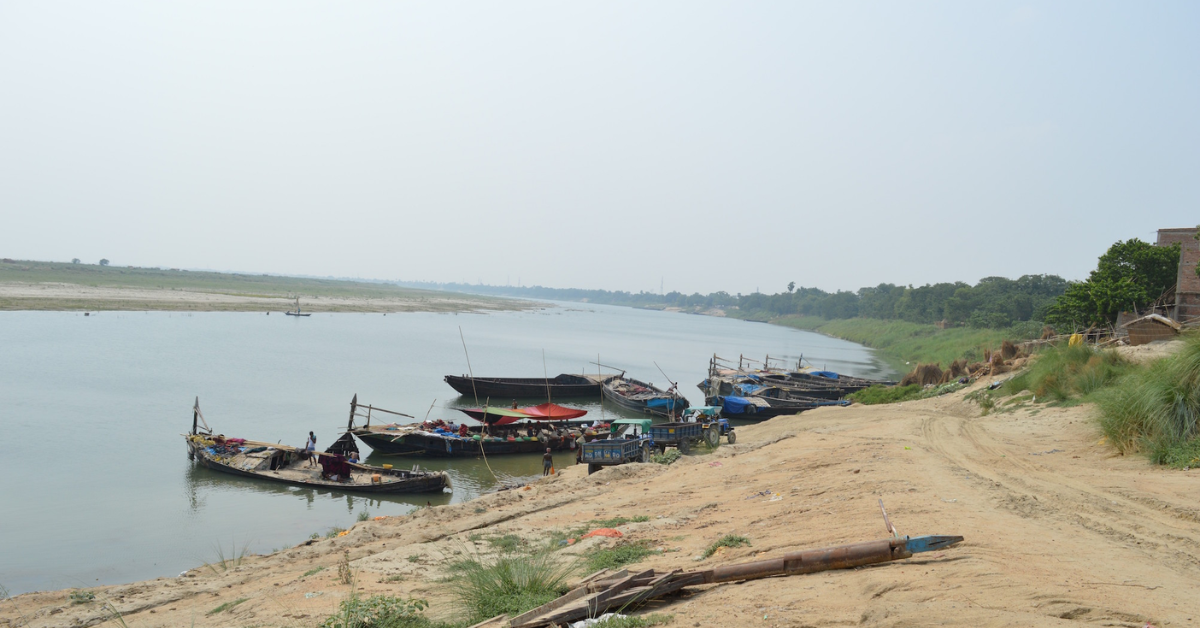

A massive 1,668 metric tonnes (MT) of over‑dimensional cargo (ODC) has successfully reached Simaria Ghat in Begusarai, Bihar via National Waterway-1 (NW-1) on the Ganga River, marking an important step for inland water transport in India. The consignment, originating from Diamond Harbour in Kolkata, was destined for Indian Oil Corporation’s Barauni Refinery expansion project.
Union Minister for Ports, Shipping and Waterways Sarbananda Sonowal described the movement as a significant milestone in strengthening India’s inland waterways network and showcasing the Ganga as a viable logistics corridor for heavy industrial cargo. The shipment underlines the growing role of waterways in enabling efficient, sustainable and cost‑effective cargo transportation across the eastern and north‑eastern hinterland.
Details of the Cargo and Route
The cargo comprised two large refinery units – a depropanizer splitter and a deethanizer – each weighing about 450 MT, as part of a total consignment of 1,668 MT of refinery equipment. The vessels covered a 713‑km stretch from Diamond Harbour in West Bengal to Simaria Ghat in Begusarai, Bihar along the Ganga River.
Barauni Refinery, a key oil processing facility of Indian Oil in Bihar, is undergoing capacity expansion and modernisation, requiring movement of heavy modules that are logistically challenging to transport by road or rail. Using the inland waterway route allows these over‑dimensional units to be moved in a single integrated shipment, reducing handling complexity and lowering logistics costs for such capital‑intensive projects.
Significance for Ganga Logistics and Industry
The successful delivery reinforces confidence among industries in using inland waterways as a reliable mode for moving heavy and bulky cargo, particularly for refineries, power plants and large industrial projects in landlocked regions. As cargo movement on the Ganga gains momentum, strengthened inland water transport (IWT) infrastructure is expected to enhance multimodal connectivity and ease of doing business for eastern and north‑eastern India.
National Waterway-1, which runs along the Ganga–Bhagirathi–Hooghly river system from Haldia in West Bengal to Prayagraj in Uttar Pradesh, is India’s longest inland waterway and has emerged as a key transport corridor for bulk and project cargo. The Barauni shipment highlights how NW-1 can reduce dependence on road and rail for heavy consignments, while also supporting lower emissions per tonne‑kilometre compared with some conventional modes of transport.
Broader Push for Inland Water Transport
The movement is part of a wider government push to develop inland waterways as a strategic component of India’s multimodal logistics network, alongside dedicated freight corridors, ports and inland container depots. With improved navigation aids, channel marking, terminal infrastructure and regular dredging on key stretches, the Ganga waterway is increasingly being integrated into national supply chains.
As more such consignments move via NW-1, the route is expected to play a larger role in supporting industrial growth in Bihar, Jharkhand, Uttar Pradesh and the north‑east, while contributing to efforts to cut overall logistics costs and improve competitiveness for Indian manufacturing.
 Join our WhatsApp channel for more updates:
 Subscribe to our YouTube channel for more updates: