
A.P. Moller Capital has agreed to acquire Singapore-based Portek International and a controlling interest in Belgium’s Euroports, extending its planned investments across African, Asian and European port networks. The separate agreements, announced in October and September 2026, cover businesses handling containers, vehicles and essential industrial and agricultural commodities. Both transactions remain subject to approvals and closing conditions.
The buyer is an infrastructure investment manager within the wider A.P. Moller Group, which also includes shipping and logistics company Maersk. The acquisitions are being undertaken through investment vehicles managed by A.P. Moller Capital. Financial terms have not been disclosed.
What does the Portek acquisition include?
Under the agreement announced on 15 October, A.P. Moller Capital’s Emerging Markets Infrastructure Fund II will acquire 100% of Portek International from Japan’s Mitsui & Co.
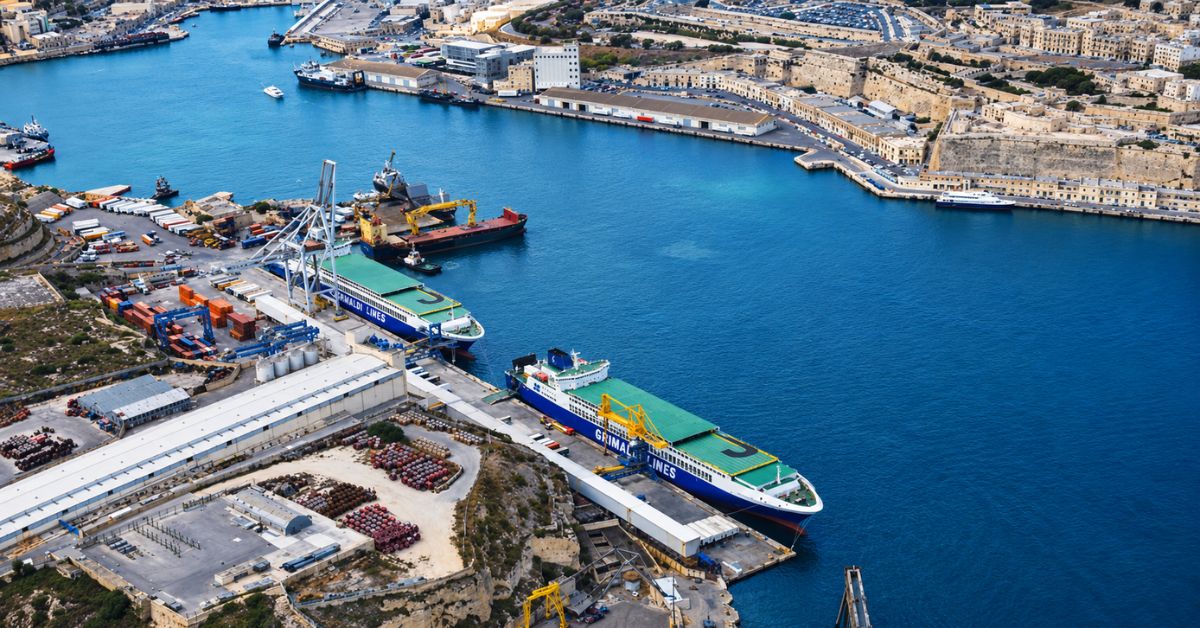
Founded in 1988, Portek has interests in seven terminals across Algeria, Gabon, Indonesia, Latvia, Malta and Vietnam. Its activities also include port engineering, operations and maintenance services, principally delivered from Singapore and Indonesia.
The company employs approximately 1,400 people. Its terminal portfolio handles around seven million tonnes of bulk cargo, 700,000 containers and 90,000 vehicles annually. These figures describe existing cargo activity across the business, rather than additional capacity announced under the acquisition.
Which African port operations are involved?
Portek’s interests in Algeria and Gabon form the African component of the proposed transaction.
In Algeria, Portek participates in Bejaia Mediterranean Terminal through a joint venture with the Bejaia Port Authority. The container terminal has a stated annual capacity of 300,000 twenty-foot equivalent units (TEUs), a 500-metre quay and a water depth of 12 metres.
Its facilities include a dedicated refrigerated-container installation with electricity supply and monitoring for up to 500 containers. These capabilities support cargo requiring temperature-controlled handling alongside conventional container traffic.
In Gabon, subsidiary Gabon Port Management manages port and harbour activities at Owendo and Port-Gentil, including infrastructure development and maritime services. Portek lists container-handling capacities of 130,000 TEUs at Owendo and 10,000 TEUs at Port-Gentil.
The operations serve a mix of containers, vehicles and conventional cargo. Owendo also handles bulk cargo, while Port-Gentil accommodates supply boats. Portek reported in 2022 that its Gabon concession had been extended until 2042.
How will Euroports expand the investment portfolio?
The Euroports agreement, announced on 28 September, involves a separately managed fund vehicle backed by A.P. Moller Holding. The transaction covers a 53.35% interest in Thaumas N.V., the company that indirectly owns Euroports.
Euroports operates more than 50 deep-sea and inland terminals across 10 European countries and China. It handles over 70 million tonnes of bulk, breakbulk and liquid bulk cargo annually, including fertilisers, agricultural commodities, sugar, fruit, forest products, metals and minerals.
The group employs around 3,000 people and also operates Manuport Logistics, an independent freight forwarder active in more than 20 countries. Manuport will retain its own brand and continue its development plans within Euroports.
Belgian investment institutions SFPIM and PMV will remain shareholders following completion. Euroports’ existing management team, governance arrangements and strategic direction are also expected to continue.
What happens after the agreements?
Completion requires regulatory and other third-party approvals. The announcements therefore establish proposed ownership changes, rather than completed transfers.
For Portek, A.P. Moller Capital has identified operational performance, safety, governance, capital discipline and emissions-reduction planning as priorities following completion. At Euroports, the incoming shareholder consortium intends to support management’s plans to expand activities, broaden geographical coverage and attract additional customers and cargo volumes.
 Join our WhatsApp channel for more updates:
 Subscribe to our YouTube channel for more updates: