
Summary
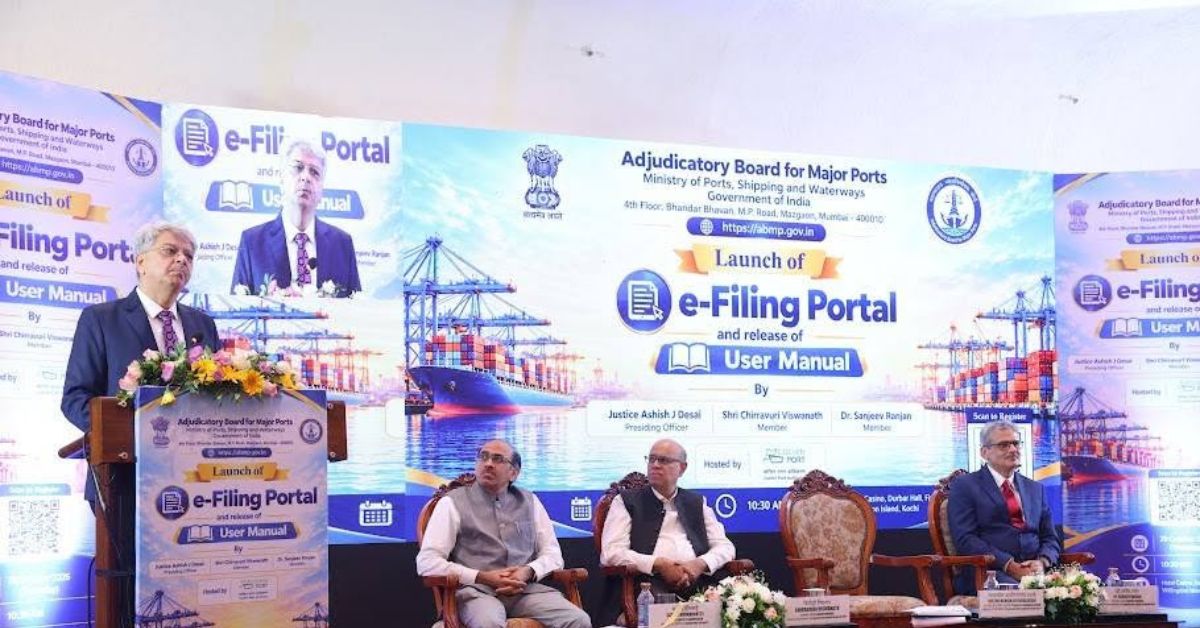
The Adjudicatory Board for Major Ports has formally launched an e-filing portal to enable online case submission and digital case management. Unveiled at Cochin Port Authority on 29 October 2026, the platform and accompanying user manual aim to improve access, transparency and procedural efficiency for port-sector stakeholders.
Kochi launch introduces digital case handling
The ABMP e-filing portal provides a digital channel for submitting cases and managing related proceedings before the Adjudicatory Board for Major Ports.
The launch at Cochin Port Authority was attended by the board’s Presiding Officer, Justice Ashish J. Desai, former Chief Justice of the Kerala High Court, and members Chirravuri Viswanath and Sanjeev Ranjan.
Cochin Port Authority Deputy Chairperson Satish Honnakkatte also attended, while Chairperson M. Angamuthu and other stakeholders participated through video conferencing. The user manual released at the event provides guidance on online filing and digital case management.
The initiative brings a digital interface to a specialised institution serving major port authorities, private concessionaires and port users. Its practical purpose is to make procedural engagement more accessible to organisations operating across different port locations.
Platform supports hybrid proceedings
The portal enables online submission of cases and digital processing of case-related activities. Integration with e-Court facilities is intended to support hybrid hearings, allowing digital filing to operate alongside arrangements for remote participation.
A presentation and live demonstration of the portal and Digital Case Management System were conducted during the launch. Participants also offered suggestions and feedback to support implementation and wider adoption.
Representatives of major ports, public-private partnership concessionaires, port users and user associations joined the programme. Praveen P. Nair, Joint Secretary responsible for Ports and PPP in the Ministry of Ports, Shipping and Waterways, participated through video conferencing.
For geographically dispersed parties, digital submission and hybrid proceedings could reduce the administrative burden associated with presenting documents and attending hearings. Their effectiveness will depend on adoption, reliable access and consistent procedural guidance.
Board established under the 2021 ports law
The Central Government constituted ABMP on 13 August 2025 under the Major Port Authorities Act, 2021.
Its responsibilities include adjudicating disputes and claims involving major ports, PPP concessionaires and captive users within the framework of concession agreements. It also examines complaints from port users concerning services provided by major ports or private operators.
Another part of its mandate is to review stressed PPP projects referred to it and suggest measures for their revival. The board can additionally consider operational matters referred by the Central Government or major port boards.
These functions give the institution relevance beyond individual contractual disagreements. Its work encompasses relationships between public infrastructure owners, private terminal investors and businesses using port services.
Defined powers underpin the digital process
The board’s published framework distinguishes its adjudicatory responsibilities from tariff setting. Its functions include specified matters arising from earlier Tariff Authority for Major Ports guidelines and orders, alongside concession-related disputes and service complaints.
For discharging its responsibilities, ABMP has powers relating to the production of documents, examination of witnesses and receipt of evidence through affidavits. It can also review decisions and issue interim orders within the applicable framework.
The board is guided by natural justice and the governing Act and rules. Its published remit also recognises the position of disputes referred to arbitration within the parties’ contracts or concession agreements.
The portal therefore changes the administrative route through which parties engage with the institution. The underlying scope of a dispute and the applicable contractual arrangements remain important to how it proceeds.
Earlier outreach prepared stakeholders
The formal launch follows earlier engagement with the port community.
On 10 July 2026, Visakhapatnam Port Authority hosted an awareness session for concessionaires, shipping lines, stevedores, handling agents and other stakeholders. The programme covered the board’s constitution, powers and dispute-resolution procedures, together with a demonstration of the e-filing portal.
That outreach indicates that stakeholder familiarisation preceded the October launch. The accompanying manual now provides a reference for users as digital filing becomes part of their interaction with the board.
For the industry, the immediate benefit is a more accessible channel for case submission and management. Over time, its contribution will be assessed through practical outcomes: ease of filing, dependable handling of records, effective participation in proceedings and the timely progression of cases.
FAQs
What is the ABMP e-filing portal?
It is a digital platform for submitting cases and managing case-related activities before the Adjudicatory Board for Major Ports.
When and where was it formally launched?
On 29 October 2026 at Cochin Port Authority in Kochi.
What matters does the board handle?
Its remit includes specified concession disputes, port-user service complaints and reviews of referred stressed PPP projects.
Does the platform support hybrid hearings?
Integration with e-Court facilities is intended to support hybrid proceedings.
Is guidance available for users?
Yes. A user manual was released alongside the formal launch.
 Join our WhatsApp channel for more updates:
 Subscribe to our YouTube channel for more updates: