
Summary
A study has identified Mundra, Jawaharlal Nehru Port, Chennai and Tuticorin as promising locations for alternative marine fuel bunkering. It recommends phased development through 2047, combining early projects with infrastructure expansion, safety standards and competitive pricing to strengthen India’s position in the emerging cleaner-fuel market.
Four gateways identified for initial development
Alternative fuel bunkering development in India could begin with a concentrated effort at four established cargo gateways, according to the Study on Potential Demand and Pricing of Alternative Marine Fuels in India.
Prepared by DNV under the International Maritime Organization’s GreenVoyage2050 programme, the assessment examines vessel traffic, fuel demand, pricing and the infrastructure needed to establish commercially viable services.
The identified locations are Mundra in Gujarat, Jawaharlal Nehru Port in Maharashtra, and Chennai and Tuticorin in Tamil Nadu. The findings concern a national development opportunity; the four ports are outside West Bengal.
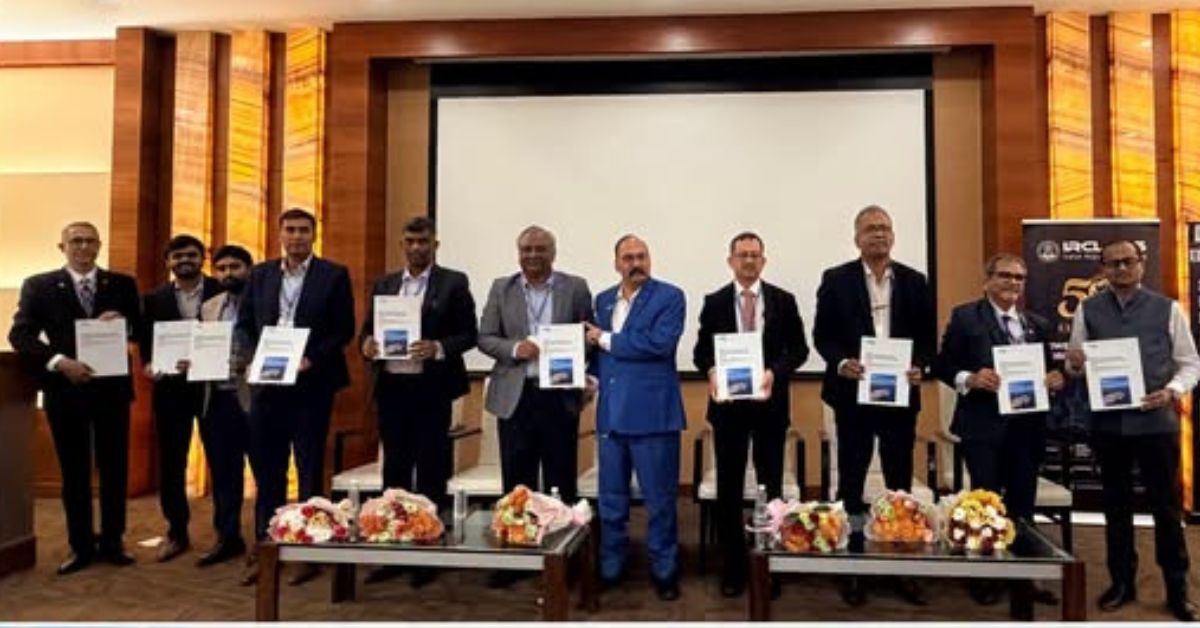
The study was presented through India’s maritime administration during a recent safety and compliance workshop in Mumbai.
Demand projections span several scenarios
The assessment projects alternative marine fuel demand associated with Indian ports at approximately 42–65 petajoules by 2035, increasing to 113–293 petajoules by 2047.
These are scenario-based energy-demand estimates. They should not be interpreted as confirmed fuel purchases, committed terminal capacity or demand allocated equally among the four ports.
The range also demonstrates the uncertainty surrounding adoption rates and the eventual scale of the market. For investors, the figures provide a basis for evaluating opportunities rather than a guaranteed revenue forecast.
Methanol offers a potential starting point
The proposed roadmap has three stages.
The first, covering 2026–2030, focuses on establishing safe, competitive bunkering at selected ports. The second, from 2030–2035, envisages expanding successful operations and preparing for ammonia. The final stage, extending to 2047, addresses multiple fuels and green shipping corridors.
Methanol is identified as the most suitable starting fuel, with a possible pilot at Mundra supplied from Deendayal Port, Kandla. This is a proposed pathway rather than an announced operating service.
Biofuels and methanol are expected to support earlier adoption, while ammonia could assume a greater role as supply chains, infrastructure and safety arrangements develop.
Existing port calls provide an initial customer base
The study’s commercial approach prioritises vessels already calling at Indian ports. Scheduled container services are identified as a promising source of early demand.
That approach connects fuel supply with established shipping activity. It gives developers a basis for examining identifiable customers and recurring calls before making larger infrastructure commitments.
Competitiveness will depend on the complete bunkering proposition. Delivered fuel prices, port charges, reliability and operating efficiency will influence owners’ purchasing decisions alongside geographical location.
For suppliers, this means production capability must be matched by dependable delivery. For shipowners, fuel availability must fit voyage schedules and technical requirements.
Earlier dialogue examined investment barriers
The final assessment follows a policy and investment dialogue held in Mumbai on 9 February 2026.
Around 40 participants—including shipowners, port authorities, fuel suppliers, financiers, technical organisations and government representatives—examined preliminary findings and the conditions needed to move beyond pilot projects.
Discussions addressed regulatory uncertainty, commercial contracts and the risks borne by early investors. Financing conditions, operating scale and costs beyond the fuel itself were also considered.
Participants highlighted the need for stronger demand signals and coordination between public authorities and commercial stakeholders. These earlier discussions provide context for the study’s emphasis on practical implementation and commercially repeatable services. International Maritime Organization
Implementation will require coordinated commitments
The findings present opportunities across fuel production, storage, distribution and marine delivery. Their commercial value will depend on matching those activities with customers willing to purchase the fuels.
Ports will need to consider how bunkering interacts with cargo operations, vessel movements and emergency arrangements. Developers will need clear responsibilities, workable approval processes and credible supply commitments.
The recommendations provide evidence for policy and investment decisions. The next substantive milestones will be defined projects, customer agreements and operating arrangements that demonstrate the proposed model.
For India’s maritime sector, the immediate task is to convert identified potential into services that vessels can use reliably and competitively.
FAQs
Which four ports were identified?
Mundra, Jawaharlal Nehru Port, Chennai and Tuticorin.
Who prepared the study?
DNV undertook it under IMO’s GreenVoyage2050 programme with Indian maritime authorities.
Which fuel is proposed for an initial pilot?
Methanol, potentially at Mundra using supply from Deendayal Port.
Are the demand forecasts confirmed orders?
No. They are scenario-based projections for future demand.
What will determine commercial success?
Competitive delivered prices, reliable supply, efficient operations, safety arrangements and customer demand.
 Join our WhatsApp channel for more updates:
 Subscribe to our YouTube channel for more updates: