



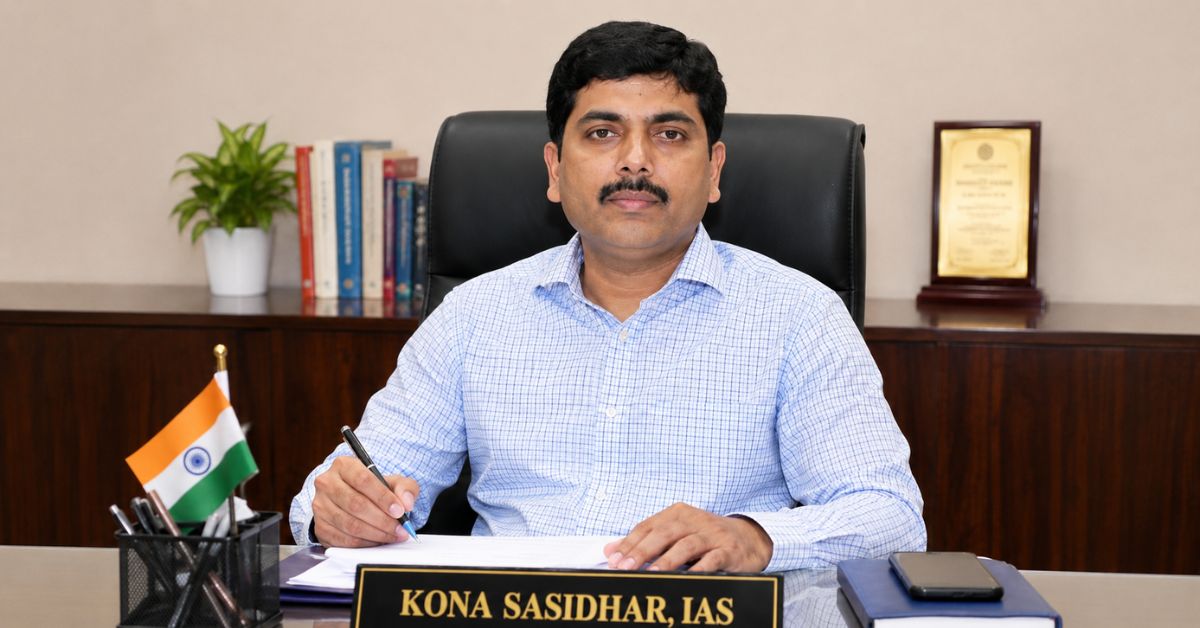

Andhra Pradesh took its shipbuilding investment case directly to the global maritime industry at the India Business Roundtable held during SMM Hamburg, with Kona Sasidhar, Secretary for Infrastructure and Investment in the Government of Andhra Pradesh, presenting the state’s maritime credentials to an international audience of shipowners, yards, and equipment manufacturers.
Sasidhar positioned Andhra Pradesh as a strategic entry point for companies looking to set up shipbuilding, ship repair, and marine ancillary operations in India, framing the pitch around the state’s coastal geography, industrial base, and ease-of-doing-business record.
Why is Andhra Pradesh positioning itself as a maritime investment hub?
The state, located on India’s southeastern coast, spans roughly 160,000 square kilometres with a population of 53 million, nearly half of it under 30. Sasidhar cited a gross state domestic product of 214 billion dollars and average annual growth of about nine percent over the last five years. Andhra Pradesh has ranked first in India’s ease of doing business rankings for three consecutive years, a record Sasidhar linked to the state drawing 25 percent of India’s total foreign direct investment.
What maritime infrastructure does the state already have?
Andhra Pradesh currently operates six ports along a coastline of about 1,053 kilometres, with five greenfield ports and two captive greenfield ports under development. The state has deep-draft capability of up to 18 metres, suitable for large vessels, and more than 50 coastal and creek sites identified as viable for shipbuilding activity. Existing port capacity of 330 million metric tonnes is being expanded by a further 354 million metric tonnes, taking total capacity beyond 600 million metric tonnes in the coming years. Ports are backed by multimodal links across rail, road, and inland waterways, alongside a land bank exceeding 1,000 acres earmarked for industrial use.
Which locations is the state offering for shipbuilding?
Sasidhar identified three priority sites. The lead project is a government-approved mega shipbuilding cluster at Dugarajapatnam, offering 18-metre draft, waterfront access, and land for both shipbuilding and ancillary units; one shipyard is already operational in the state, with two more Indian yards in active discussions on foreign technology partnerships. Two brownfield locations, Kakinada and Machilipatnam, are also on offer, with breakwaters completed and dredging underway; both are expected to be operational in the next financial year.
What industrial ecosystem supports port-linked investment?
Sasidhar pointed to a cluster of anchor industries feeding demand for port services, including ArcelorMittal’s planned steel plant at Visakhapatnam, described as Asia’s largest, alongside two green ammonia plants, two petrochemical investments from state public sector units, and what he called Asia’s largest pharma park. The state is also targeting renewable energy expansion, aiming to lift the renewable share of its energy mix from 36 percent currently to 75 percent by 2047, supported by upcoming solar and wind parks.
How is the state addressing workforce and skilling needs?
Sasidhar described a skilling ecosystem tailored to industry requirements, citing Korean, Japanese, European, and Russian companies operating customised training programmes in the state, including a recent deployment of welders trained for a Russian shipbuilding requirement. Visakhapatnam also hosts the Eastern Naval Command headquarters and Indian Ocean Shipyard, giving the state an established base in naval and defence-linked marine skilling. The state’s stated goal is to become a global hub for maritime human resource development.
What incentives and next steps is the state offering investors?
Beyond incentives available from the central government, Andhra Pradesh is offering additional fixed capital, power, and tax incentives for large-scale investments, along with customised support packages negotiated directly with interested companies. Sasidhar credited the state’s single-window clearance system as a key factor behind its ease-of-doing-business ranking.
He invited prospective partners to sign non-binding exploratory memorandums of understanding within 30 days, followed by site visits and detailed discussions to finalise investment terms. AP Maritime Board CEO Praveen Lalit was also present at the roundtable. Sasidhar’s presentation was followed by a technical session from Maharashtra Maritime Board CEO Pradeep, representing what he described as India’s largest state by maritime activity.
 Join our WhatsApp channel for more updates:
 Subscribe to our YouTube channel for more updates: