





Summary
Global logistics firm Aramex has signed an MoU with GMR Airports to strengthen its express and freight capabilities at all GMR-operated airports in India. The plan covers dedicated truck docks, screening systems and space at express cargo terminals, built-in customs clearance and a possible warehouse with airside access, with infrastructure targeted by March 2027.
Article
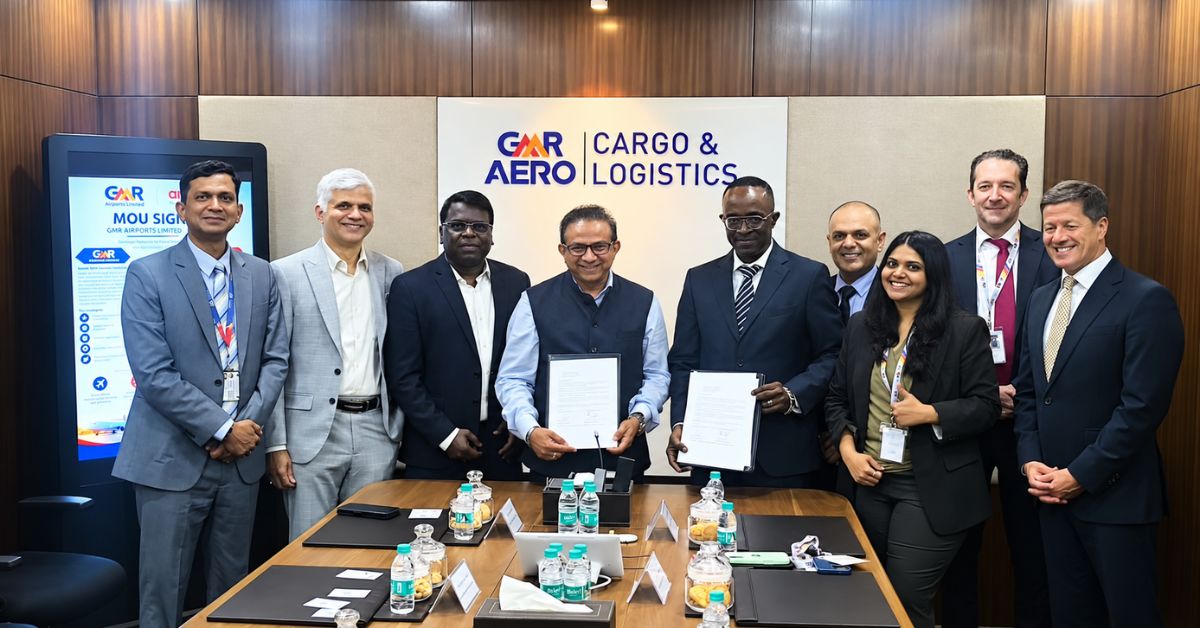
Hyderabad: Aramex has signed a Memorandum of Understanding with GMR Airports Limited (GAL) to expand its logistics capabilities at all GMR-operated airports, aiming to speed up international shipments for MSMEs and other businesses engaged in import and export.
The MoU was signed at GMR Hyderabad Air Cargo (GHAC) in Hyderabad and announced on October 14, 2026.
What does the MoU cover?
The partners will explore enhancing Aramex’s operational infrastructure at GMR’s express cargo terminals across India. This includes dedicated truck docks, screening systems and dedicated space, subject to terms under a definitive agreement.
The proposed infrastructure will allow Aramex to develop built-in customs clearance capabilities for multiple international products, improving operational efficiency and speeding up cargo clearance.
GAL will maintain the identified infrastructure at the express cargo terminals. The two companies are also exploring a warehousing facility near the express cargo terminal with dedicated airside corridor access. GAL may also facilitate engagement with relevant authorities and share technical know-how.
What is the timeline?
The two sides are working towards developing the proposed infrastructure by March 2027. Investment amounts, project timelines and other details will be worked out jointly as talks progress.
Who signed the MoU?
The signing was attended by Aramex Group CEO Amadou Diallo, Aramex India Managing Director Veena Bhogaonkar and Abbas Panju, Regional CEO for the GCC and Indian Subcontinent. GMR was represented by Sanjiv Edward, CEO, Cargo and Logistics, GMR Airports, and Kadhir Kadhiravan, CEO of GMR Hyderabad International Airport, among others.
What did the companies say?
Diallo said Aramex’s India strategy is about building the capabilities and infrastructure needed for the country’s next phase of trade growth, and creating “efficient channels for businesses to access international markets.”
Bhogaonkar said the upgrades at GMR’s express cargo terminals would help businesses, including MSMEs, access more efficient express and freight services. Panju described India as a strategically important market and said the partnership would strengthen Aramex’s capabilities through GAL’s key international gateways.
Why does it matter?
The partnership is expected to strengthen India’s international trade links, particularly with the GCC region, where Aramex has a strong network. Dedicated docks, screening and in-house customs clearance at airport express terminals can significantly cut dwell times for time-sensitive shipments, while an airside-connected warehouse would allow faster transfers between storage and aircraft.
For Indian exporters, especially MSMEs and e-commerce sellers, more efficient express handling at major gateway airports could reduce costs and improve delivery reliability to overseas markets.
FAQs
What has Aramex agreed with GMR Airports?
An MoU to strengthen Aramex’s express and freight infrastructure at all GMR-operated airports in India.
What facilities are planned?
Dedicated truck docks, screening systems and space at express cargo terminals, plus a possible warehouse with airside access.
Will Aramex handle customs clearance?
The infrastructure will allow Aramex to develop built-in customs clearance for multiple international products.
When will the infrastructure be ready?
The partners are working towards completing it by March 2027.
Who benefits from the partnership?
Businesses involved in import and export, especially MSMEs, are expected to benefit from faster and more efficient international shipping, particularly to the GCC.
 Join our WhatsApp channel for more updates:
 Subscribe to our YouTube channel for more updates:



