



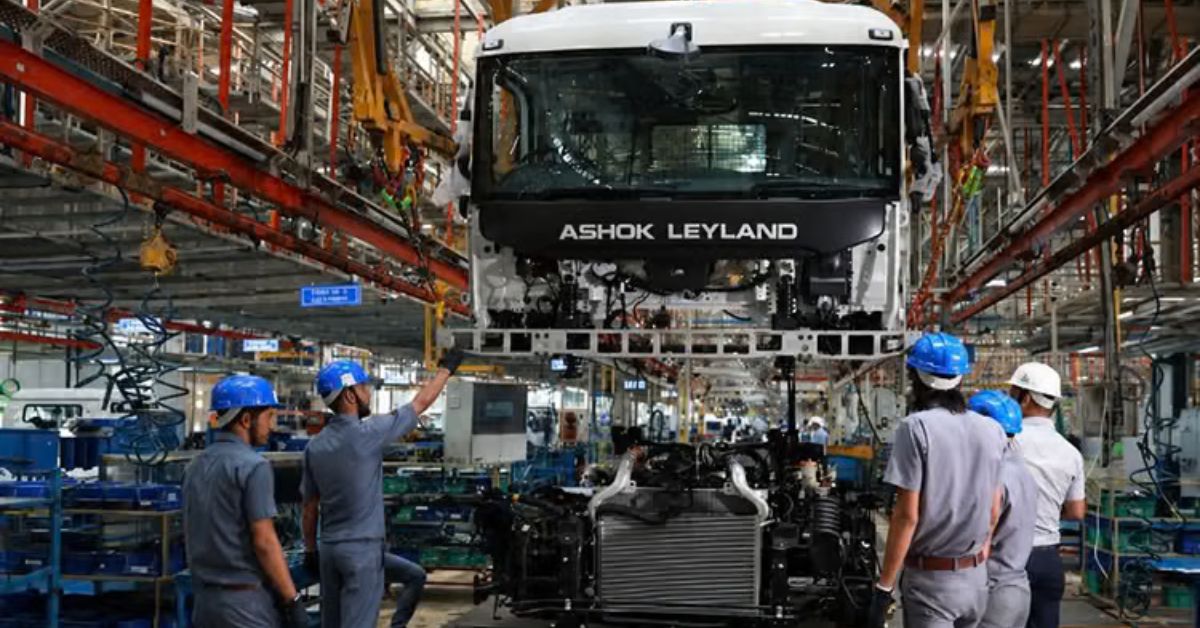

Ashok Leyland is preparing new liquefied natural gas (LNG) trucks for long-haul transport as it develops electric, LNG and hydrogen technologies for different commercial vehicle applications. Managing Director and Chief Executive Officer Shenu Agarwal outlined the approach during the company’s second-quarter FY2026–27 earnings call on 16 November, identifying LNG as a viable option for heavy-duty freight movement.
The company expects to share further details at its next investor interaction. It has not announced the upcoming models, their specifications or a confirmed launch date. The planned products will extend an alternative-fuel portfolio that already includes LNG-powered haulage vehicles.
Where does LNG fit in the company’s strategy?
“For long haul, LNG definitely is a viable option,” Agarwal said during the earnings call.
He indicated that the company would pursue all three technologies, with investment and product development reflecting their different adoption timelines. Electric mobility remains the immediate priority, while hydrogen is viewed as a longer-term opportunity.
Management expects electrification to progress earlier in light commercial vehicles (LCVs) and buses. Adoption in medium and heavy commercial vehicles is expected to take longer, although Ashok Leyland is also developing electric truck technologies.
The approach connects vehicle development with the operational requirements of different transport segments, including long-distance haulage, urban goods movement and passenger services.
What is Ashok Leyland’s existing LNG experience?
The manufacturer began delivering its AVTR 1922 LNG-powered haulage truck to Mahanagar Gas Limited at Hosur in November 2023.
Built on the AVTR platform, the vehicle used an internally developed LNG engine meeting Bharat Stage VI Stage II emission standards. Ashok Leyland said the truck shared substantial component commonality with its diesel range, supporting service and maintenance requirements.
That earlier introduction provides the operational and product background for the latest expansion plans. The November 2026 announcement concerns additional LNG products, rather than the company’s first entry into LNG trucking.
How will the battery plant support electric vehicles?
Alongside its LNG programme, Ashok Leyland is progressing a battery pack manufacturing facility at Pillaipakkam near Chennai. Management said approvals were in place and construction had begun.
Initial capacity is planned at approximately 4 gigawatt-hours (GWh), serving Ashok Leyland and Switch Mobility, with provision for expansion to 8 GWh or 12 GWh. Production is expected in the third quarter of FY2027–28.
At the project’s groundbreaking on 11 March 2026, the company announced an investment of ₹400–500 crore. It said the facility would localise battery pack production, strengthen the domestic electric vehicle supply chain and develop specialised manufacturing skills.
The project forms part of the Hinduja Group’s previously announced investment commitments in Tamil Nadu.
What progress has been made in electric and hydrogen freight?
Ashok Leyland’s FY2024–25 annual report recorded orders for more than 180 electric trucks, covering 19-tonne intermediate commercial vehicles and 55-tonne tractor-trailers. It also reported delivery of fuel-cell buses to NTPC and continuing customer trials of hydrogen internal-combustion-engine trucks with Reliance.
The company additionally showcased an electric terminal tractor, extending its technology development into specialised cargo-handling applications.
For freight operators, the next LNG announcement should establish the vehicle configurations and commercial availability needed to assess deployment. The present update confirms the development direction, while model-specific operating performance and procurement details remain undisclosed.
 Join our WhatsApp channel for more updates:
 Subscribe to our YouTube channel for more updates: