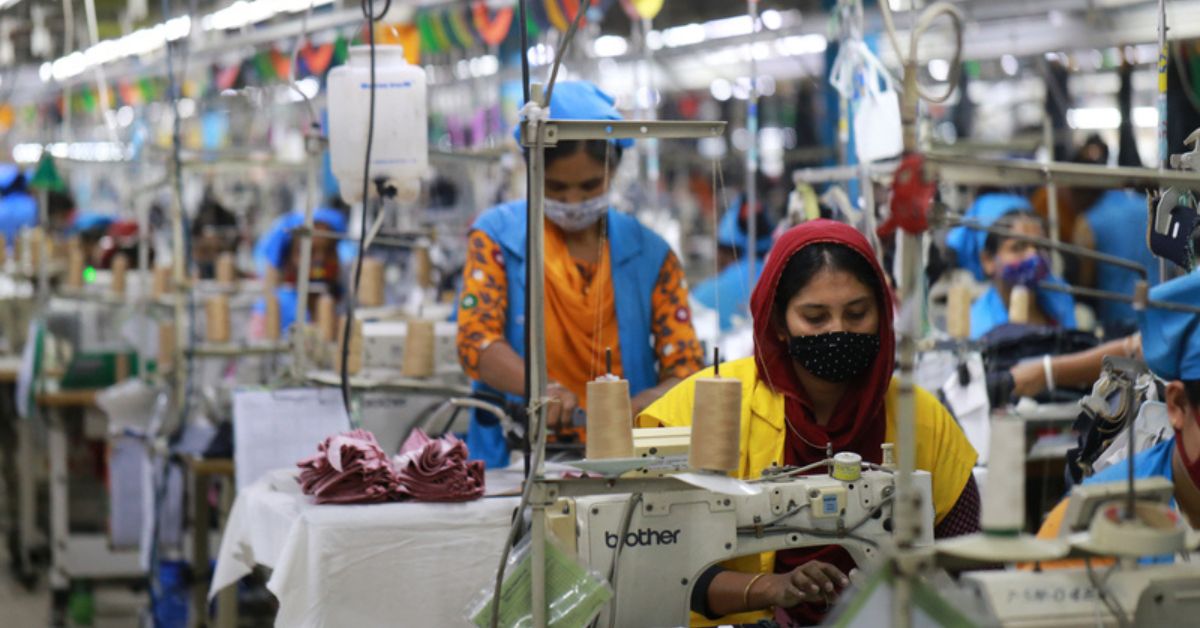

International clothing buyers have urged Bangladesh’s garment manufacturers to resolve continuing labour unrest, warning that factory disruptions are delaying shipments and holding up orders for the next autumn and winter seasons. The concerns were raised at a meeting with the Bangladesh Garment Manufacturers and Exporters Association (BGMEA) in Dhaka on 18 November 2026.
The appeal comes as wage-related protests across Ashulia, Savar and Gazipur enter their third week, creating uncertainty for the country’s ready-made garment (RMG) industry during an important period for securing international orders.
Why are international buyers concerned?
Representatives of European and North American buyers, including H&M and Inditex, attended the meeting at BGMEA’s Uttara office, according to an association director who spoke anonymously.
The director said factory closures and interrupted production had affected shipment schedules. Some buyers were postponing purchasing decisions while awaiting greater stability and clarity on the minimum wage that would apply to upcoming production.
The concerns involve both existing deliveries and future business. Buyers are assessing next season’s orders while suppliers face uncertainty over production continuity and labour costs.
Where do wage negotiations stand?
The government established a minimum wage board on 1 November following protests over rising living costs. Workers’ representatives have proposed a minimum monthly wage of Tk32,000, while the employers’ representative is expected to submit a proposal at the board’s meeting on 23 November.
Separately, the Centre for Policy Dialogue (CPD) presented a living-wage assessment on 18 November, recommending Tk24,204 a month. Its calculation covers food, housing and other essential expenditure, together with modest savings, for a four-member household with 1.58 earners.
The think tank estimated that Tk18,578 was the minimum needed to keep such a household above the upper poverty line. It therefore recommended negotiations within a monthly range of Tk18,578 to Tk24,204.
These figures are recommendations for the wage-setting process, rather than an approved pay structure. They also differ from the proposal submitted by workers’ representatives, highlighting the range of positions being considered.
What responsibilities do buyers face?
Alongside calls to restore production, international industry and labour organisations have urged buyers to support a sustainable wage settlement through their purchasing practices.
In a joint statement published on 19 November, the Fair Labor Association and eight other organisations called for meaningful consultation with workers and a minimum wage consistent with living costs. They said workers should be protected against dismissal, blacklisting, criminal charges or arrest for peacefully exercising legitimate labour rights.
The organisations also acknowledged buyers’ role in enabling suppliers to pay higher wages. They committed to encouraging members to reflect wage increases in existing and future orders, and to avoid cancelling orders, reducing purchases or moving sourcing elsewhere in response to higher pay.
Why does the dispute matter for export supply chains?
The joint statement put Bangladesh’s garment exports at US$38.70 billion in FY2025–26, representing approximately four-fifths of merchandise exports. Its signatories collectively represent more than 2,500 brands, retailers, suppliers and workers, with member companies sourcing from over 2,900 factories in Bangladesh.
The organisations argued that a transparent wage process, serious consideration of workers’ demands and respect for labour standards would strengthen confidence in future sourcing. Their position links the restoration of reliable export supply with the terms on which production resumes.
The American Apparel and Footwear Association has also called for an inclusive wage review, trade union participation, annual revisions and protection against retaliation, adding to international pressure for a negotiated settlement.
 Join our WhatsApp channel for more updates:
 Subscribe to our YouTube channel for more updates: