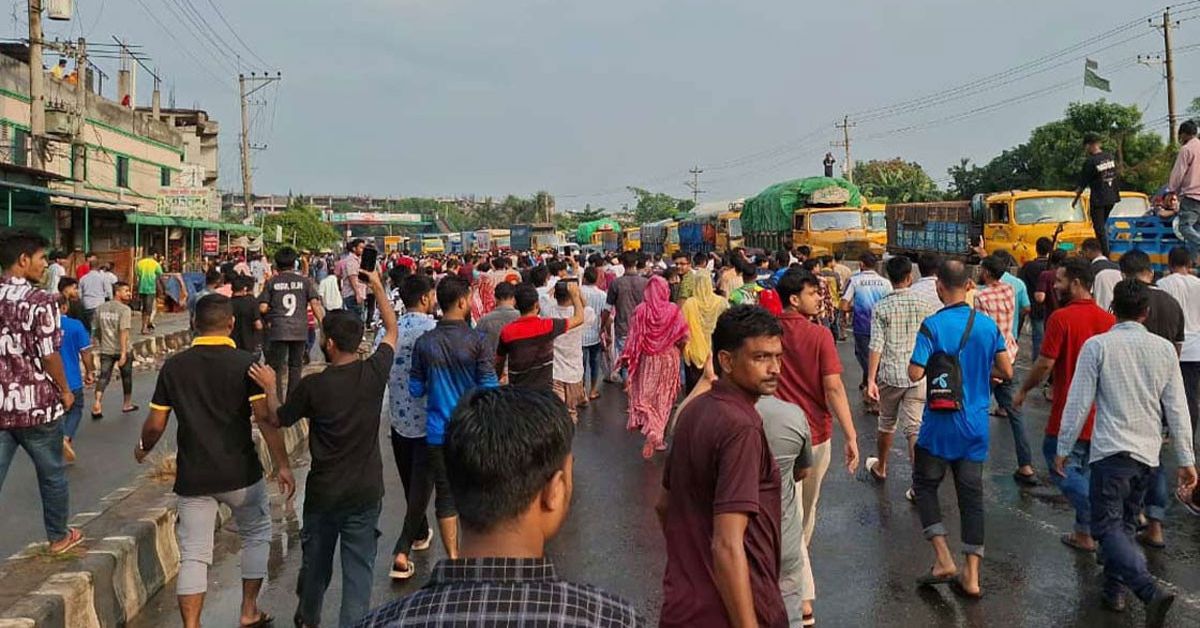

The Bangladesh Garment Manufacturers and Exporters Association (BGMEA) said 65 garment factories had been declared closed indefinitely by 15 November 2026 as protests over minimum pay disrupted production in Savar, Ashulia and Gazipur. About 121 factories were affected that day, including units that temporarily halted work. The disruption came ahead of a Minimum Wage Board meeting on 16 November, when employers were due to submit their pay proposal.
Where did garment production stop?
BGMEA president Mahmud Hasan Khan said the association’s tally rose from 55 on 14 November to 65 the following day. Some owners had begun reopening factories after invoking the closure provision. Industrial police said most factories in Savar, Ashulia and Dhamrai were operating normally, while employers reported fresh stoppages in Gazipur.
Echotex Limited, Fareast Dresses and Apex Fashions were among the Gazipur factories where production was suspended on 15 November. Echotex alone employs about 20,000 workers and staff. In Gazipur’s Kaliakair area, garment workers demanding higher wages blocked the Dhaka–Tangail highway for about 30 minutes before police restored traffic.
What are workers asking the wage board to approve?
Workers’ representative Babul Akhter proposed a minimum monthly wage of 32,000 Bangladeshi taka at the board’s 9 November meeting, up from the current minimum of 12,500 taka, set in 2023. Employers were scheduled to submit their written proposal at the board’s third meeting in Dhaka on 16 November. The board will consider both sides’ proposals before making a recommendation to the government.
Fazlee Shamim Ehsan, executive president of the Bangladesh Knitwear Manufacturers and Exporters Association, said employers wanted the wage review settled within November. Khairul Mamun Mintoo of the Bangladesh Garments and Sweaters Workers Trade Union Centre called for production to resume alongside the wage talks, saying the loss of pay could deepen workers’ grievances.
What do the stoppages mean for export shipments?
Factories that had lost production days were under pressure to meet shipment deadlines. BGMEA vice-president Mijanur Rahman said one buyer had asked him to send some goods by air and defer other shipments until the following year. The association said prolonged stoppages could leave suppliers paying for costlier air freight or facing order cancellations.
The stoppages came after a rise in Bangladesh’s global garment exports in October. BGMEA figures show that combined knitwear and woven garment exports reached US$3.17 billion that month, up 4.90% year on year. In the European Union, apparel shipments from Bangladesh fell 11.91% in value to €13.48 billion in the first nine months of 2026, according to Eurostat data compiled by Bangladesh Apparel Voice.
FAQs
What does Section 13(1) of the Bangladesh Labour Act allow?
It allows employers to close all or part of an establishment in the event of an unlawful strike. Workers who participate in the strike are ineligible for wages during the closure under that provision.
How many factories temporarily halted production?
Of the approximately 121 factories affected on 15 November, 56 declared temporary holidays, according to the BGMEA figures reported that day.
 Join our WhatsApp channel for more updates:
 Subscribe to our YouTube channel for more updates: