
Bharat Petroleum Corporation Limited (BPCL) has secured environmental and Coastal Regulation Zone (CRZ) clearances for its proposed ₹1,03,408-crore refinery and petrochemical complex near Ramayapatnam Port in Andhra Pradesh. The project is planned with a refining capacity of nine million tonnes per annum.
The Union Ministry of Environment, Forest and Climate Change issued the clearance order on 27 October 2026, following appraisal of the proposal. The approvals advance the project’s regulatory process, although other applicable statutory permissions remain necessary before construction and operations.
Where will the refinery be developed?
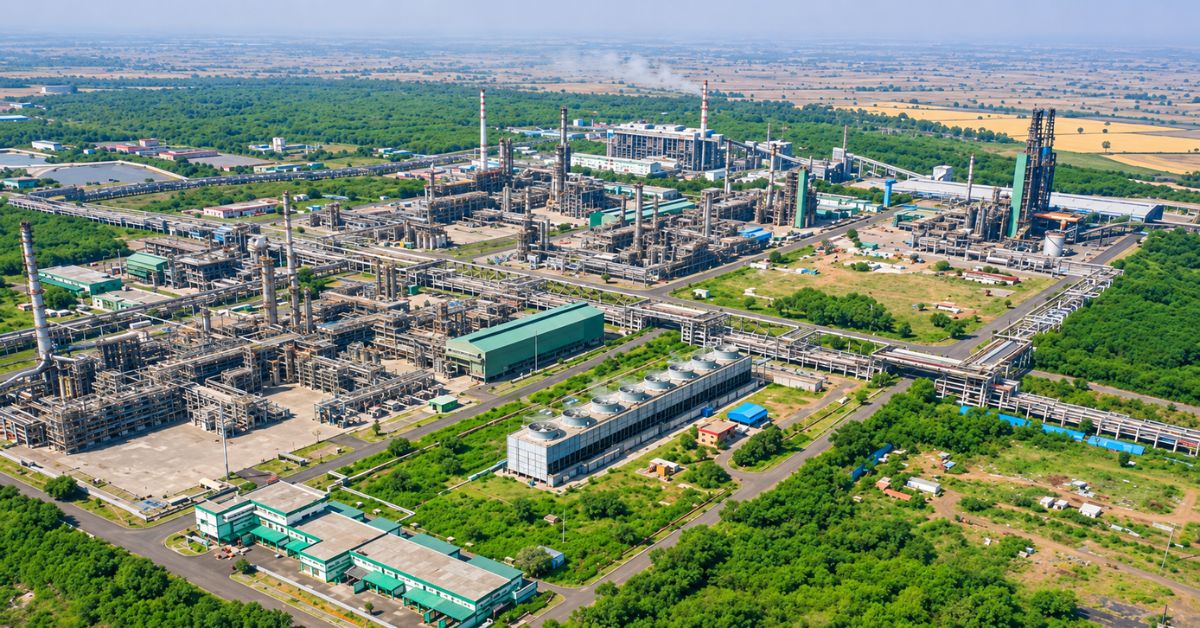
The proposed complex covers 5,213 acres, equivalent to 2,109.62 hectares, across Chevuru and Ravuru villages in Gudlur mandal and Chennayapalem and Rudrakota villages in Kavali mandal. The project land is classified as non-forest land.
BPCL has taken possession of 3,764 acres. The remaining 1,449 acres comprise 1,404 acres of private land and 45 acres of government land, with acquisition assigned to the Andhra Pradesh Industrial Infrastructure Corporation.
Although the reported acquisition schedule specified 31 October 2026, the latest account does not confirm completion of that remaining transfer. The land already secured and the balance acquisition should therefore be treated separately.
What environmental conditions apply?
Approximately 30% of the site, or 1,564 acres, is designated for greenbelt development. The clearance requires planting at least 2,500 trees per hectare, predominantly indigenous species, with a minimum of 20 varieties.
BPCL has earmarked ₹3,033 crore for environmental management capital expenditure and ₹32.50 crore in annual recurring expenditure. A further ₹54 crore is allocated under an extended Environmental Management Plan for development activities in surrounding villages by 2030.
The approval also requires continuous monitoring of emissions and effluents, wastewater treatment and recycling, and compliance with prescribed pollution-control standards. These conditions form part of the project’s obligations as it moves towards implementation. deccanchronicle.com
Has BPCL approved the full investment?
Environmental clearance is a separate milestone from the company’s investment decision.
On 23 October, BPCL’s board approved the incorporation of a wholly owned subsidiary to serve as the dedicated project company for the Ramayapatnam refinery, petrochemical complex and associated facilities. The proposed entity would have initial authorised share capital of up to ₹4,900 crore, subject to requisite approvals.
BPCL said the subsidiary would support due diligence, discussions with lenders and prospective partners, and the development of financing and partnership arrangements.
In that disclosure, the company stated that detailed feasibility reports were being finalised and that the investment decision and financial commitments would be considered separately by the competent authorities. The clearance announcement does not, by itself, establish that those subsequent decisions have been completed.
What partnerships and employment are envisaged?
BPCL signed a non-binding memorandum of understanding with Oil India in October 2025 to explore cooperation on the proposed Ramayapatnam complex. The agreement established a basis for evaluating collaboration, rather than a confirmed equity participation arrangement. oil-india.com
Employment estimates associated with the clearance envisage 400 direct and 13,600 indirect jobs during construction. During operations, the project is expected to support 1,250 direct and 3,750 indirect jobs. These are projected employment figures rather than positions already created.
How does the project fit BPCL’s expansion strategy?
BPCL’s existing refining network comprises facilities at Mumbai, Kochi and Bina. The company has identified the Andhra Pradesh project as an additional greenfield investment alongside expansion of its established refining and petrochemical businesses.
Its published refining strategy places Ramayapatnam within a broader effort to increase processing capacity and develop petrochemical production. The next material milestones are completion of project structuring, the investment decision and implementation arrangements following the environmental and coastal approvals.
 Join our WhatsApp channel for more updates:
 Subscribe to our YouTube channel for more updates: