




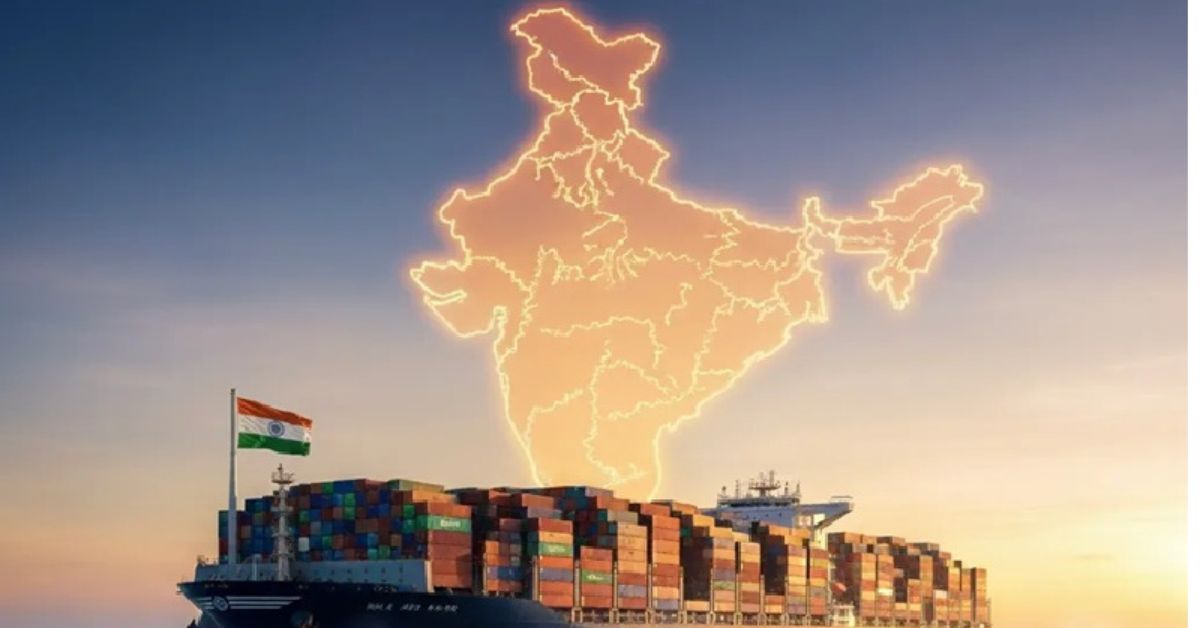

The Union Cabinet, chaired by Prime Minister Narendra Modi, has approved the creation of the Bharat Maritime Insurance Pool — a sovereign-backed domestic marine insurance mechanism carrying a guarantee of ₹12,980 crore — in a landmark policy decision that directly addresses the insurance crisis that has been one of the Hormuz conflict’s most commercially damaging secondary effects for Indian shipping and trade.
The BMI Pool will provide coverage for all categories of maritime risk — hull and machinery damage, cargo losses, protection and indemnity liabilities, and war-related risks — for Indian-flagged vessels, Indian-controlled ships, and all vessels with either an origin or a destination in India. The sovereign guarantee is structured for an initial ten-year period with a five-year extension, providing the long-term commitment needed to build sustainable domestic underwriting capacity. Policies will be issued by insurers that are members of the pool, using the combined underwriting capacity of approximately ₹950 crore — the pool’s operational insurance capacity — backstopped by the ₹12,980 crore sovereign guarantee that provides confidence to both insurers and shipowners.
Why This Is a Structural Shift, Not an Emergency Measure
The BMI Pool announcement, made by Union Minister Ashwini Vaishnaw, explicitly identifies two structural vulnerabilities the mechanism is designed to address beyond the immediate crisis. The first is India’s near-total dependence on the International Group of P&I Clubs — a London-based consortium that provides liability coverage for approximately 90 per cent of the world’s ocean-going tonnage — for third-party liability insurance covering oil pollution, wreck removal, and crew injury claims. When the IG P&I Clubs cancelled or suspended war risk coverage for the Persian Gulf on March 5, Indian-flagged vessels lost their liability backstop overnight.
The second is India’s dependence on GIC Re — its only state-backed reinsurer — for domestic marine reinsurance capacity. GIC Re’s withdrawal from Gulf war risk reinsurance effectively left Indian domestic insurers without the capital to underwrite coverage for Gulf operations, regardless of willingness. The BMI Pool, by providing a sovereign guarantee that supplements the domestic pool’s underwriting capacity, breaks both dependencies simultaneously. The Ministry of Finance statement explicitly cited ‘strengthening self-reliance, sanctions resilience and ensuring greater sovereign control’ as the rationale; a formulation that signals the BMI Pool is conceived as permanent architecture for India’s maritime trade security, not a temporary wartime stopgap.
 Join our WhatsApp channel for more updates:
 Subscribe to our YouTube channel for more updates: