



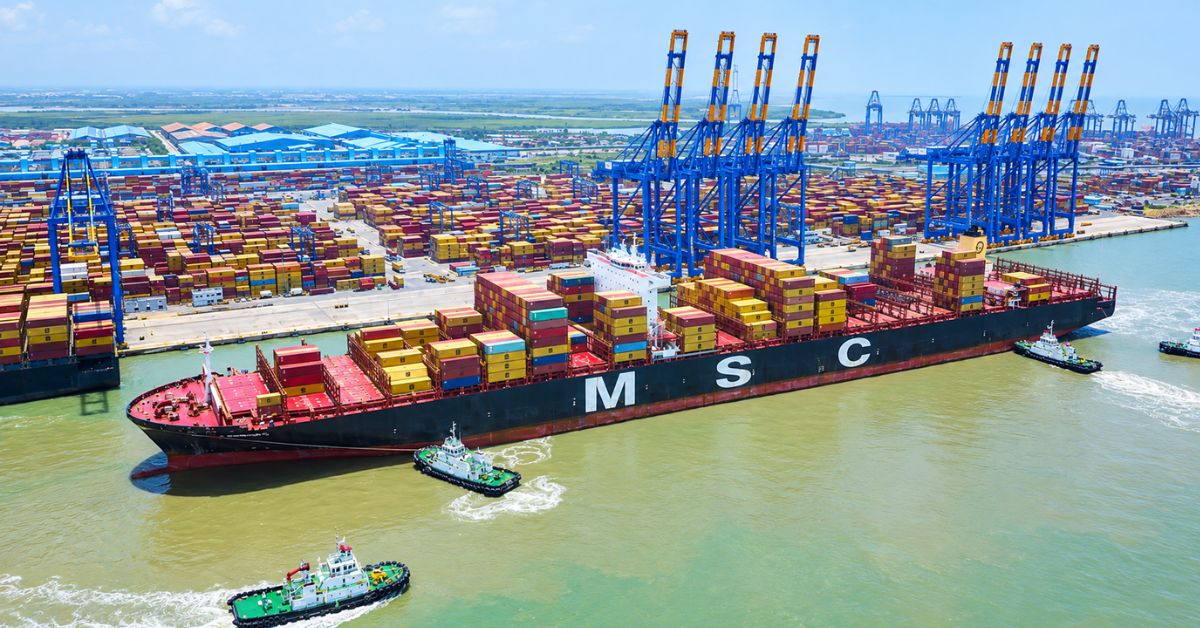

The Ministry of Ports, Shipping and Waterways has officially classified four ports as India’s first “mega ports,” designating Mundra, Deendayal (Kandla), Jawaharlal Nehru (Nhava Sheva) and Paradip under Section 73 of the Indian Ports Act, 2025. The notification, issued on September 25, 2026, by Praveen P Nair, Joint Secretary, Ministry of Ports, Shipping and Waterways, came into effect from the date of its publication in the Gazette of India (Extraordinary).
Mundra Port, operated by Adani Ports and Special Economic Zone, is the fourth and only private-sector-owned asset on the list, alongside three government-run facilities, Deendayal Port, Jawaharlal Nehru Port and Paradip Port, that have long formed the backbone of India’s maritime trade. Mundra has been classified as a port other than a major port, given its status as a privately developed port.
The new performance-based classification is based on strict criteria requiring high annual cargo volumes, rather than ownership structure, marking a shift in how the government plans to focus infrastructure investment and policy support on the country’s most active maritime hubs. The criteria for this categorisation were laid out in a gazette notification issued on July 30, 2026.
The mega port status will be valid for five years, meaning these ports must maintain their high cargo throughput to retain the designation, with the classification subject to periodic review.
Paradip Port’s inclusion is notable as the only mega port on India’s east coast, marking an important milestone in its growth as a key maritime gateway and following a series of record-breaking operational achievements at the port in recent months, including record Capesize vessel berthing and its 18.5-metre deep-draft capability. Jawaharlal Nehru Port Authority remains a primary hub for container traffic, while Paradip serves as a vital gateway for dry bulk cargo. The recognition of Mundra alongside these state-run entities reflects a competitive landscape in which privately managed port infrastructure has reached the scale and efficiency levels of traditional government-controlled assets.
Going forward, industry observers will monitor how this new status influences regulatory interactions, infrastructure planning and future investment decisions across India’s port sector.
 Join our WhatsApp channel for more updates:
 Subscribe to our YouTube channel for more updates: