
Summary
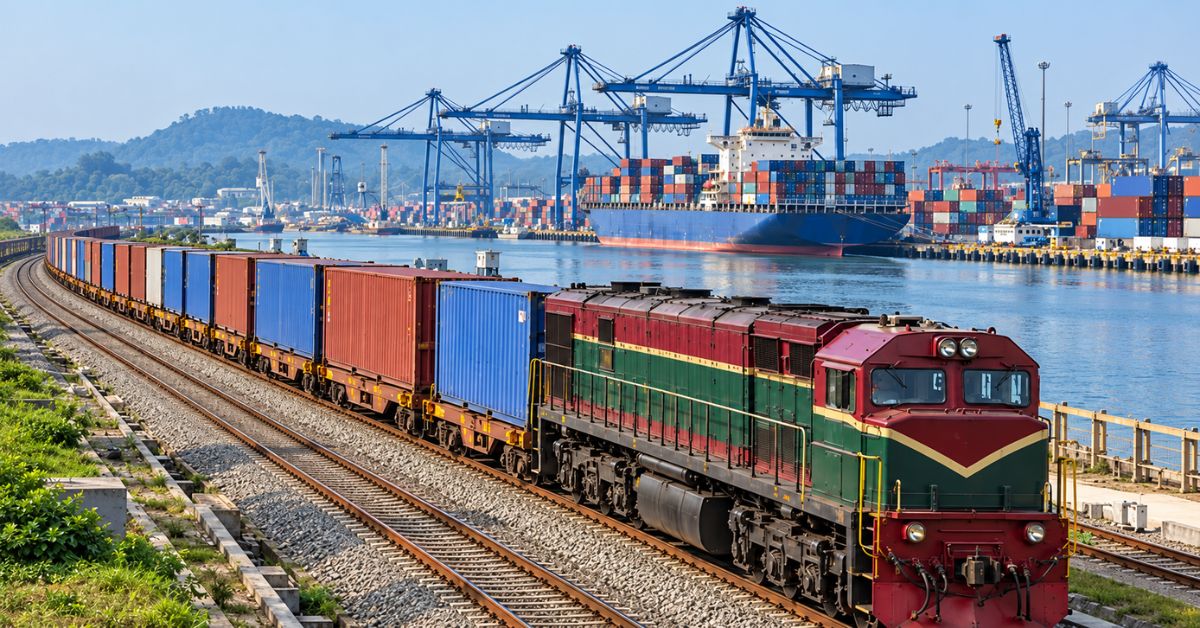
Bangladesh Railway plans to assess rail connectivity across Chattogram Port’s existing and upcoming terminals as part of efforts to reduce road dependence and improve freight movement. The World Bank-funded preparation programme will examine tracks, yards, locomotives and handling facilities, with studies expected to conclude by the end of 2027.
Planning covers existing and future terminals
The Chattogram Port rail links initiative aims to improve connections between Bangladesh’s principal seaport and its inland freight network, addressing uneven railway access across cargo-handling facilities.
Bangladesh Railway will examine terminal connectivity through its Green Railway Transport Project Preparation Facility Project. The Tk930 million, or Tk93 crore, programme covers preparatory studies and designs. The end-2027 milestone relates to completing studies, rather than commissioning rail connections at every terminal.
The work will consider how port access can support the Dhaka–Chattogram freight corridor and accommodate expanding cargo activity.
Existing access requires integration
Chattogram’s operational facilities include the General Cargo Berth, Chittagong Container Terminal, conventional jetty areas, Patenga Container Terminal and New Mooring Container Terminal. Laldia Container Terminal and Bay Terminal are also included in planning for future connectivity.
Access remains uneven, while freight capacity and use of existing connections at the Chittagong Container Terminal and New Mooring Container Terminal are limited.
Older terminal tracks use metre gauge, creating an integration requirement as Bangladesh Railway plans for broader use of broad-gauge freight operations. The assessment must therefore consider how existing infrastructure fits into the future network.
Study extends beyond connecting tracks
Bangladesh Railway’s published consultancy scope identifies improvements between Faujdarhat and Chattogram Goods Port Yard, including changes within the yard itself. It also covers the proposed Bay Terminal connection and freight locomotive requirements.
The preparatory work includes environmental and social documentation and procurement preparation for selected investments. A separate assessment will examine a railway connection between the Mirsharai Economic Zone logistics hub and the Dhaka–Chattogram corridor.
Loading tracks, container-handling equipment, storage, shunting areas and coordinated road–rail operations are also under consideration. These components matter because a physical connection alone does not establish an efficient freight service: containers must move through yards and transfer points without creating additional bottlenecks.
Earlier freight plans provide the background
The current exercise follows earlier efforts to strengthen rail freight between Dhaka and Chattogram.
In 2022, Bangladesh Railway outlined a wider programme involving corridor development, remodelling of Kamalapur station yard, a transport hub at Dhaka airport railway station and the proposed purchase of 20 cargo locomotives.
Those earlier proposals sought to increase freight train frequency, improve railway revenue and reduce pressure on the highway. They provide historical context for the present planning exercise, although they do not establish that every earlier investment has been implemented.
The continuity highlights a central planning challenge: terminal access, corridor capacity and inland handling facilities need to work together. Improving one section may deliver limited benefits if constraints remain elsewhere.
Terminal modernisation increases the stakes
The railway initiative comes alongside changes in terminal investment and management.
On 8 October 2026, Bangladesh signed a 15-year operating concession with DP World for New Mooring Container Terminal. Chattogram Port Authority retains ownership of the terminal, land and infrastructure.
The agreement includes an investment commitment exceeding Tk1,000 crore over the first decade for equipment, technology and modernisation. The terminal handles approximately 44% of Chattogram’s container traffic, making its inland connectivity commercially significant.
Operationally, improved quayside productivity creates greater value when cargo can also leave the port reliably. Rail planning consequently complements terminal modernisation by examining the inland movement of containers after discharge and before loading.
Reliability will determine commercial uptake
For exporters, importers and freight forwarders, the potential attraction is a more dependable alternative for moving cargo between the port and inland destinations.
Actual uptake will depend on service frequency, transit time, handling arrangements and total transport cost. A rail option must fit production schedules and vessel cut-offs to become a practical choice for shippers.
The immediate task is to establish feasible investments and operating requirements. The studies should provide the basis for subsequent decisions on financing, procurement and implementation, while clarifying how individual terminal connections can function as an integrated freight network.
FAQs
What is Bangladesh Railway planning?
It plans to assess improved rail access for Chattogram Port’s existing and upcoming terminals.
When are the studies expected to finish?
By the end of 2027. This is a study completion target, rather than a deadline for opening all connections.
What does the preparation programme cover?
It examines rail links, yard improvements, locomotives, handling facilities and connections with the inland freight corridor.
Why does track gauge matter?
Existing metre-gauge terminal tracks need to be considered alongside plans for future broad-gauge freight operations.
How could businesses benefit?
Effective rail services could provide another cargo transport option and ease road dependence. Benefits will depend on cost, reliability and service availability.
 Join our WhatsApp channel for more updates:
 Subscribe to our YouTube channel for more updates: