
Summary
TCI Seaways is exploring a dedicated shipping service between Chennai and Thailand’s Ranong port, with discussions focused on bilateral trade and regional logistics. The proposal builds on longstanding port cooperation under BIMSTEC, but a launch date, vessel deployment, sailing frequency and commercial terms have not been announced.
TCI Seaways discusses proposed route
The Chennai–Ranong shipping service proposal has been discussed between TCI Seaways and Chennai Port Authority as part of efforts to strengthen maritime connectivity between India and Thailand.
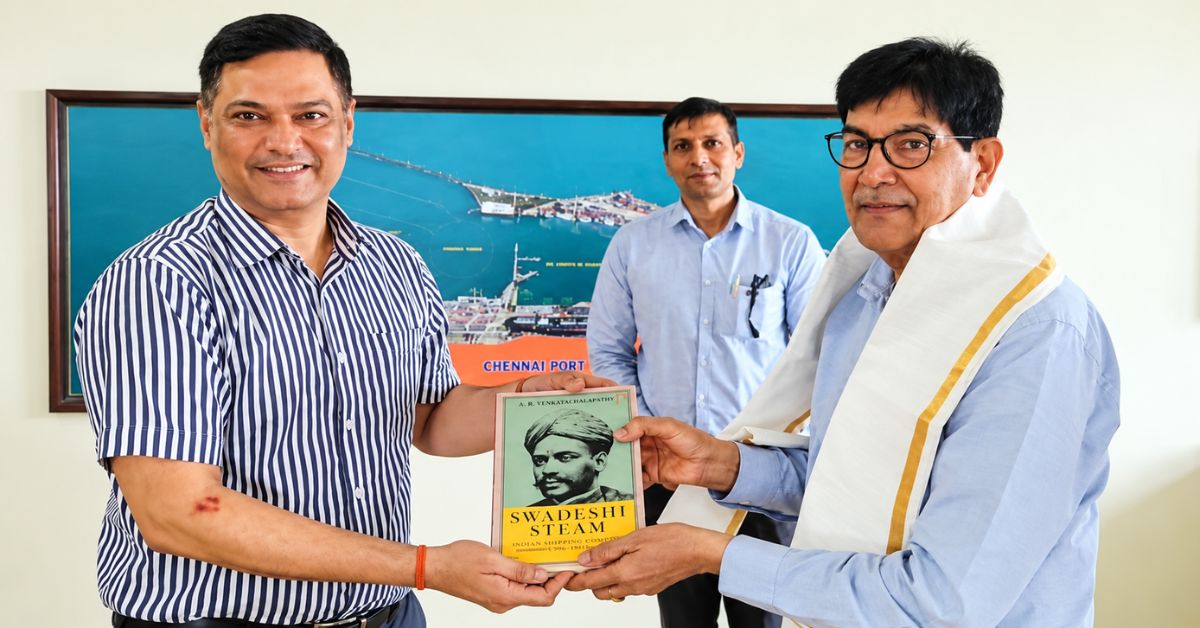
A delegation led by R. U. Singh, President and Chief Executive Officer of TCI Seaways, met Chennai Port Authority Chairman Sachin S. Kurve to examine the opportunity.
The engagement, reported on 24 October 2026, covered shipping connectivity, trade facilitation and maritime logistics supporting regional commerce. TCI Seaways is a division of Transport Corporation of India.
The service remains under consideration. The available announcement does not specify a vessel, cargo capacity, port rotation, freight rate or commencement date. Consequently, the discussions represent an exploratory commercial step rather than confirmation of an operating route.
Commercial case depends on dependable cargo
If developed, a dedicated connection would offer shippers another option for moving cargo between India’s east coast and Thailand’s western seaboard.
For exporters and importers, its usefulness would depend on sailing reliability, inland connections and the total cost of moving goods between origin and destination. Port-to-port transit time would be only one element of that assessment.
A commercially sustainable operation would also require sufficient cargo in both directions. Equipment availability, container repositioning and coordination with freight forwarders would influence operating costs and service consistency.
These considerations will determine whether the proposed connection can move beyond discussions. No cargo commitments or projected annual throughput were disclosed in the announcement.
Port cooperation dates back to 2019
The latest engagement has an established institutional background.
In November 2019, Ranong Port, under the Port Authority of Thailand, signed memorandums of understanding with the Indian ports of Chennai, Visakhapatnam and Kolkata during the first BIMSTEC Ports’ Conclave.
The agreements sought to improve connectivity between Thailand’s west coast and India’s east coast, supporting economic cooperation under India’s Act East Policy.
Chennai Port’s annual report records its sister-port agreement with Ranong as having been signed on 7 November 2019 at Visakhapatnam.
Those arrangements established a framework for cooperation. The present TCI Seaways discussions concern the separate commercial task of developing a dedicated shipping product around a specific port pair.
BIMSTEC provides broader policy support
The proposal also sits within BIMSTEC’s wider transport-connectivity agenda.
The grouping adopted its Master Plan for Transport Connectivity at the Colombo summit in March 2022. The plan covers roads, railways, ports, maritime transport, inland waterways, aviation, multimodal transport and trade facilitation.
An Agreement on Maritime Transport Cooperation was subsequently signed in Bangkok in April 2025, providing a further framework for improving regional maritime services and economic integration.
These measures support cooperation between governments and transport institutions. They do not, by themselves, establish individual liner services or guarantee the commercial viability of a route.
For the Chennai–Ranong proposal, policy alignment therefore provides an enabling context, while deployment decisions remain dependent on operational and market assessments.
Operator brings multimodal experience
TCI Seaways began as an independent sea-cargo division in February 1995 and operates within the group’s wider multimodal logistics network.
Its activities include coastal shipping, container movements and first- and last-mile connectivity through road and rail. The business also offers liner, charter, agency, stevedoring and project-handling services.
That combination is relevant to a proposed international connection because customers require transport arrangements beyond the sea passage itself. Factory collection, terminal handling, documentation and delivery at the receiving end all affect the overall service proposition.
However, the company’s existing capabilities should be distinguished from arrangements specifically committed to the proposed Thailand route.
Next stage requires defined operating terms
For Chennai Port, the proposal offers an opportunity to deepen an existing relationship with Ranong through commercial shipping activity.
For TCI Seaways, further development would require a defined operating model supported by cargo demand and workable port arrangements.
The next meaningful milestones would be confirmation of vessel capacity, frequency, transit schedule, booking arrangements and a start date. Until those details emerge, businesses should treat the route as a prospective option when reviewing their India–Thailand logistics plans.
FAQs
Who is exploring the service?
TCI Seaways, a division of Transport Corporation of India, has discussed the proposal with Chennai Port Authority.
Has the service been launched?
No launch has been announced. The proposal remains exploratory.
Which ports would it connect?
Chennai in India and Ranong in Thailand.
Is there an existing cooperation framework?
Yes. Chennai and Ranong signed a sister-port agreement in November 2019.
Have sailing frequency or freight rates been disclosed?
The available announcement does not provide those details.
 Join our WhatsApp channel for more updates:
 Subscribe to our YouTube channel for more updates: