




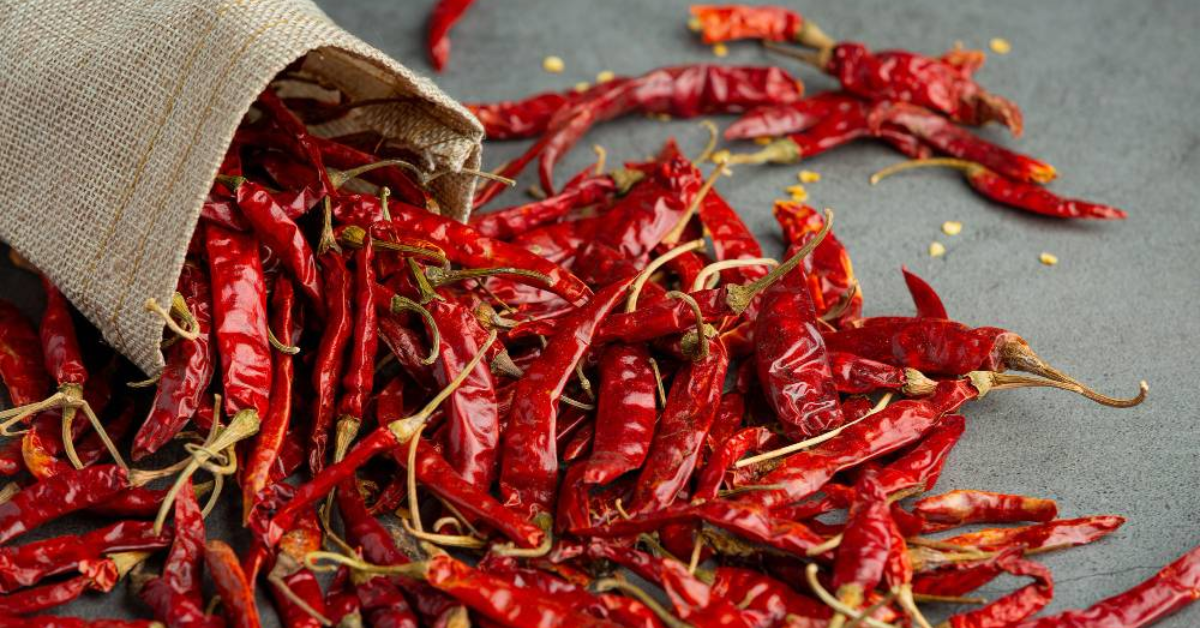

Chilli exporters have urged the Spices Board and the Andhra Pradesh government to step in after a series of rejections and intensified scrutiny of Indian chilli consignments by China. The concern centres on pesticide residue issues that are increasingly affecting export confidence and shipment clearance for one of India’s key spice commodities.
Exporters say the problem is no longer limited to a few shipments, but reflects a wider compliance challenge across major chilli-growing states such as Andhra Pradesh, Telangana and Karnataka. They have warned that repeated residue violations could hurt India’s reputation in global markets, especially as buyers tighten food safety checks.
The immediate trigger was the rejection of three chilli consignments involving five containers by Chinese authorities, reportedly due to excessive pesticide residues. While exports to China continue, the incident has raised fresh alarm among traders and processors who depend on the market for high-volume chilli sales.
The exporters’ association has asked the state government to ban or restrict the use of high-risk pesticides such as acephate and metamidophos in export-oriented chilli cultivation. It has also called for a residue-compliant cultivation programme with the Spices Board, agricultural universities, Krishi Vigyan Kendras and plant protection authorities.
Industry stakeholders are also seeking village-level awareness campaigns, stronger pre-harvest testing and better traceability systems in chilli-growing belts. Their view is that unless farmers receive clearer guidance on pesticide use, dosage limits and safe harvesting practices, export rejections could continue and weaken India’s position in the global chilli trade.
 Join our WhatsApp channel for more updates:
 Subscribe to our YouTube channel for more updates: