



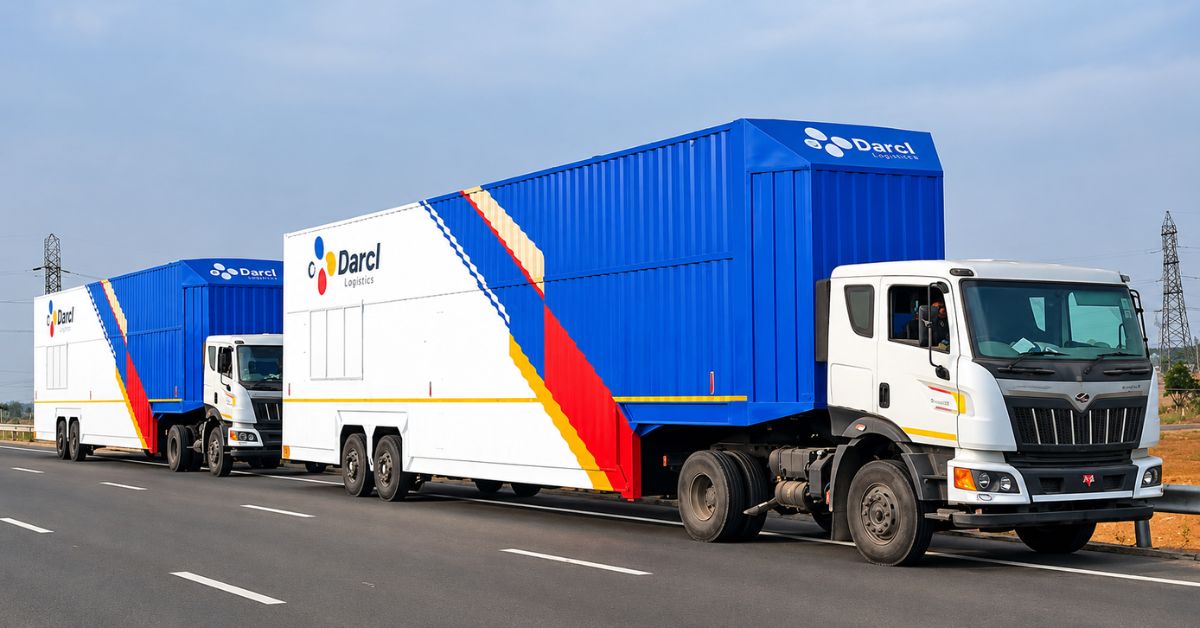

IPO-bound CJ Darcl Logistics expects its revenue growth momentum to continue, after growing at around 10% compound annual growth rate (CAGR) over the past few years, Nikhil Agarwal, President of CJ Darcl Logistics, said.
The logistics firm, backed by South Korea’s CJ Logistics Corporation, reported consolidated revenue of Rs 5,680.19 crore in FY26, up 10% year-on-year. The company’s EBITDA for the year was Rs 273.24 crore, up marginally by 1.88% YoY. Its net profit for FY26, however, declined by 6.87% YoY to Rs 86.72 crore, according to the company’s annual report for the fiscal year.
Agarwal attributed the expected continuation in momentum to India’s manufacturing growth, exports and industrial demand, along with government initiatives aimed at promoting industrial activity. CJ Logistics is supporting the Indian business across various areas as it builds out its next growth phase.
The company is building three main pillars to sustain this performance: a technology-enabled marketplace for truckers, electric transport solutions, and rapid expansion of its warehousing division. The trucker marketplace platform aims to connect roughly 10 lakh truckers, helping them manage administrative tasks and reduce idle time, digitising a historically fragmented segment of the logistics chain.
Warehousing has become a high-growth area for the firm, expanding at 70-80% annually. With 2.78 million square feet of space currently in operation, the company is now focusing on the e-commerce and quick-commerce sectors, which require faster and more frequent deliveries. CJ Darcl is also scouting for inorganic growth opportunities, particularly in newer verticals such as warehousing, with Agarwal noting that an acquisition could bring additional customers or a larger logistics footprint and create opportunities to add road and multimodal freight services.
On the challenges side, higher crude prices have pushed up diesel prices, affecting logistics costs and freight rates. For CJ Darcl’s contract logistics business, diesel costs are generally passed through to customers. However, higher shipping and freight rates can eventually affect industrial demand, Agarwal said. On freight rates, he said the impact of higher diesel prices was already visible, particularly in long-haul segments, though rising commercial vehicle sales could add supply and potentially lead to some correction in freight rates, an effect that typically takes one or two quarters to materialise.
The company is also experimenting with electric vehicles on specific high-traffic routes to improve sustainability, though the higher upfront cost of these vehicles compared to traditional diesel trucks remains a consideration in scaling the fleet further.
 Join our WhatsApp channel for more updates:
 Subscribe to our YouTube channel for more updates: