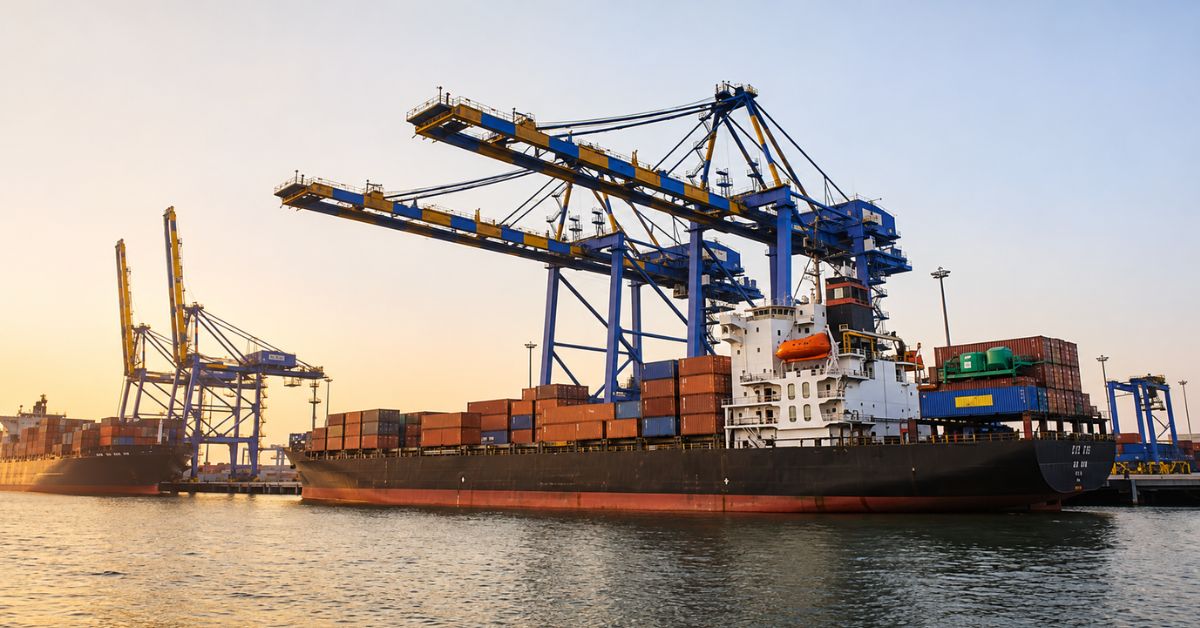

Shipping and logistics businesses have sought intervention from the Central and Kerala governments over mandatory container scanning at Cochin Port, following disruption to cargo movement at the International Container Transshipment Terminal (ICTT) in Vallarpadam. Trailer crews have reportedly boycotted the scanning facility since 9 November 2026, citing concerns about repeated passage through the equipment.
The dispute over the reported 100 per cent scanning requirement has affected terminal gate movements and raised concerns among exporters, importers and transport operators about cargo delays and additional charges.
Why are trailer crews opposing the scanning arrangement?
Workers have questioned the safety arrangements for drivers making multiple trips through the drive-through scanner each day. Union representatives said some drivers pass through the facility six or seven times daily and have sought measures addressing their concerns.
These are worker allegations. The available reports do not establish a medical link between the scanner and reported health complaints, or provide an independent assessment of current operating conditions.
The distinction matters because drive-through scanning is designed to allow drivers to remain inside their vehicles. The Customs Directorate of Logistics states that such systems incorporate safeguards intended to prevent direct or unacceptable radiation exposure. This general description does not constitute an assessment of the present dispute at Vallarpadam.
What changes has the trade proposed?
The Cochin Chamber of Commerce and Industry has called for Customs intervention to restore cargo movement. Chamber President Bipu Punnuran and Secretary Prakash Iyer have proposed selective or risk-based scanning while adequate infrastructure is established.
They have also suggested examining whether designated Container Freight Stations (CFSs) and Inland Container Depots (ICDs) could accommodate scanning or examination to ease pressure at the terminal.
These remain industry proposals. The reports reviewed do not confirm their acceptance by Customs or announce a settlement with trailer crews.
How is the dispute affecting cargo movement?
Reports describe queues along National Highway 966A, commonly known as Container Road, which connects Kalamassery with Vallarpadam. Import containers have reportedly been held up, with businesses facing potential detention, demurrage and other delay-related costs. No independently verified estimate of the financial impact was available.
Trade representatives are seeking an arrangement that maintains cargo-security checks while addressing workers’ concerns and restoring predictable clearance. Their appeal focuses on the implementation of universal scanning and the operational disruption surrounding it.
What procedures existed before the current dispute?
Container scanning itself is not new to Vallarpadam. Cochin Customs records show that its drive-through facility began operating on 15 October 2018. An awareness programme later that month brought together Customs officials, radiation specialists and industry representatives.
A 2019 Customs public notice set out procedures for containers selected for scanning. It provided for images to be classified as clean or suspicious, priority handling of refrigerated and direct-port-delivery containers, and decisions by designated officers when scanning could not be completed.
Those historical provisions explain the earlier operating framework, but do not establish what exemptions apply under the current requirement.
Why does a resolution matter for regional trade?
Vallarpadam handles a substantial volume of containerised cargo. Operator DP World reported throughput of 834,665 twenty-foot equivalent units (TEUs) in FY2024–25, approximately 11 per cent higher than the preceding year. This included 169,562 TEUs of transshipment cargo, with 640 vessel calls recorded during the year.
Against that operating scale, the immediate issue is restoring reliable landside movement while resolving the disagreement over scanning procedures and driver safety arrangements.
 Join our WhatsApp channel for more updates:
 Subscribe to our YouTube channel for more updates: