



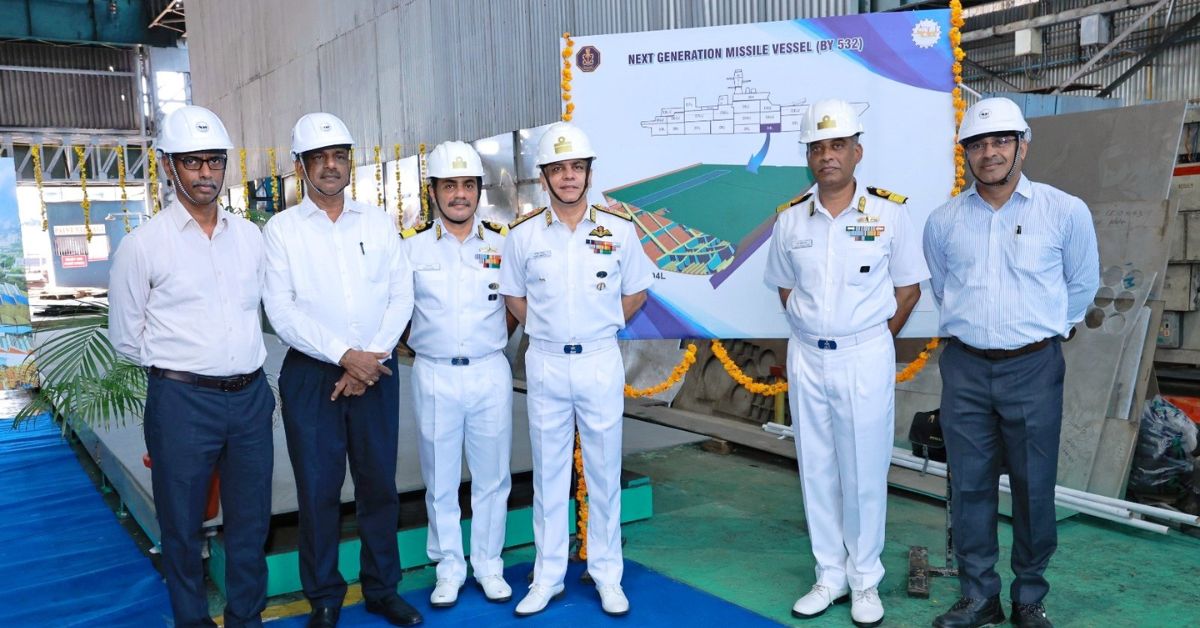

Cochin Shipyard Limited (CSL) has achieved two major construction milestones in the Indian Navy’s Next Generation Missile Vessel (NGMV) programme, laying the keel for the first vessel while commencing steel cutting for the second ship at its Kochi yard.
The keel for the first vessel, BY 531, was laid on 18 September 2026 by Vice Admiral Sanjay Sadhu, Controller of Warship Production and Acquisition at Integrated Headquarters, Indian Navy. A day earlier, on 17 September, steel cutting was undertaken for the second NGMV in the presence of Rear Admiral Kapil Mehta, Assistant Controller of Warship Production and Acquisition.
The milestones mark steady progress on the six-vessel programme being executed by CSL under a contract signed with the Ministry of Defence in March 2023.
What is the Next Generation Missile Vessel programme?
The Ministry of Defence awarded CSL a contract valued at approximately ₹9,805 crore for six Next Generation Missile Vessels as part of the Indian Navy’s fleet modernisation programme.
Delivery of the vessels is scheduled to commence from March 2027. The programme represents CSL’s entry into the construction of heavily armed, high-speed surface combatants for the Navy, expanding the shipyard’s defence portfolio beyond aircraft carriers and anti-submarine warfare vessels.
Steel cutting for the first vessel was carried out in December 2024, marking the start of physical construction of BY 531. The latest keel-laying ceremony represents the next major stage in the vessel’s assembly process.
What capabilities will the new missile vessels have?
The NGMVs are being designed as high-speed warships with a strong offensive capability. They will be equipped with surface-to-surface missile systems, anti-missile defence systems, air-surveillance radars and fire-control radars.
The vessels are intended for maritime strike and anti-surface warfare operations and will also provide the Navy with sea-denial capability, particularly around strategically important maritime choke points.
In defensive operations, the ships are expected to support local naval defence and the protection of offshore development areas.
Each vessel will have a complement of around 80 personnel and a maximum speed of approximately 33 knots. They will also incorporate integrated platform-management systems, propulsion and auxiliary machinery, power-generation and distribution systems and damage-control equipment.
How significant is the programme for indigenous shipbuilding?
A substantial share of the role-defining equipment for the NGMVs is being designed and manufactured domestically, according to the Ministry of Defence.
The programme forms part of India’s wider effort to increase indigenous content in complex naval platforms and expand the country’s domestic defence-manufacturing ecosystem. The Ministry has said the construction of the six NGMVs is expected to generate around 45 lakh man-days of employment over nine years, while creating opportunities for Indian shipbuilding suppliers and Micro, Small and Medium Enterprises.
The programme also adds to CSL’s growing naval order book. The Kochi-based public-sector shipyard constructed INS Vikrant, India’s first indigenously built aircraft carrier, and is also building Anti-Submarine Warfare Shallow Water Craft for the Indian Navy. The third vessel in that series, Mangrol, was delivered in August 2026.
Construction of second NGMV gets underway
The steel-cutting ceremony for the second vessel marks the beginning of hull construction for the next ship in the series.
According to the Ministry of Defence, major systems planned for the vessels have been developed and manufactured in India, aligning the programme with the government’s objectives of increasing indigenous defence production and strengthening domestic naval shipbuilding capabilities.
With the first vessel progressing through keel assembly and work now commencing on the second ship, CSL is moving into parallel construction of multiple NGMVs as it works towards the Navy’s planned induction schedule.
The six-vessel programme will add a new class of fast, heavily armed surface combatants to the Indian Navy while further building domestic capability in the design, construction and integration of complex naval platforms.
 Join our WhatsApp channel for more updates:
 Subscribe to our YouTube channel for more updates: