



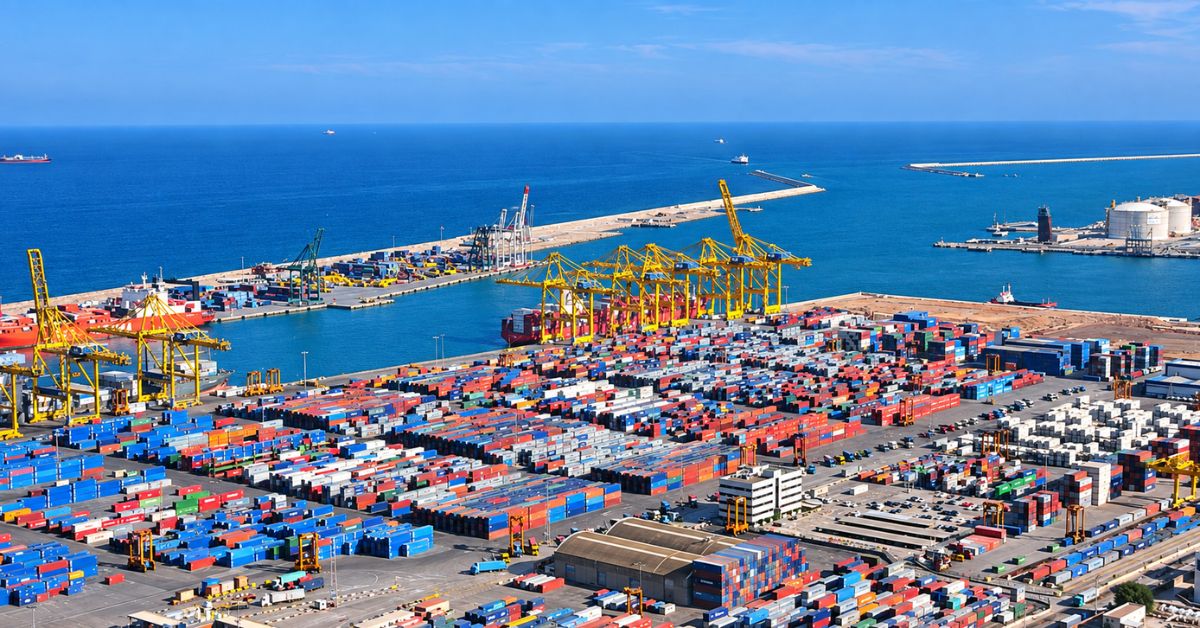

Transshipment volumes at the Port of Colombo rose 7.8% year-on-year to 638,843 TEUs (twenty-foot equivalent units) in August 2026, increasing their share of total container throughput to 82.3%, from 79.9% a year earlier, according to Sri Lanka Ports Authority (SLPA) data.
Overall container handling at the port grew 4.7% to 776,300 TEUs during the month, indicating that transshipment cargo is contributing an increasing share of Colombo’s container growth compared with gateway traffic.
Why is transshipment outpacing overall growth at Colombo?
The widening gap between transshipment and total throughput growth reflects Colombo’s established position as a major hub port for the Indian subcontinent. The port serves as a transfer point for cargo bound for India, Bangladesh, Pakistan and the Maldives, where some ports have limitations in deep-draught berths or direct connectivity for the largest container vessels.
As shipping lines continue to deploy larger vessels on major east-west trade routes, hub ports such as Colombo, located close to key Indian Ocean shipping lanes, have taken on a growing role in feeder distribution to regional markets.
What risk does adverse weather pose to port operations?
The increase in transshipment volumes comes as adverse weather conditions threaten to add to congestion at the port. Strong winds, heavy swells and reduced visibility can delay vessel berthing, increase turnaround times and disrupt yard operations, adding pressure to a port already handling elevated cargo volumes.
For a hub port operating at Colombo’s scale, even short weather-related delays can affect wider vessel schedules because feeder and mainline services are closely interconnected across regional shipping networks.
How does this fit into Colombo’s broader growth trajectory?
Colombo has expanded its container-handling capacity in recent years through the development of new deep-water terminals designed to accommodate ultra-large container vessels. The expansion forms part of a broader strategy to strengthen the port’s role as a major transshipment hub in the Indian Ocean.
The increasing share of transshipment cargo in overall container volumes reflects both expanded capacity and continued regional demand for consolidated cargo movement through a centrally located hub, even as global shipping markets face route disruptions and elevated freight costs linked to instability in other regions.
What does this mean for regional shipping and trade?
The SLPA figures indicate that transshipment, Colombo’s core function, is strengthening even as overall container volume growth remains more moderate. The trend highlights the port’s structural role within regional shipping networks rather than being solely a reflection of short-term demand fluctuations.
Continued growth in transshipment volumes could increase pressure on congestion management, requiring port authorities to focus on berth capacity, weather-resilience planning and operational coordination to maintain service reliability as cargo volumes increase.
 Join our WhatsApp channel for more updates:
 Subscribe to our YouTube channel for more updates: