




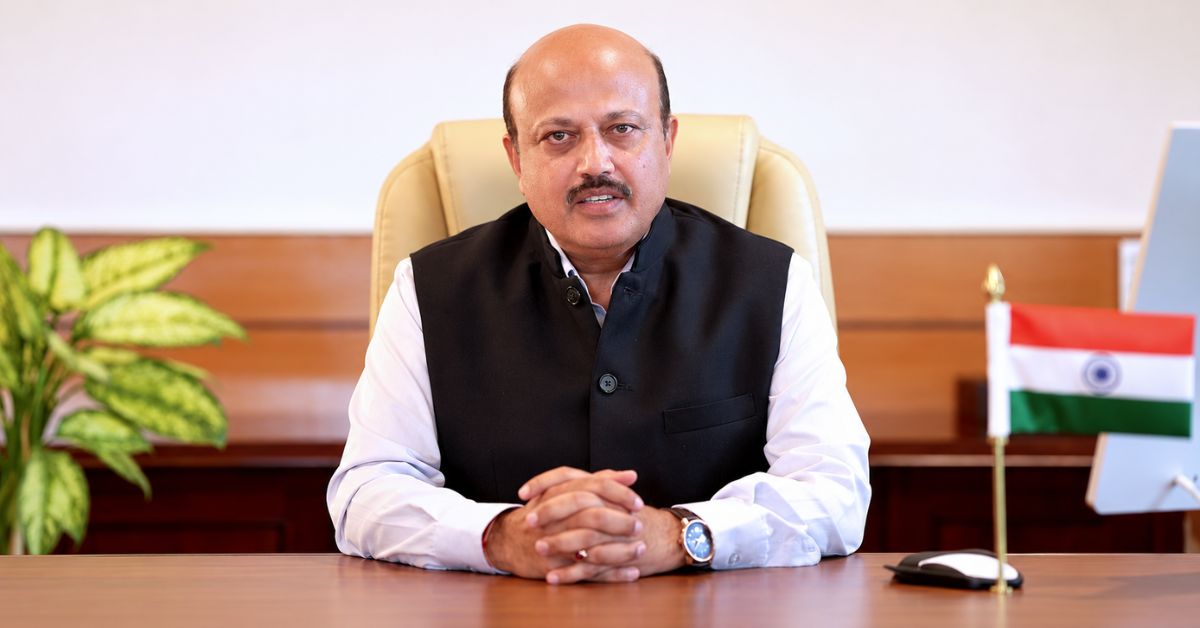

Commerce Secretary Rajesh Agrawal has called on Indian exporters, industry associations, Export Promotion Councils and state governments to make greater use of market access and investment opportunities available under the India-European Free Trade Association (EFTA) Trade and Economic Partnership Agreement (TEPA).
Agrawal made the remarks while delivering the keynote address at an outreach event for major exporters in New Delhi. The event, organised by the Department of Commerce, was held as part of the 2nd India-EFTA Prosperity Summit 2026 and brought together exporters, industry representatives and business representatives from the EFTA countries.
India-EFTA TEPA Market Access
The TEPA entered into force on October 1, 2025. Leaders from Iceland, Liechtenstein, Norway and Switzerland are in New Delhi to mark the first year of the agreement and discuss its implementation and future direction.
Agrawal said the agreement has opened markets on both sides. EFTA’s commitments cover 92.2% of its tariff lines, representing 99.6% of India’s exports, with full coverage of non-agricultural products. India’s commitments cover 82.7% of tariff lines, accounting for 95.3% of EFTA exports.
According to the Commerce Secretary, the agreement’s significance extends beyond tariff reductions, with greater predictability expected to support investment decisions, supply-chain development and long-term business planning.
He urged Indian companies to build partnerships with businesses in EFTA countries and develop integrated value chains covering inputs through to finished products.
Export Opportunities in EFTA Markets
Agrawal highlighted the potential for Indian exporters in high-income EFTA markets, particularly for products where tariffs have been reduced to zero.
“If you are able to create quality products in this market, then you are ready for any other market,” he said.
He also pointed to agriculture as an area with significant export potential, encouraging exporters to identify products benefiting from lower duties and establish long-term supply arrangements in EFTA markets.
The four EFTA countries collectively import goods and services worth more than half a trillion US dollars annually, presenting a sizeable market for Indian exporters.
Five-Year Market Action Plans
Agrawal called on Export Promotion Councils, industry associations and state governments to communicate the opportunities under TEPA to businesses across India.
He asked stakeholders to develop five-year action plans for individual EFTA markets, covering India’s growth objectives as well as non-tariff barriers and other issues that need to be addressed.
“The idea is not that businesses in EFTA countries only see India as an extension of their market. The idea is also that businesses in India should see the market of EFTA countries as an extension of their market,” he said.
TEPA Investment and Employment Commitments
Investment is another key component of the agreement. Under Article 7.1 of TEPA, the EFTA States have committed to pursuing increased foreign direct investment into India.
The agreement states that “the EFTA States shall aim to increase foreign direct investment from investors of the EFTA States into India by 50 billion (US dollars) within 10 years from the entry into force of this Agreement and an additional 50 billion (US dollars) in the succeeding 5 years”, and “shall aim to facilitate the generation of 1 million jobs within 15 years in India”.
Agrawal said India’s expanding market provides investment opportunities across sectors and that stronger business partnerships between India and EFTA countries could support investment beyond the levels outlined in the agreement.
 Join our WhatsApp channel for more updates:
 Subscribe to our YouTube channel for more updates: