



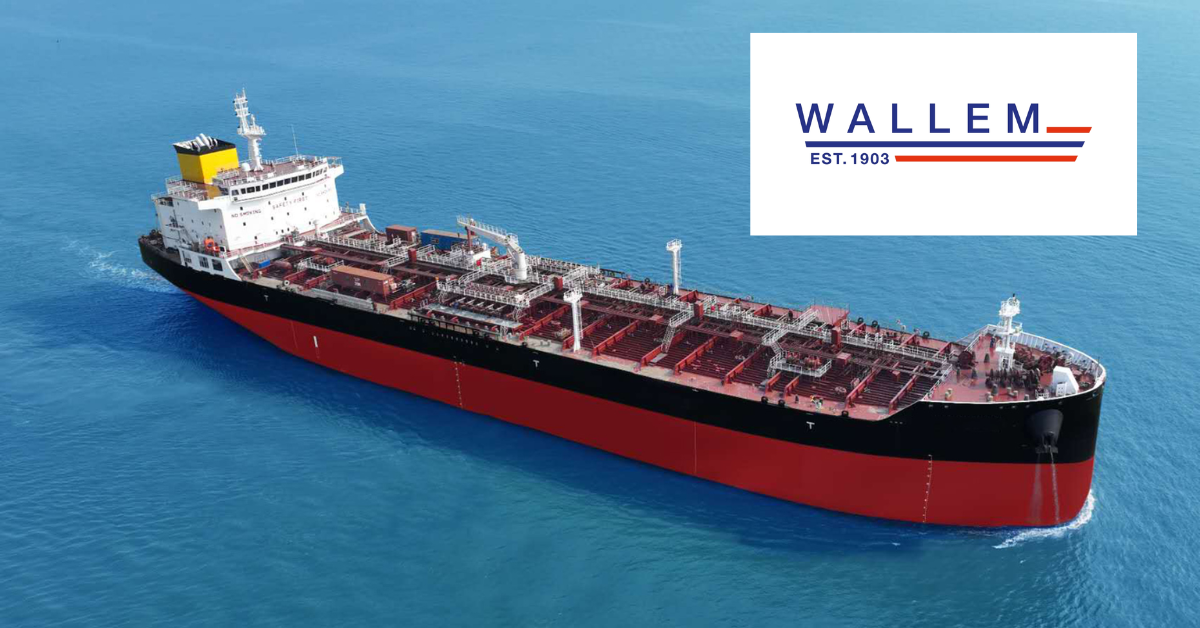

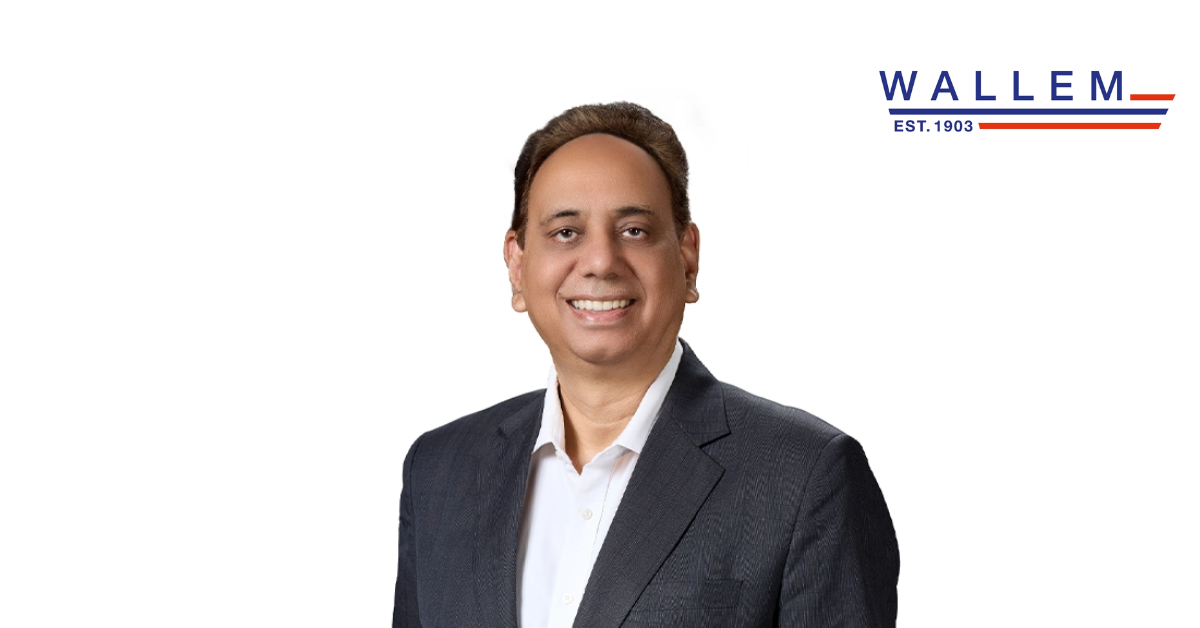
Few people in shipping carry the kind of institutional memory that Anurag Mathur does. Nearly five decades in the industry have taken him through every cycle the market has thrown at seafarers and shipowners alike, from the downturns of the 1980s to COVID and the current geopolitical turbulence reshaping trade routes in real time. As Managing Director, Commercial Services at Wallem Group, Mathur oversees a commercial management portfolio that spans Suezmax tankers to car carriers, VLGCs to handy-sized bulkers. In this conversation with Maritime Gateway at Singapore Maritime Week 2026, he reflects on how the role of the commercial ship manager has been transformed, why Chinese industrial giants are entering ship ownership, and what a 123-year-old institution brings to a market that changes by the hour.
You have been in shipping for nearly five decades. What has changed most fundamentally about the role of a commercial ship manager?
When I started, the role was relatively straightforward. You found employment for a ship, secured a reasonable rate, and managed the fixture. The relationship between the owner and the commercial manager was largely transactional. Today, that model is almost unrecognisable.
Ship owners — especially smaller ones — are now looking for a total service. That means market intelligence, relationship leverage to deliver the best returns on their investment, compliance oversight, and on top of all that, day-to-day positioning decisions in an environment where the market can move on a single tweet. Where should this vessel be deployed three months from now to maximise earnings? What is the likely trade pattern in that geography? Which charterers are taking positions and which are stepping back? These are the questions commercial managers must answer today, and answering them well requires infrastructure, manpower, and accumulated market experience that many smaller owners simply do not have in-house.
That is where a boutique operator like Wallem Commercial can genuinely add value. We are not a large specialised pool focused on one or two vessel types. Our portfolio spans Suezmax tankers to chemical tankers, handy-sized bulkers to post-Panamax bulk carriers, car carriers, LPG vessels — VLGCs and MGCs. The diversity itself is a strength because we bring cross-sector intelligence to every owner relationship.
Wallem Commercial is now in its third year under your leadership. What makes its model distinct within the wider Wallem Group?
It is fairly unique in the ship management industry that a technical management company of Wallem’s scale also has a fully integrated commercial desk. Most ship management companies of our size do not have that. It has come from the nature of our shareholders — they are ship owners themselves, and one of them has a distressed asset management business. That context shapes how we think. We are not just managing ships. We are managing investments with a ten to twenty-year horizon.
What we offer third-party clients is genuinely bespoke. We look at each owner’s specific commercial requirements and build the solution around that. There is no standard template. That boutique approach, sitting within a 123-year-old institution with the full backing of Wallem’s technical management, agency network, and maritime solutions services, is something competitors find difficult to replicate.
The geopolitical environment has become exceptionally volatile — the Strait of Hormuz situation being the most recent example. How does Wallem Commercial respond to that kind of sudden disruption?
It tests everything. The only way to manage in this environment is through collaboration and constant vigilance. You have to be in close, continuous contact with every stakeholder — governments, charterers, underwriters, owners. And you need not just relationships but real intelligence: what is possible in the market today, what is not, and what your fallback looks like if conditions shift in ways you did not anticipate.
Let me give you a concrete example. We were in advanced negotiations to help an owner acquire a VLGC. In the space of two weeks, the picture changed completely — the LPG cargo that made the acquisition viable simply evaporated. An entity that had been handling 150,000 tonnes a month suddenly had no LPG to ship. The owner walked away from the purchase. Two weeks from term-sheet to no deal, because of events in the Gulf.
The same dynamic plays out in chartering. We have seen transit cost caps on certain routes go from five million dollars to two million dollars as the window of risk shifted. It is that dynamic. It changes by the hour.
For the commercial manager, the response is not panic. It is preparation — making sure your contracts are structured correctly, that all parties clearly understand cost escalation clauses, and that you have the relationships to renegotiate quickly and with credibility when the situation demands it. Wallem’s brand and its 123 years of trust in the market mean that when we walk into a renegotiation, there is already a foundation of trust. That does not make it easy, but it makes it possible.
War risk insurance and operating costs have spiked sharply. How are owners and charterers absorbing that?
It is a genuine crisis for many charterers. Several have contracted cargo at fixed rates that simply did not account for the possibility of insurance costs and transit tolls running into millions of dollars per voyage. Their projects have become commercially unviable. They are not taking new positions as a result.
On the owner and operator side, we renegotiate — because we have to, and because our interests are aligned with the owners we work for. Crew war risk allowances, insurance premiums, extraordinary transit costs — these are not part of normal OPEX and cannot be absorbed without an honest commercial conversation. We have those conversations, and we have been able to add real value by leveraging our relationships to bring costs down to workable levels.
What keeps trade moving, even in these conditions, is that certain cargo must move regardless. Saudi and Iranian producers — their storage facilities have been hit; their rigs are running. If they do not ship that oil within two or three days, they have to shut down pumping operations, and restarting them takes weeks or months. So they accept cost they would rather not. That is the brutal physics of the energy market, and it keeps vessels moving even when conditions are deeply uncertain.
BYD, ANJI, and other Chinese industrial companies are now entering ship ownership. What does that mean for commercial management, and how is Wallem positioning itself?
It is one of the most interesting structural shifts in shipping right now. For a Chinese car manufacturer, owning part of your logistics chain is simply sound business. Rather than being entirely dependent on third-party carriers for your export freight, you control some of your capacity, you manage your cost exposure, and you reduce supply chain vulnerability. BYD’s eight vessels and ANJI’s twelve might cover around half their export requirements. The rest still goes through the market.
Where Wallem’s role becomes critical is on the return voyage. These companies have cargo one way. They do not have established relationships to source backhaul cargo. That is where we step in — using our commercial network to secure cargo in the other direction and make the economics of ownership viable.
Some of these companies are also relatively new to the complexities of ship ownership. They need experienced partners who understand both the technical and commercial dimensions — crew management, post-fixture operations, agency support at ports. Wallem has supported BYD across a broad range of shipping requirements, effectively giving them access to an experienced external shipping desk. That relationship speaks for itself. We are growing in this segment, and we see it continuing to grow as more Chinese manufacturers look to take greater control over their supply chains.
Greek and Japanese owners represent the traditional heartland of third-party ship management. Are they changing?
Yes, and in quite different ways, driven by quite different pressures.
Greece has always had a strong domestic infrastructure for ship ownership — financing, crew supply, in-house technical capability. What changed first was crew availability. As the demand for specialised seafarers — LNG-trained, dual-fuel-qualified — outpaced Greek supply, owners began outsourcing crew management. That opened the door. Once the relationship with a third-party manager was established for crew, it expanded naturally to technical management as regulatory complexity grew and the burden on in-house shore teams increased. Now you are also seeing Greek financial investors entering ship ownership who have no operational infrastructure at all. They need market intelligence and full management support. The trigger is different from the traditional family-owned Greek shipowner, but the destination is the same — third-party management.
Japan is a different story. Japanese owners have never had a large domestic seafarer pool. Outsourcing crew has always been the norm. Where the shift is happening now is in technical management for new-generation vessels — LPG, LNG, dual-fuel ships with increasingly sophisticated on-board systems. Historically, Japanese dry cargo owners managed their fleets in-house and outsourced only their tanker and gas carrier operations. That is changing as the technology on board dry cargo vessels becomes more complex. Wallem has been in the Japanese market for thirty to forty years and is well positioned to grow with that shift.
One other interesting development in Japan is that owners who have traditionally been sellers of older tonnage are now, in some cases, becoming buyers of second-hand ships under ten years old. That is historically unusual and reflects how market dynamics are reshaping long-held assumptions.
In an increasingly competitive third-party management market, what is Wallem’s single strongest differentiator?
The brand — but I want to be precise about what that means, because brand is not a marketing device. Brand is built on people. Wallem has shore staff and sea staff who have spent entire careers with this company. Some have retired from Wallem ships. In some families, three generations have served Wallem. Not many companies can easily claim that. The culture, the values, the standards of professionalism that the Wallem name represents have been built over 123 years and through every conceivable crisis — the downturns of the 1980s and 1990s, SARS, Lehman Brothers, COVID, and now geopolitical upheaval on multiple fronts simultaneously.
Our seafarers have operated in some of the most dangerous and unpredictable conditions imaginable. They have maintained professionalism and responsibility under circumstances that most people would not want to face. There is no price you can put on that. That is the Wallem brand — and that is what underpins everything we offer commercially and technically.
We also have the backing of very strong, commercially focused shareholders who keep the business oriented around long-term performance rather than short-term positioning. In a volatile world, that stability is itself a differentiator.
 Join our WhatsApp channel for more updates:
 Subscribe to our YouTube channel for more updates: