


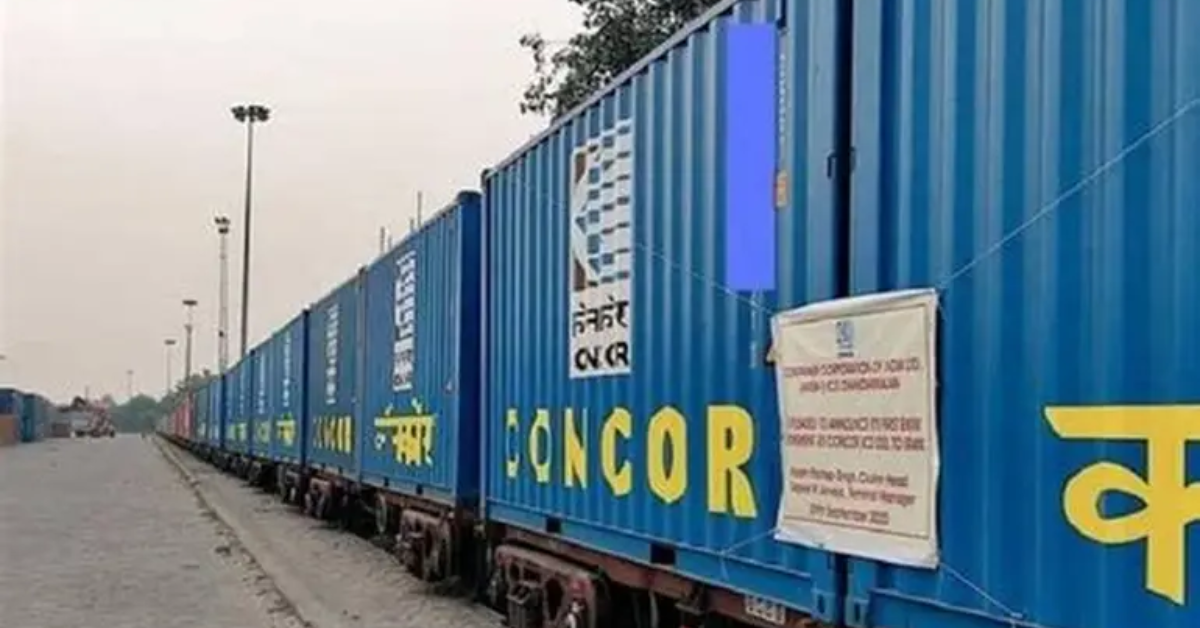

Container Corporation of India Ltd (CONCOR) has notched a landmark achievement, with its Area 1 terminals posting the highest-ever monthly outward domestic rake handling in March 2026, underscoring surging rail logistics momentum amid port decongestions.
The northern cluster—spanning ICDs at Dadri, Tughlakabad, and Ludhiana—dispatched a record number of double-stack rakes, boosting container evacuation efficiency by 18% year-on-year. This surge aligns with Dedicated Freight Corridor (DFC) ramp-ups, enabling faster first-mile hauls from hinterlands to western ports like JNPA, Mundra, and Pipavav, where CONCOR operates 13 gateway facilities.
Domestic cargo dominated, with agri-exports, FMCG, and auto parts leading volumes—up 22% to over 1.2 lakh TEUs. Electrified DFC lines slashed transit times 25%, from 72 to 54 hours Delhi-Mundra, while automated stacking cranes at Dadri handled 20% more turns. “DFC integration and rake-sharing pacts propelled this feat,” said CONCOR MD V. Kalraj, noting 28% first/last-mile share via owned fleets.
The milestone bolsters national logistics resilience. Amid Hormuz/Red Sea snarls inflating sea freight 150%, rail’s 40% cost edge (vs trucks) and 80% lower emissions draw EXIM shippers. CONCOR’s 63-terminal network moved 3.64 million TEUs in FY25-26 Q3, with liquid tank containers emerging for bulk chemicals—greening supply chains per Gati Shakti mandates.
Port synergies amplify gains: Mundra’s 6,000-car vessel record dovetails with CONCOR’s rail bridges, while Kandla’s LPG inflows feed northern rakes. Challenges persist—rake shortages cap 70% utilisation—but Q4 capex of ₹1,000 crore targets 15% capacity add via wagon buys and IT upgrades like blockchain tracking.
This record cements CONCOR’s pivot: from 1% containerised rail in FY15 to 5% now, eyeing 10% by 2030 amid ₹10,000 crore CTO investments. For maritime trade, it spells smoother evacuations—DFC’s 42 million tonnes FY25 cargo reduces truck dependency 30%, easing NH-48 jams and port dwells to 3 days.
As India targets top-25 LPI, CONCOR Area 1’s triumph signals rail’s renaissance: efficient, sustainable hauls fuelling 8% GDP growth, with western gateways reaping hinterland efficiencies.
 Join our WhatsApp channel for more updates:
 Subscribe to our YouTube channel for more updates: