



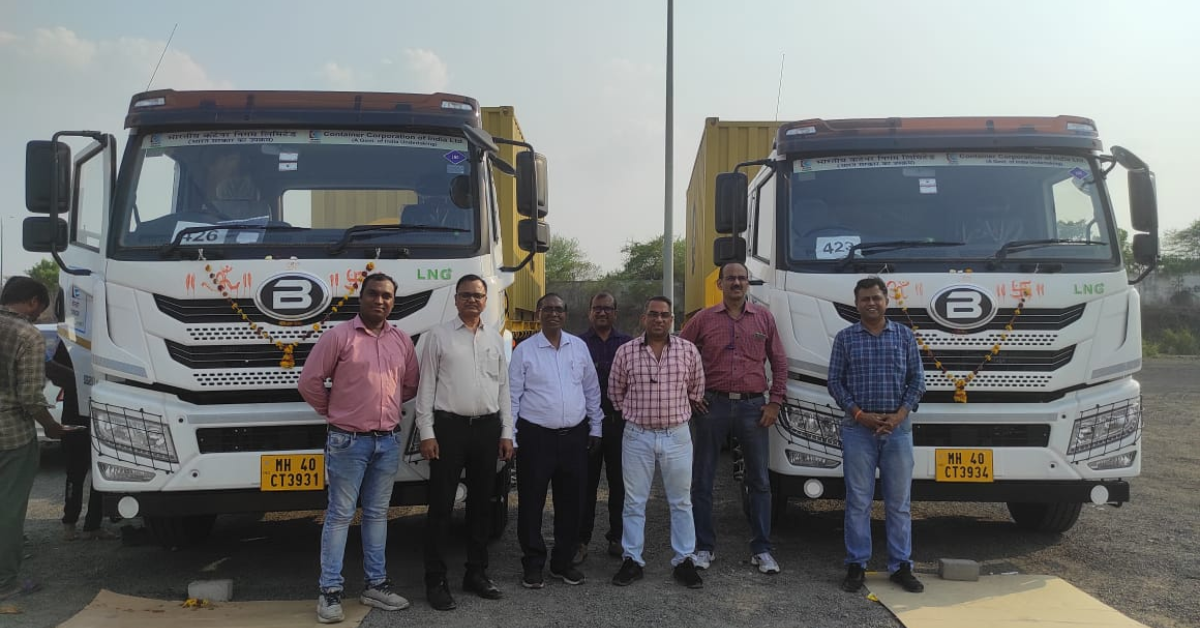

Container Corporation of India Ltd (CONCOR) has rolled out its first fleet of LNG-powered container trailers, marking a concrete step towards decarbonising first- and last-mile logistics in the country. The launch aligns with India’s broader sustainability agenda and reinforces CONCOR’s strategy to complement its predominantly rail-based operations with cleaner road transport solutions.
Under its green logistics roadmap, CONCOR is deploying LNG-fuelled trailers for container movements between ports, inland container depots (ICDs), container freight stations (CFSs) and customer premises, targeting short-haul and feeder operations that traditionally rely on diesel trucks. LNG-powered vehicles emit significantly lower carbon dioxide and particulate matter than conventional diesel trucks, while also generating less noise, making them particularly suitable for urban and peri-urban corridors. Company executives have highlighted that the transition to LNG is expected to lower fuel costs over the vehicle lifecycle, thereby improving operating economics for both CONCOR and its customers.
The new trailers build on CONCOR’s earlier initiatives, including the development of an LNG refuelling ecosystem at its key multimodal nodes. The company has already inaugurated a dedicated LNG station at its Multimodal Logistics Park in Khatuwas, Rajasthan, which serves as a base for servicing CONCOR-owned LNG road trailers deployed in the region. Additional LNG infrastructure is being planned at other strategic locations such as Dadri, in collaboration with gas suppliers, to ensure reliable fuel availability and support network expansion.
CONCOR’s management has repeatedly underlined that about 95 per cent of its cargo moves by rail, one of the most energy-efficient modes of transport, and that green road assets like LNG trailers are intended to complete the sustainability loop across the end-to-end logistics chain. The LNG trailer initiative is part of a broader package of ESG-focused projects that includes deploying electric vehicles for intra-terminal movements and developing India’s first net-zero warehouse at Sriperumbudur. Collectively, these efforts aim to cut the carbon intensity of each container move while maintaining competitive transit times and service reliability.
Industry observers see CONCOR’s LNG rollout as a signal that green technologies are moving from pilot scale to operational reality in India’s container logistics market. By greening first- and last-mile legs, CONCOR is helping to address a critical emissions hotspot in supply chains, where road transport remains indispensable despite the growth of dedicated freight corridors and multimodal infrastructure. The company’s investments in LNG stations, alternative-fuel fleets and digital tools for booking such services via mobile platforms are expected to encourage wider adoption of low-emission road transport among cargo owners and transport intermediaries.
As more LNG-powered container trailers join CONCOR’s fleet over the coming months, the initiative is likely to support cleaner hinterland connectivity for major ports and ICDs, reinforcing India’s shift towards sustainable, multimodal freight movement. For shippers, the availability of LNG-based first- and last-mile services through an established rail operator offers an opportunity to reduce their logistics carbon footprint without sacrificing network reach or service flexibility.
 Join our WhatsApp channel for more updates:
 Subscribe to our YouTube channel for more updates: