


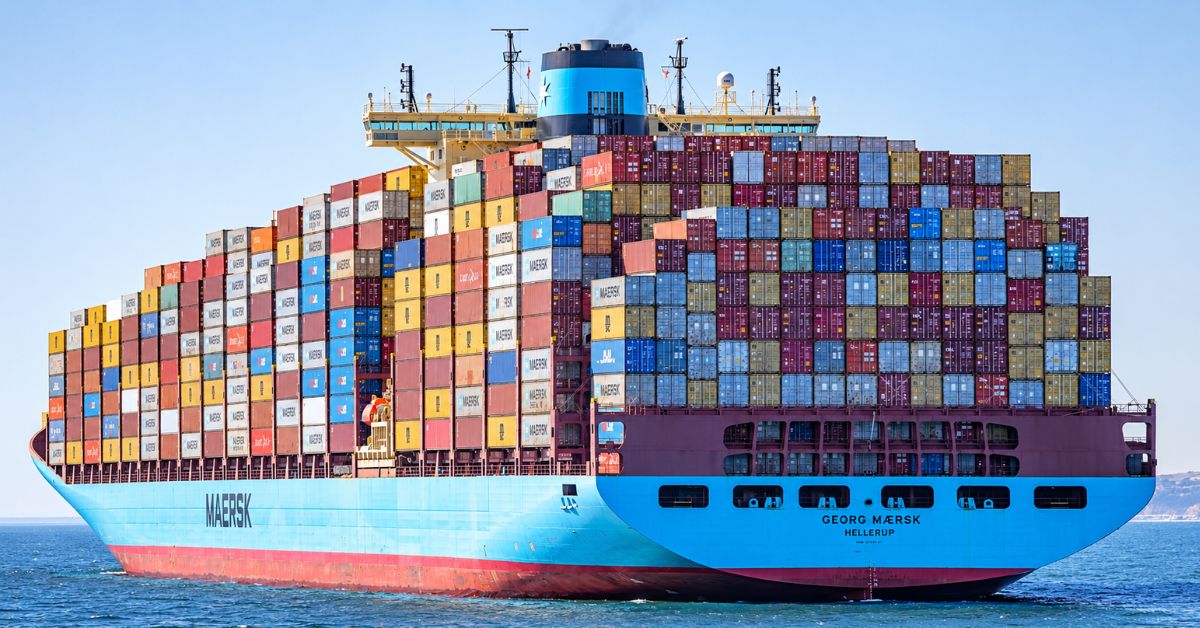

The container shipping market could face increasing supply pressure in 2027 as fleet growth accelerates and new vessel deliveries continue to enter the market, according to BIMCO’s latest Container Shipping Market Overview & Outlook.
BIMCO published its September 2026 outlook on September 23 under the headline “Supply pressure is mounting.” The organization expects container fleet capacity to grow by 4.6% in 2026 before accelerating to 9% in 2027.
The outlook comes as the global container fleet has already reached around 34 million TEUs. Meanwhile, the container ship orderbook now exceeds 14 million TEUs, equivalent to around 42% of the existing fleet. BIMCO expects recycling activity to remain low, which means new vessel deliveries will translate into faster overall fleet growth.
Container volumes rise 5.1%
Demand has remained relatively strong during 2026. According to BIMCO, global container volumes increased by 5.1% year-on-year during the first seven months of the year. Strong growth in trades outside the Persian Gulf more than offset lower volumes to and from South and West Asia.
Exports from East and Southeast Asia accounted for more than half of the year-to-date increase. Head-haul and regional volumes increased by 6.3%, while back-haul volumes remained unchanged. As a result, ship demand has again grown faster than overall cargo volumes.
Current market conditions are also supported by continued rerouting around the Cape of Good Hope. Longer sailing distances absorb additional vessel capacity, while at the same time, some vessels remain unavailable within the Persian Gulf.
Suez return could release vessel capacity
A gradual return of container services to the Suez Canal could significantly change the supply-demand balance. Some liner operators have already started returning services to Suez routings.
BIMCO estimates that if the gradual normalisation continues during 2027, ship demand growth could end five percentage points below its current forecast. Once routings fully normalise, ship demand could be around 10% lower than under a scenario in which Cape of Good Hope routing remains preferred.
This could release significant vessel capacity back into the market at the same time as the fleet continues to expand.
Supply expected to grow faster than demand
BIMCO continues to assess two scenarios for the Strait of Hormuz. The first assumes that the Strait remains effectively closed throughout 2026 and 2027. The second assumes normal transit conditions throughout 2027.
However, under both scenarios, BIMCO expects ship supply to grow faster than demand in 2027.
Demand also faces wider economic risks. Higher energy prices are weighing on consumer confidence in the United States and European Union, while Chinese retail sales volume growth has slowed.
Against this backdrop, accelerating vessel deliveries and a possible return to shorter Suez routings could weaken the container shipping supply-demand balance during 2027.
 Join our WhatsApp channel for more updates:
 Subscribe to our YouTube channel for more updates: