



The Central Warehousing Corporation (CWC) is planning to conduct its first freight hyperloop trial in Mumbai, exploring high-throughput movement of containers as a next-generation logistics solution.
The CWC has already placed an order with TuTr Hyperloop, a startup associated with IIT Madras, for the first trial. The organisation is evaluating the pilot between the port and its facility in Mumbai, Santosh Sinha, Managing Director, Central Warehousing Corporation, said, adding that the order was placed in March or April, with the developer indicating a tentative timeline of about a year. The pilot is expected to cost around Rs 20-23 crore and will be funded by the CWC from its own resources.
Sinha was speaking in Chennai at a stakeholder consultation on “Strengthening Agri Export Logistics Through Integrated Warehousing and Value-Added Services,” organised by CWC and CII, where Tamil Nadu Agriculture Department Director Chandra Shekhar Chakkamuri and Central Customs Commissioner Vishal Pratap Singh were also present.
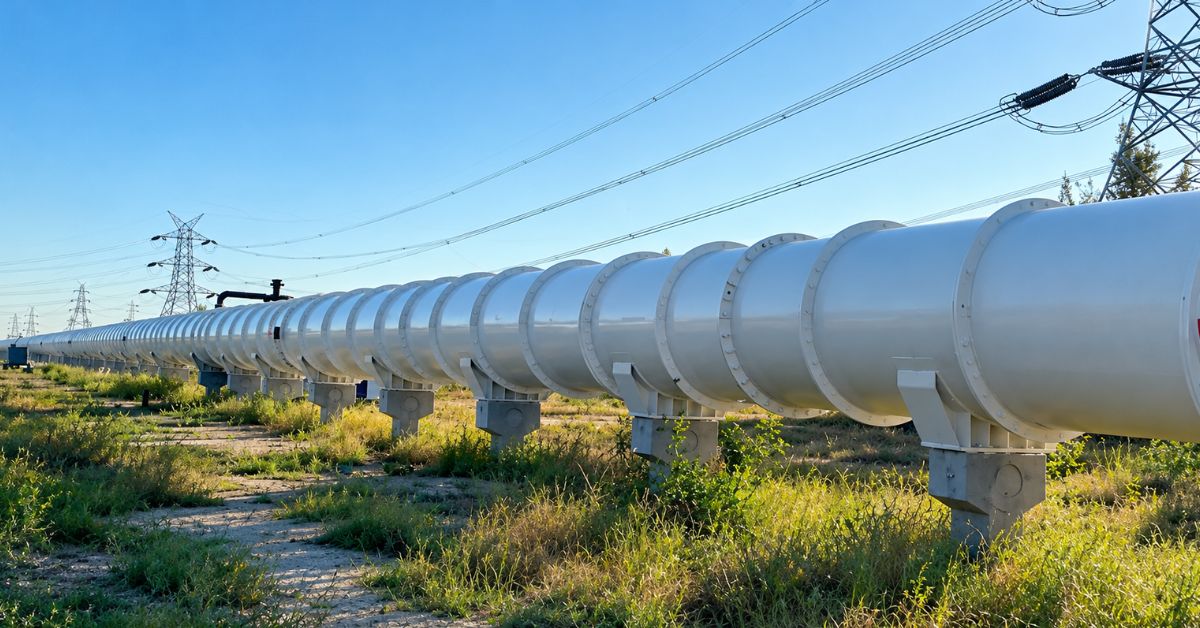
Sinha said the corporation was looking to integrate scientific warehousing, refrigerated supply chains, cargo handling and multimodal transportation to support agricultural exports, noting that a plan is needed to connect production centres with export destinations while protecting product quality. He said that as the next step, CWC is going to install a 650-metre-long Hyperloop, developed by IIT Madras, at Mumbai Port, with further discussions on the project to be held with IIT Madras.
Unlike regular trains, the hyperloop system, powered by Linear Induction Motor (LIM) technology installed on the vehicles and coupled with the track as they move, will start by moving one container at a time, with plans to scale up. Sinha described the project as a research and development initiative aimed at reducing operational inefficiencies and improving throughput across CWC’s logistics infrastructure.
Sinha added that CWC had also introduced electric vehicles as an alternative to diesel-powered vehicles as part of its broader sustainability push. Central Customs Commissioner Vishal Pratap Singh said the Customs Department was working towards introducing a single-window system for the export of agricultural products.
 Join our WhatsApp channel for more updates:
 Subscribe to our YouTube channel for more updates: