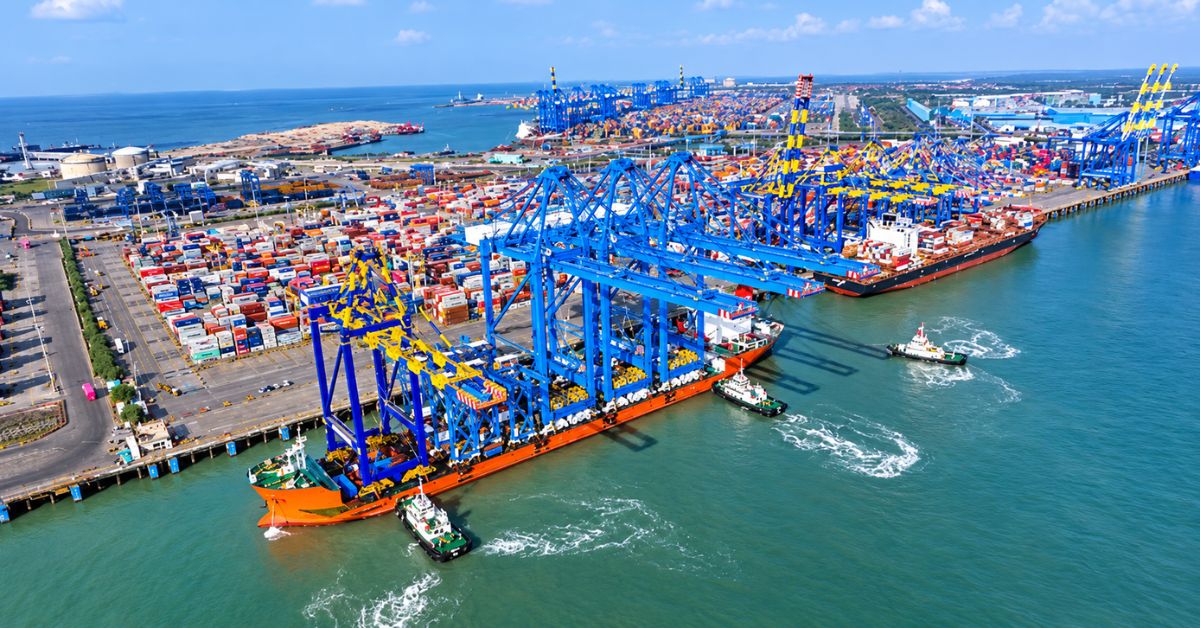

Deendayal Port Authority (DPA) at Kandla in Gujarat has crossed 125 million tonnes of cargo throughput in financial year 2026–27, reaching the threshold 72 days earlier than in the previous financial year. The achievement follows its record 160.11-million-tonne performance in 2025–26, when it ranked first among India’s major ports by cargo volume.
In its announcement, DPA credited the milestone to the efforts of its workforce and operational teams. The update did not provide a commodity-wise breakdown or identify the cargo categories responsible for reaching the threshold earlier.
What does the earlier milestone indicate?
Reaching the same cargo threshold 72 days sooner demonstrates a faster accumulation of throughput than in the previous financial year. It provides an indication of the volume moving through the port, although it does not establish a precise year-on-year growth rate.
Calculating that rate would require cumulative cargo figures for matching dates in both years. The milestone announcement also does not provide the operational data needed to separate the effects of cargo demand, vessel arrivals, handling productivity or changes in the commodity mix.
At the 125-million-tonne threshold, DPA had handled approximately 78% of its previous full-year total. Another 35.11 million tonnes would equal the 2025–26 result. These comparisons place the milestone in context without projecting throughput for the remaining months of the financial year.
How did Deendayal Port perform last year?
DPA handled 160.11 million tonnes in 2025–26, ahead of Paradip Port Authority’s 156.45 million tonnes and Jawaharlal Nehru Port Authority’s 102.01 million tonnes.
Its leadership position relates specifically to India’s major ports, the ports administered under the Union government’s major-port framework. It should not be interpreted as a ranking of every commercial port in the country.
Together, India’s major ports handled 915.17 million tonnes in 2025–26, recording year-on-year growth of 7.06% and exceeding their combined annual target of 904 million tonnes. DPA accounted for approximately 17.5% of that aggregate throughput.
The national figures establish the scale of Deendayal’s contribution to major-port cargo handling and provide the historical benchmark against which its current financial-year performance will be assessed.
Which cargo markets does the port serve?
Deendayal is a multi-cargo gateway serving industrial and trading centres in western and northern India. Its established cargo portfolio includes crude oil, petroleum products, coal, salt, edible oils, fertilisers, sugar, timber and agricultural commodities.
The port’s operations extend across Kandla and Vadinar. The Ministry of Ports, Shipping and Waterways’ port profile identifies dry cargo activities at Kandla, including fertilisers, foodgrains, steel, machinery and ores. Vadinar handles crude oil imports, petroleum-product exports and crude transshipment.
Road and rail connections link the port with inland markets. This combination of liquid and dry cargo operations gives DPA exposure to energy, agriculture and manufacturing supply chains. However, the established cargo portfolio should not be treated as evidence that every category contributed equally to the latest milestone.
What will determine the full-year outcome?
The earlier crossing strengthens DPA’s position against its previous annual performance, but a new record will depend on cargo handled through the rest of 2026–27.
Subsequent monthly and commodity-wise statistics will show whether the momentum is broad-based or concentrated in particular trades. They will also allow a clearer comparison between liquid bulk, dry bulk and other cargo movements.
For port users and logistics providers, those details will be more useful for assessing individual trade flows than the aggregate milestone alone. The immediate development remains significant: DPA has reached 125 million tonnes substantially earlier than last year.
 Join our WhatsApp channel for more updates:
 Subscribe to our YouTube channel for more updates: