




Authorities are working on a freight interchange system around the National Capital Region (NCR) to shift cargo from long‑haul diesel trucks to electric vehicles before entering Delhi during the winter pollution season. The plan aims to lower freight‑related emissions while keeping goods movement uninterrupted when air quality restrictions are in force.
The proposal is linked to India’s broader push for cleaner urban transport and electric vehicle (EV) adoption, targeting one of the major sources of transport‑sector particulate emissions in and around the capital. By redesigning how cargo reaches city warehouses and distribution centres, the initiative seeks to balance air quality goals with supply‑chain reliability.
Freight Interchange Hubs Around Delhi
Under the plan, about five multimodal logistics hubs are proposed at key NCR locations such as Sonipat, Faridabad, Ghaziabad, Greater Noida and Gurugram. These hubs would function as freight interchange nodes where diesel trucks stop and cargo is transferred to cleaner vehicles for last‑mile delivery into Delhi.
At these hubs, long‑haul diesel vehicles would either unload cargo or exchange trailers, and electric trucks would then carry consignments to warehouses, distribution centres or end customers in the city. The hubs are envisaged as part of a larger National Highways for EV (NHEV) public‑private partnership initiative to support EV infrastructure and logistics.
How the System Would Operate
Instead of entering Delhi, medium and heavy diesel trucks would halt at the designated hubs on the city’s periphery and complete formalities, unloading processes or trailer swaps there. Electric freight vehicles would subsequently take over the final leg into Delhi, ensuring that only zero‑emission trucks handle urban deliveries under the scheme.
The long‑term objective of this model is that diesel freight vehicles largely remain outside the capital limits, with EVs and other low‑emission options managing urban cargo operations. The freight interchange concept is designed to work both during severe pollution episodes and as part of a more permanent winter strategy.
Link to Winter Pollution Action Plan
Delhi has notified a Winter Pollution Action Plan that automatically comes into effect annually from November 1 to February 28 unless stricter measures under the Graded Response Action Plan (GRAP) are invoked. The notification consolidates various seasonal pollution‑control measures into a single framework based on air quality trends.
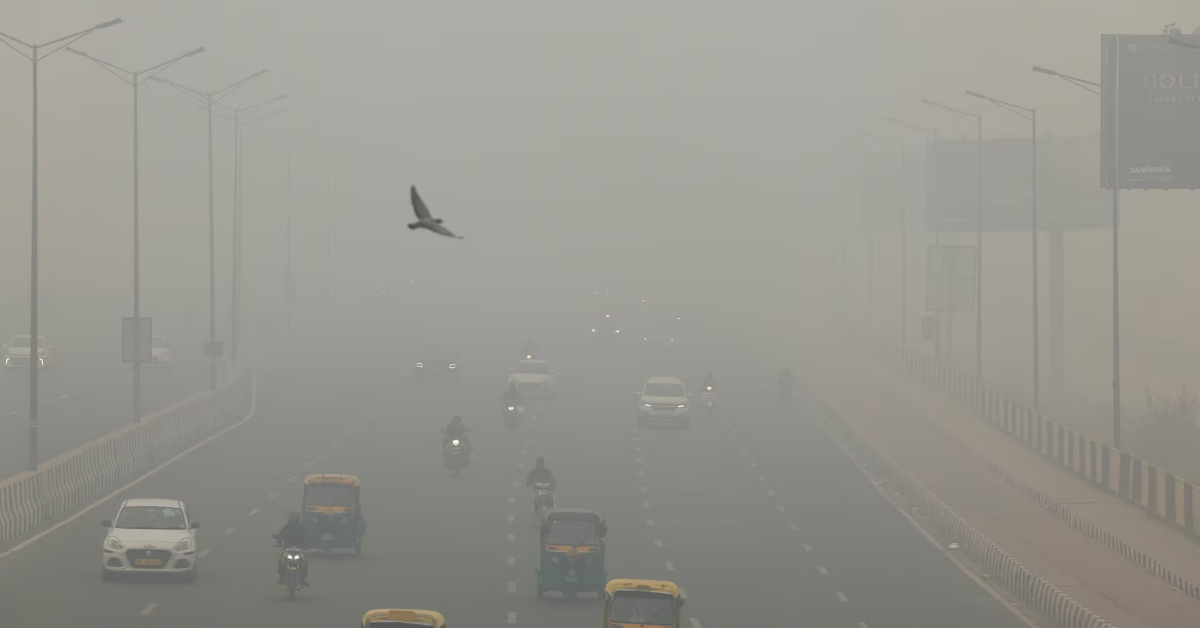
Government assessments over the past three years show that pollution levels in Delhi typically worsen between November and mid‑February, with median Air Quality Index (AQI) values in the “very poor” range and peaks in the “severe” category. The proposed freight hubs are meant to complement existing measures by specifically targeting emissions from goods transport during this period.
Role of GRAP Diesel Truck Restrictions
Under Stage IV of GRAP, entry of medium and heavy diesel goods vehicles into Delhi is curbed, except those carrying essential commodities or falling under exempt categories. These restrictions often leave trucks queued up outside the city borders until curbs are lifted, causing delays in deliveries and disrupting supply chains.
Although heavy trucks represent a relatively small share of the total vehicle count on Delhi’s roads, they are estimated to contribute around 23 per cent of transport‑sector PM2.5 emissions. Their impact is higher at night, when freight movement is most intense, making them a key focus of emission‑reduction strategies.
Place in Delhi’s Wider Pollution Strategy
The Winter Pollution Action Plan already includes measures such as year‑round checking of Pollution Under Control (PUC) certificates at fuel stations, restrictions on non‑BS VI vehicles registered outside Delhi in winter, staggered office timings and work‑from‑home advisories. It also mandates seasonal controls on construction activity and the use of anti‑smog guns or mist systems at large building sites.
Efforts to prevent open burning and enforce emission norms complement the push for cleaner freight transport, with the proposed EV logistics hubs adding a dedicated layer for cargo emissions. If implemented, the freight interchange system would allow goods movement to continue while reducing diesel truck presence inside the city during high‑pollution episodes.
 Join our WhatsApp channel for more updates:
 Subscribe to our YouTube channel for more updates: