




Summary
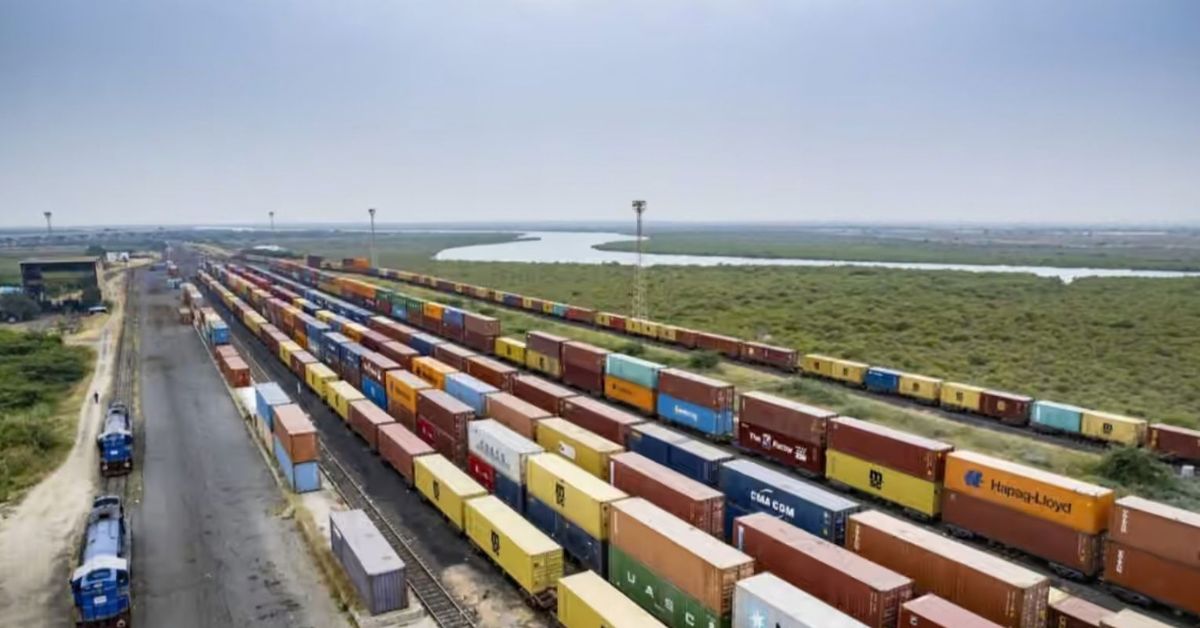
The Dedicated Freight Corridor Corporation of India has recorded its highest-ever daily freight train interchange with Indian Railways, handling 946 trains on October 6, 2026. The figure beats a record set only four days earlier and comes weeks after the Western Dedicated Freight Corridor was fully linked to JNPA, India’s largest container port.
Article
New Delhi: DFCCIL freight train interchange with Indian Railways reached an all-time high of 946 trains on October 6, 2026, the Dedicated Freight Corridor Corporation of India Limited (DFCCIL) has said. The new peak surpasses the previous record of 929 trains, set just four days earlier.
What is a train interchange?
An interchange is counted each time a freight train moves between the Dedicated Freight Corridor (DFC) network and the conventional Indian Railways network at designated junction stations. The daily interchange count is therefore a key measure of how smoothly the two systems work together and how much traffic is using the dedicated corridors.
How has the number grown?
The latest record caps a steady climb in recent weeks. DFCCIL handled 903 interchange trains on August 30, 2026, before reaching 929 and then 946 in early October.
The pace becomes clearer against earlier milestones. On January 5, 2026, DFCCIL handled 892 interchange trains with five Indian Railways zones, then the highest since the corridors were commissioned, beating 865 trains recorded a day earlier. Before that, high-volume days included 846 trains on March 30, 2025, and 830 on September 14, 2025.
The October 6 figure is therefore about 6% higher than the January peak and more than 100 trains above the busiest days of early 2025.
What is driving the increase?
According to the corporation, the rising numbers reflect better coordination, added capacity and tighter operational integration between the DFC and Indian Railways networks.
When announcing the January record, DFCCIL had attributed the performance to regulated train speeds, safe headways and close coordination between adjoining stations to reduce time spent at junctions. It also pointed to high-power electric locomotives hauling long, heavy trains at higher speeds, and to yard management that cut detention when trains entered or left the corridor.
How has the DFC network changed this year?
The new record follows the completion of the Western Dedicated Freight Corridor (WDFC). DFCCIL conducted trial runs on the final 102-km JNPT-New Saphale (Vaitarna) stretch on March 31, 2026, establishing end-to-end connectivity from hinterland nodes to Jawaharlal Nehru Port.
On September 8, 2026, Prime Minister Narendra Modi dedicated key sections of the completed corridor to the nation from Vadodara. The 1,506-km WDFC now links Dadri in Uttar Pradesh with JNPA in Mumbai. The project has been supported by the Japan International Cooperation Agency, which has extended cumulative ODA loans of JPY 620,787 million (about ₹37,658 crore) to DFCCIL.
The Eastern Dedicated Freight Corridor has been operational between Ludhiana and Sonnagar, while the roughly 538-km Sonnagar-Dankuni section was under construction as of earlier reports.
Why does it matter for ports and logistics?
Higher interchange volumes mean more freight is shifting onto the high-capacity corridors, freeing paths on the congested conventional network for both passenger and goods trains.
For the port sector, the fully connected WDFC is especially significant. DFCCIL has said completion of the final stretch is expected to cut freight transit time by nearly four hours, improve rolling stock turnaround and boost schedule reliability. For container trade moving between JNPA and northern industrial hubs, faster and more predictable rail transit can lower inventory costs and strengthen the case for rail over long-haul road transport.
Earlier projections had put daily train movements on the two corridors at around 440 once the final WDFC section was commissioned, up from an average of 406 a day in December 2025. Whether the latest interchange records translate into sustained gains in daily running will become clearer as the busy second half of the financial year unfolds.
FAQs
What record did DFCCIL set on October 6, 2026?
DFCCIL interchanged 946 freight trains with Indian Railways in a single day, its highest ever, beating the previous record of 929 trains set four days earlier.
What does a train interchange mean?
It refers to a freight train moving between the Dedicated Freight Corridor network and the conventional Indian Railways network at designated junction stations.
What was the previous major milestone?
On January 5, 2026, DFCCIL handled 892 interchange trains, which was then the highest since the corridors were commissioned.
Is the Western Dedicated Freight Corridor complete?
Yes. Trial runs on the final JNPT-New Saphale stretch were completed on March 31, 2026, and Prime Minister Narendra Modi dedicated key sections of the 1,506-km corridor to the nation on September 8, 2026.
Why is the WDFC important for JNPA?
It gives India’s largest container port direct dedicated rail connectivity to northern hinterland markets, with DFCCIL expecting freight transit time to fall by nearly four hours.
 Join our WhatsApp channel for more updates:
 Subscribe to our YouTube channel for more updates: