



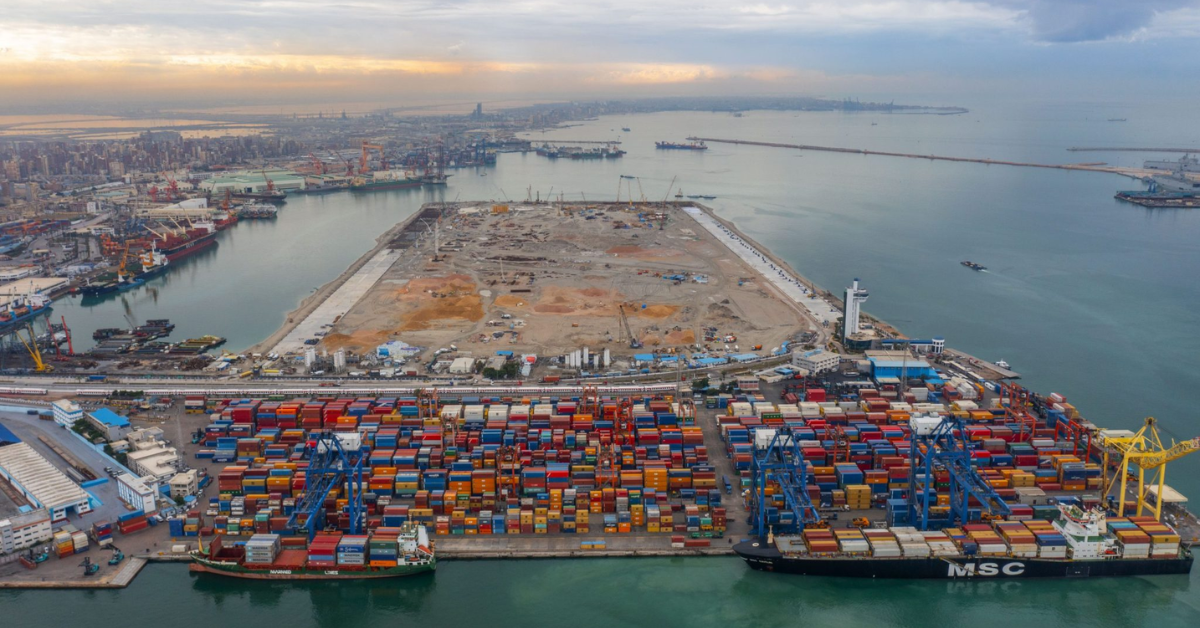

Egypt is emerging as a pivotal transit hub for freight moving between Europe and the Gulf, as shippers and forwarders increasingly route cargo via the country’s growing network of Ro‑Ro and multimodal services to dodge risks and delays linked to regional instability. With hopes of a rapid rebound in traditional Suez‑linked liner traffic dampened by the continuing crisis around the Strait of Hormuz, logistics players are instead turning to an “indirect transit” model built around Egypt’s Damietta–Trieste corridor and overland links to Red Sea ports serving the Gulf.
At the core of this shift is the Ro‑Ro service connecting Damietta in the Mediterranean with Italy’s Trieste, which now feeds cargo across Egypt to Safaga and onwards to Gulf markets such as the UAE, Kuwait, Oman, Iraq and Qatar. The corridor, launched in late 2024 and supported by a bilateral cargo agreement with Italy that provides weekly capacity for around 420 trucks, offers a shorter and more predictable alternative for European exporters facing rising insurance premiums and schedule disruption on traditional east–west routes.
Egypt’s Ministry of Transport has reinforced the model with customs and regulatory incentives, including exempting indirect Europe–Gulf transit shipments from prior registration in the Advance Cargo Information (ACI) system, accelerating clearance and cutting administrative burden. Officials say integrated digital systems, data‑sharing and coordinated work between port authorities, customs and operators at Damietta have improved truck and trailer turnaround, enhancing the competitiveness of the corridor for both dry and refrigerated cargo.
As a result, logistics companies are pitching the Egypt route to customers as a “green corridor” that combines reduced transit times, lower overall costs and improved reliability for perishable and high‑value goods, compared with more circuitous or volatile ocean options. Analysts note that if current traffic and service frequency continue to grow, Egypt’s role could evolve from a contingency solution into a structurally important bridge between Europe and Gulf markets, reshaping regional routing patterns even after tensions in traditional chokepoints eventually ease.
 Join our WhatsApp channel for more updates:
 Subscribe to our YouTube channel for more updates: