




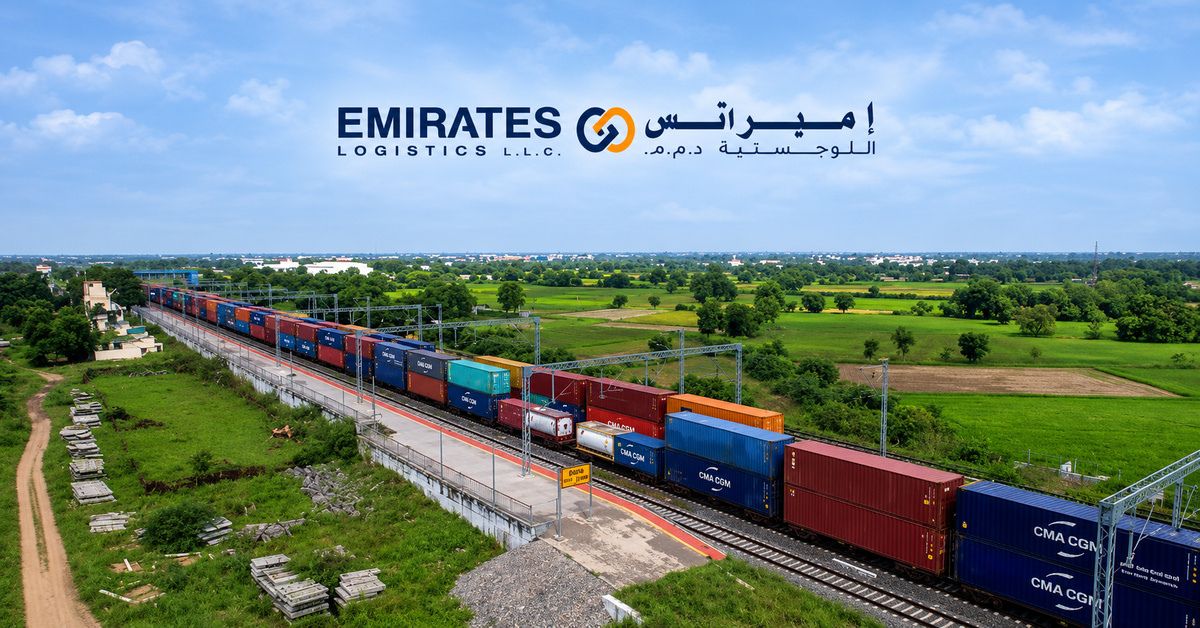

Western Railway’s Ahmedabad Division has awarded Emirates Logistics India Private Limited a 35-year contract to develop a cargo terminal at Khakharechi in Gujarat. Reported on 6 November 2026, the project will use 80,413 square metres of railway land to expand freight loading and unloading facilities through private investment.
The terminal is the division’s first project under Schedule-II of the Railway Board’s Gati Shakti Cargo Terminal (GCT) Policy 2026. Indian Railways will receive annual land licence fees exceeding ₹15 lakh, alongside revenue-sharing income, without providing capital investment for the development.
Ahmedabad’s existing terminals handle 2.3 million tonnes
The division’s eight operational GCTs handled more than 2.3 million tonnes of freight between April and October 2026, generating revenue exceeding ₹330 crore.
During those seven months, the terminals loaded over 1,700 rakes comprising more than 65,000 wagons. Cargo included containers, salt, bentonite, cement, fertilisers, sugar and pulses.
Divisional Railway Manager Ved Prakash said the Khakharechi facility would improve freight options for regional businesses and encourage rail transport through better cargo-handling infrastructure. The announcement concerns a development contract; it does not specify a commissioning date or planned annual handling capacity.
How does the Gati Shakti terminal programme work?
The national GCT programme encourages private investment in rail-linked cargo facilities, with locations selected according to industrial demand, potential freight volumes, available railway infrastructure and the logistics requirements of surrounding areas.
It forms part of Indian Railways’ broader approach to improving terminal operations. Alongside privately developed facilities, the railway is upgrading its own goods sheds to increase handling efficiency and strengthen first- and last-mile connections.
In a parliamentary response on 7 August 2026, the Ministry of Railways said 142 GCTs had been commissioned, representing an estimated annual handling capacity of 224 million tonnes. These facilities had mobilised approximately ₹10,000 crore in private investment and handled 146 million tonnes during 2025–26.
The original Gati Shakti Multi-Modal Cargo Terminal Policy was introduced on 15 December 2021. Its objectives include accelerating terminal development, improving existing facilities and simplifying approvals for private participation.
The programme also promotes more efficient train handling through “engine-on-load” operations. Under this arrangement, a locomotive remains with the train during loading or unloading within the permitted free time, allowing departure once cargo operations finish. This is a programme-level operating approach, rather than a confirmed specification for Khakharechi.
Gujarat expands its network of rail freight facilities
The Khakharechi award follows other terminal developments across Gujarat. On 15 September 2026, Railway Minister Ashwini Vaishnaw inaugurated the Shivlakha GCT in Kachchh and dedicated terminals at Bhimasar in Kachchh, Devaliya in Morbi and Chandisar in Banaskantha to the nation.
He also laid the foundation stone for the Linch terminal in Mahesana. At that event, the minister said the number of commissioned GCTs nationwide had reached 150.
According to the Ministry of Railways, these Gujarat facilities are intended to improve connections between regional production centres, ports and northern hinterland markets. They are also expected to ease freight bottlenecks around port locations.
Cargo-specific handling supports industrial freight
The September event also featured a salt-loaded train from Shivlakha to Mithapur, illustrating the programme’s focus on commodity-specific logistics.
The ministry highlighted lightweight stainless-steel salt containers designed for loading from the top and unloading from the side. The equipment addresses handling difficulties associated with conventional wagons and moisture absorption during salt transportation.
Together, terminal development and specialised cargo equipment form part of the railway’s effort to make freight services more accessible to Gujarat’s industrial and commodity producers.
 Join our WhatsApp channel for more updates:
 Subscribe to our YouTube channel for more updates:




