
Summary
Commerce and Industry Minister Piyush Goyal has said the government is willing to meet expensive certification costs for micro and small exporters under the Export Promotion Mission. His remarks signal support for overcoming overseas compliance barriers, although exporters’ reimbursement entitlements remain governed by the applicable scheme guidelines.
Smaller exporters urged to seek assistance
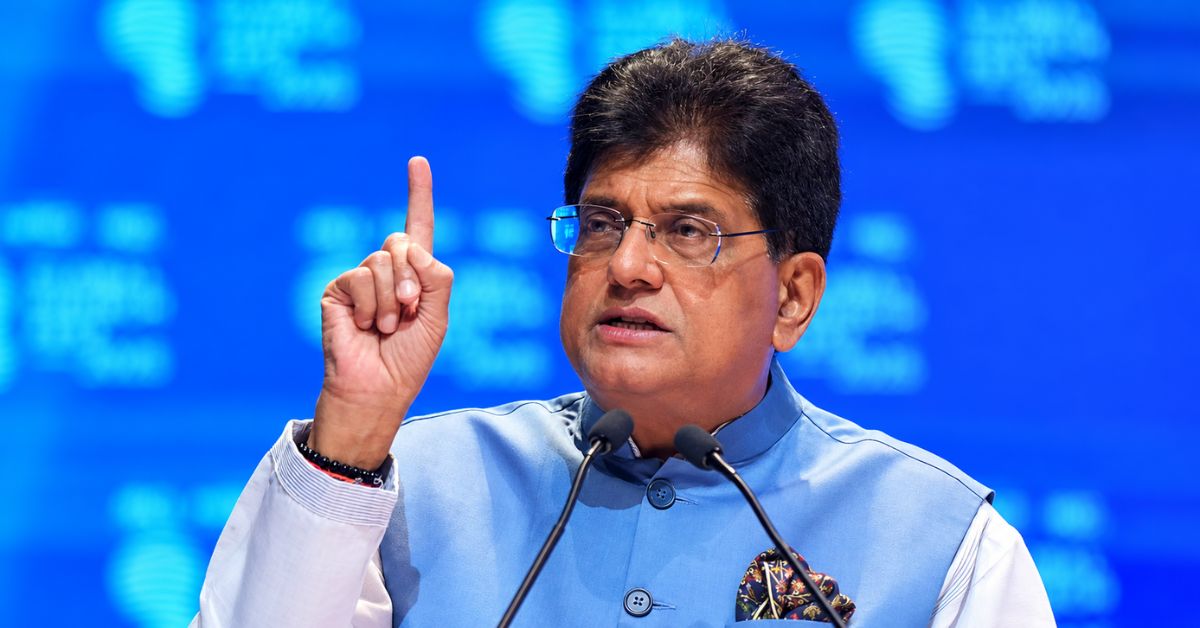
Export certification support under the Export Promotion Mission could help micro and small enterprises overcome costly market-entry requirements, Piyush Goyal said during his visit to Berlin.
Speaking to reporters on 23 October, the minister expressed willingness to cover the entire cost of expensive certification for smaller businesses. He urged existing and prospective exporters to approach the Directorate General of Foreign Trade for assistance.
Goyal also indicated that other exporters could receive support on a graded basis. His comments addressed a practical obstacle for businesses seeking international customers: obtaining the testing, verification and certification needed to enter overseas markets.
Compliance assistance includes environmental requirements
The minister identified compliance associated with the European Union’s Carbon Border Adjustment Mechanism and deforestation-related requirements among the areas where smaller firms could need assistance.
He also said the government was exploring the approval of verification agencies in India, potentially improving access to compliance services.
That proposal concerns the availability of verification expertise. Financial assistance for certification should be distinguished from payment of any carbon-related liability or exemption from an importing market’s regulations.
The commercial objective is to help businesses demonstrate compliance, rather than remove the standards they must meet.
Existing guidelines specify reimbursement limits
Goyal’s statement of willingness to provide full support needs to be read alongside the operational framework already in place.
The Trade Regulations, Accreditation and Compliance Enablement initiative, known as TRACE, operates under the mission’s Niryat Disha component.
A September circular from the Pharmaceuticals Export Promotion Council of India, reflecting July amendments, specifies assistance of up to 95% of eligible costs for micro and small enterprises and 80% for medium enterprises.
The annual ceiling is ₹50 lakh per Importer–Exporter Code. Cases requiring assistance above that amount may be considered individually by the DGFT sub-committee.
These provisions establish the published reimbursement framework. The minister’s broader assurance does not, by itself, establish an automatic entitlement to unrestricted reimbursement of every certification expense.
TRACE covers several stages of conformity assessment
DGFT launched TRACE on 20 February 2026 to strengthen the quality and technical compliance capabilities of MSMEs participating in international value chains.
Its scope includes eligible testing, inspection, certification, audits, traceability systems and other conformity-assessment requirements.
Support can cover one-time prerequisites, such as factory assessments and market-specific licensing, as well as recurring compliance expenditure. Eligible activities must meet the scheme’s notified coverage and procedural conditions.
The original framework requires applicants to hold an active Importer–Exporter Code and valid Udyam registration, with businesses on the Denied Entity List excluded.
The initiative therefore supports a wider compliance process than obtaining a certificate alone. It recognises that market access can involve assessments of products, facilities and supporting documentation
Mission combines finance with market readiness
The certification initiative forms part of the Export Promotion Mission approved by the Union Cabinet in November 2025.
With an outlay of ₹25,060 crore for FY2025–26 to FY2030–31, the mission focuses particularly on MSMEs, first-time exporters and labour-intensive industries.
Its wider objectives include affordable trade finance, compliance readiness and improved market access. DGFT is the implementing agency, with applications and disbursements managed through a digital framework.
The structure brings several export constraints within one programme, recognising that access to finance and the ability to meet overseas standards are connected requirements.
Commercial benefits depend on usable support
For smaller manufacturers, certification expenditure can precede export revenue. Assistance may therefore make it easier to evaluate new markets and pursue customer requirements.
Its usefulness will depend on clear eligibility, predictable reimbursement and access to recognised service providers.
The immediate implication of Goyal’s remarks is an invitation for exporters to bring expensive compliance requirements to DGFT. Businesses will still need to establish which costs qualify and follow the applicable application process.
For the wider trade ecosystem, effective implementation could help more firms become export-ready, broadening participation in international supply chains.
FAQs
What did Goyal announce?
He expressed willingness to cover expensive certification costs for micro and small exporters under the Export Promotion Mission.
Does every exporter automatically receive full reimbursement?
No. Assistance remains subject to the applicable eligibility rules, approved expenditure and scheme conditions.
What reimbursement rates are currently specified?
The cited TRACE framework provides up to 95% for micro and small enterprises and 80% for medium enterprises.
What is the annual ceiling?
₹50 lakh per Importer–Exporter Code, with higher assistance potentially considered case by case.
Where should exporters seek assistance?
Goyal urged exporters to approach DGFT regarding their certification and compliance requirements.
 Join our WhatsApp channel for more updates:
 Subscribe to our YouTube channel for more updates: