




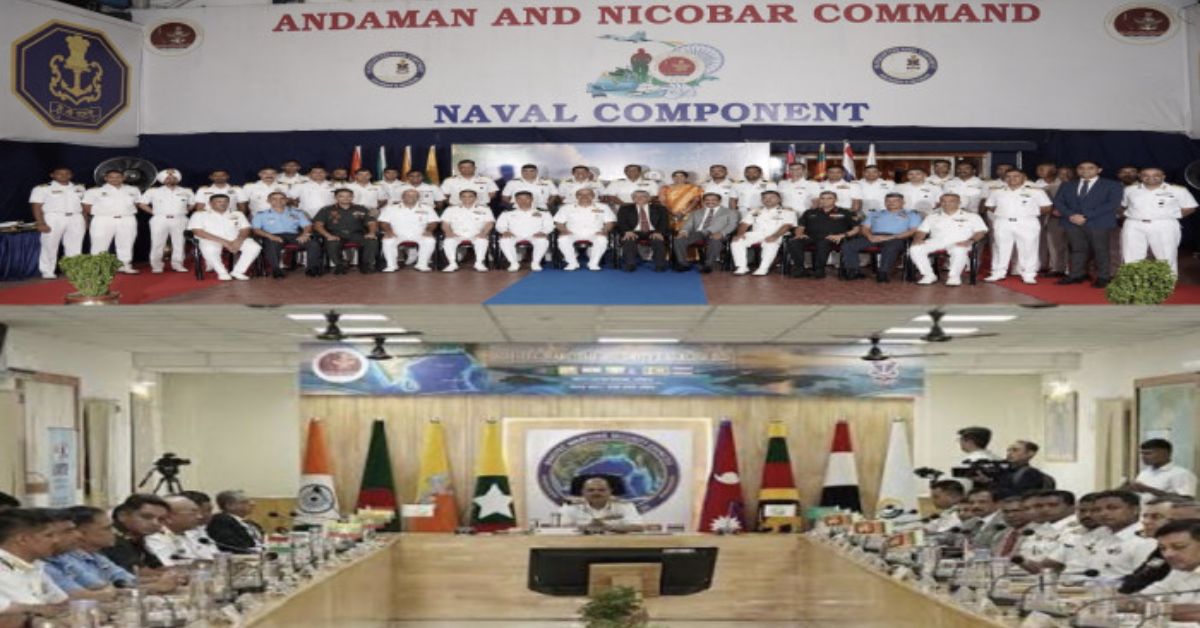

The inaugural BIMSTEC Maritime Security Exercise is being conducted from 30 October to 3 November 2026, bringing the grouping’s seven member countries together to improve coordination and maritime security cooperation in the Bay of Bengal.
India’s Ministry of Defence said the exercise aims to strengthen interoperability, maritime domain awareness and exchanges of operational best practices. It links regional security cooperation with the protection of a maritime region supporting trade, connectivity and energy flows between South and South-East Asia.
Which countries are involved?
The Bay of Bengal Initiative for Multi-Sectoral Technical and Economic Cooperation (BIMSTEC) comprises Bangladesh, Bhutan, India, Myanmar, Nepal, Sri Lanka and Thailand.
The exercise provides a practical mechanism for advancing cooperation among these countries, building on commitments made at the sixth BIMSTEC Summit in Bangkok in April 2025.
Its stated objectives include improving the ability of participating organisations to coordinate their activities and develop a shared understanding of maritime challenges. The defence ministry described the initiative as a step towards translating regional commitments into operational cooperation.
Why is the Bay of Bengal important to maritime trade?
The Bay of Bengal connects South Asian economies with South-East Asia and supports shipping, regional connectivity and energy security.
The exercise places maritime cooperation within this wider economic setting. Its focus on awareness and coordination concerns the security environment in which commercial vessels, ports and maritime supply chains operate.
The ministry’s announcement emphasises regional stability and an open, inclusive maritime domain. It does not announce changes to commercial shipping procedures, port access requirements or cargo regulations.
What role does the Andaman and Nicobar Command play?
The announcement highlights the strategic position of the Andaman and Nicobar Islands and the capabilities of the Andaman and Nicobar Command (ANC).
Situated alongside important sea lanes, the islands support maritime surveillance and regional engagement. The ministry also identified humanitarian assistance, disaster relief, and search and rescue among the command’s relevant capabilities.
The command became operational on 8 October 2001. A parliamentary statement issued that year recorded that Army, Navy, Air Force and Coast Guard components in the islands were placed under the operational authority of its Commander-in-Chief.
This integrated structure provides the institutional background to the command’s role in coordinating activities across different services in the island territory.
How does the exercise build on the Bangkok summit?
The sixth BIMSTEC Summit, held on 4 April 2025, adopted the Bangkok Vision 2030, the organisation’s first vision document. It established a roadmap for cooperation towards a prosperous, resilient and open regional grouping.
The summit’s outcomes also included maritime transport cooperation and a memorandum of understanding with the Indian Ocean Rim Association, broadening the framework for engagement on shared regional priorities.
BIMSTEC’s Agreement on Maritime Transport Cooperation was signed at the ministerial meeting in Bangkok on 3 April 2025. The organisation identifies it as a measure to strengthen maritime partnerships and regional connectivity.
How do maritime security and connectivity initiatives relate?
The transport agreement and the security exercise address separate but connected aspects of regional maritime cooperation.
The agreement focuses on the movement of goods and people, while the exercise seeks to improve coordination and operational linkages among member countries. Together, they reflect BIMSTEC’s effort to advance economic connectivity alongside cooperation on shared security challenges.
The current exercise remains an initial step. Its significance lies in establishing a practical platform for maritime engagement across the seven-country grouping, with further outcomes dependent on sustained cooperation after its conclusion.
 Join our WhatsApp channel for more updates:
 Subscribe to our YouTube channel for more updates:




