



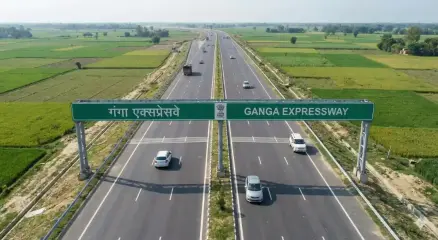

Prime Minister Narendra Modi will inaugurate the 594-kilometre Ganga Expressway on April 29 — one of the longest access-controlled highways in India and a project that will fundamentally transform freight movement between western and eastern Uttar Pradesh. The expressway runs from Meerut in western UP to Prayagraj in the east, connecting some of the most densely populated and commercially active districts of the state. By creating a dedicated, high-speed east-west corridor, the expressway addresses one of UP’s chronic logistics bottlenecks: the absence of a fast, congestion-free truck route linking the NCR-adjacent western districts with the Purvanchal industrial and agricultural belt.
The freight logistics implications are substantial. Western UP’s manufacturing clusters in electronics, garments, furniture, and automotive components — which supply the NCR and export via JNPA and other ports — will gain faster and more cost-efficient access to eastern markets. Eastern UP’s agricultural output — wheat, rice, vegetables, and processed foods — will reach western consumption centres faster and with lower spoilage. The expressway also supports the Western and Eastern DFC connectivity by providing efficient road links to rail interchanges along both freight corridors, improving the multimodal logistics chain that the government has invested heavily in building over the past decade.
 Join our WhatsApp channel for more updates:
 Subscribe to our YouTube channel for more updates: