
Summary
Great Eastern Shipping has contracted to purchase a secondhand, 82,000-cubic-metre very large gas carrier, with delivery expected during October–December 2026. Funded entirely through internal accruals, the acquisition adds to a pipeline that includes two Kamsarmax bulk carriers and a newbuilding Suezmax tanker scheduled for later delivery.
Gas carrier expected during the current quarter
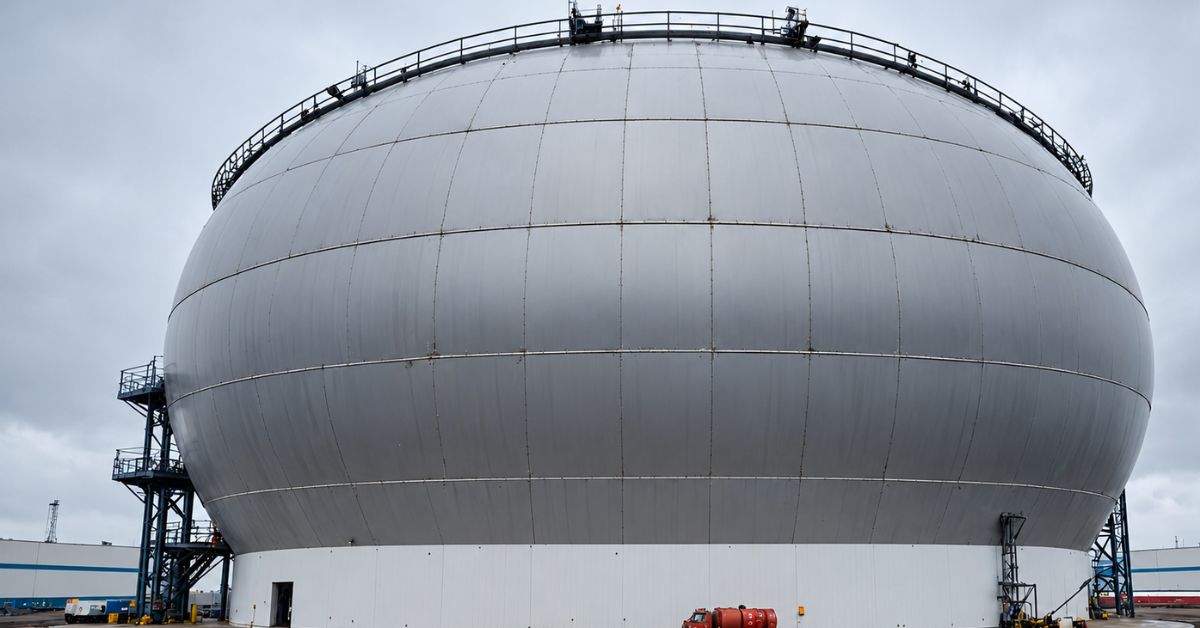
The GE Shipping gas carrier purchase will expand the company’s fleet with a 2015-built very large gas carrier, or VLGC, under a contract signed on 23 October 2026.
The approximately 82,000-cubic-metre vessel is expected to join the fleet in the third quarter of FY2026–27, corresponding to October–December 2026.
Great Eastern Shipping identified fleet expansion as the purpose of the acquisition and said the purchase would be financed entirely from internal accruals.
The announcement confirms a purchase agreement rather than completed delivery. It does not disclose the vessel’s name, seller or acquisition price.
Existing fleet operates near full utilisation
At the announcement date, GE Shipping owned 40 vessels with aggregate carrying capacity of 3.24 million deadweight tonnes.
Its fleet comprised 25 tankers and 15 dry bulk carriers. The tanker portfolio included five crude carriers, 16 product tankers and four LPG carriers.
The dry bulk fleet consisted of two Capesize vessels, 10 Kamsarmax ships, one Ultramax and two Supramax carriers.
The company reported capacity utilisation close to 100%. That provides context for the expansion, although the announcement does not identify employment arrangements or a charter contract for the incoming gas carrier.
Suezmax order extends the investment horizon
The latest transaction follows a separate agreement announced on 28 September for a newbuilding Suezmax tanker of approximately 157,000 deadweight tonnes.
That vessel will be constructed in the Far East, with delivery scheduled for the second half of FY2028–29, equivalent to October 2028–March 2029.
GE Shipping said at the time that financing was proposed from internal accruals. The announcement did not name the shipbuilder.
The tanker order establishes a longer investment horizon alongside the purchase of an existing gas carrier. The transactions therefore contribute capacity on different schedules, with the secondhand acquisition expected substantially earlier than the newbuilding.
The company also has two secondhand Kamsarmax dry bulk carriers contracted for purchase, with completion expected in the third quarter of FY2026–27.
Earlier gas carrier transactions provide context
GE Shipping has already completed changes to its gas fleet this year.
On 16 January 2026, it took delivery of Jag Vijay, a 2015-built VLGC with capacity of approximately 84,048 cubic metres. The South Korean-built vessel had been contracted for purchase in the preceding quarter and was financed entirely through internal accruals.
That completed acquisition is separate from the unnamed vessel covered by the October agreement. Although both ships were built in 2015, their disclosed capacities differ.
The January delivery demonstrates that the latest contract follows an earlier investment in the gas transportation segment, rather than marking the company’s first purchase in the category.
Vessel sales also shape the fleet
Fleet development has included disposals as well as purchases.
On 30 March 2026, GE Shipping announced delivery of its 2002-built VLGC Jag Vishnu to buyers, following a sale agreement reached in the third quarter of FY2025–26.
That transaction removed an older gas carrier from the fleet. Together, the earlier purchase and disposal show why acquisition announcements need to be assessed alongside completed sales when tracking changes in vessel numbers and carrying capacity.
The October purchase is explicitly described as an expansion transaction. Its eventual effect on the owned fleet will be reflected after delivery and any other intervening transactions.
Delivery remains the next operational milestone
For cargo customers, the commercial significance is additional potential gas transportation capacity within an established, diversified fleet.
For GE Shipping, using internal accruals means the disclosed purchase funding does not depend on a new vessel-specific borrowing arrangement. Without a disclosed price, however, the transaction’s capital cost cannot be assessed.
The next milestone is physical delivery. Subsequent disclosures may clarify the vessel’s identity and deployment, while completion of the contracted bulk carrier purchases would broaden the near-term expansion across more than one shipping segment.
FAQs
What vessel has GE Shipping contracted to buy?
A 2015-built secondhand very large gas carrier with capacity of approximately 82,000 cubic metres.
When is delivery expected?
During the third quarter of FY2026–27, or October–December 2026.
How will the purchase be financed?
Entirely through internal accruals.
What is the company’s current fleet size?
At the announcement date, it owned 40 vessels totalling 3.24 million deadweight tonnes.
What other additions are planned?
Two secondhand Kamsarmax bulk carriers are expected in Q3 FY2026–27, followed by a newbuilding Suezmax tanker in the second half of FY2028–29.
 Join our WhatsApp channel for more updates:
 Subscribe to our YouTube channel for more updates: