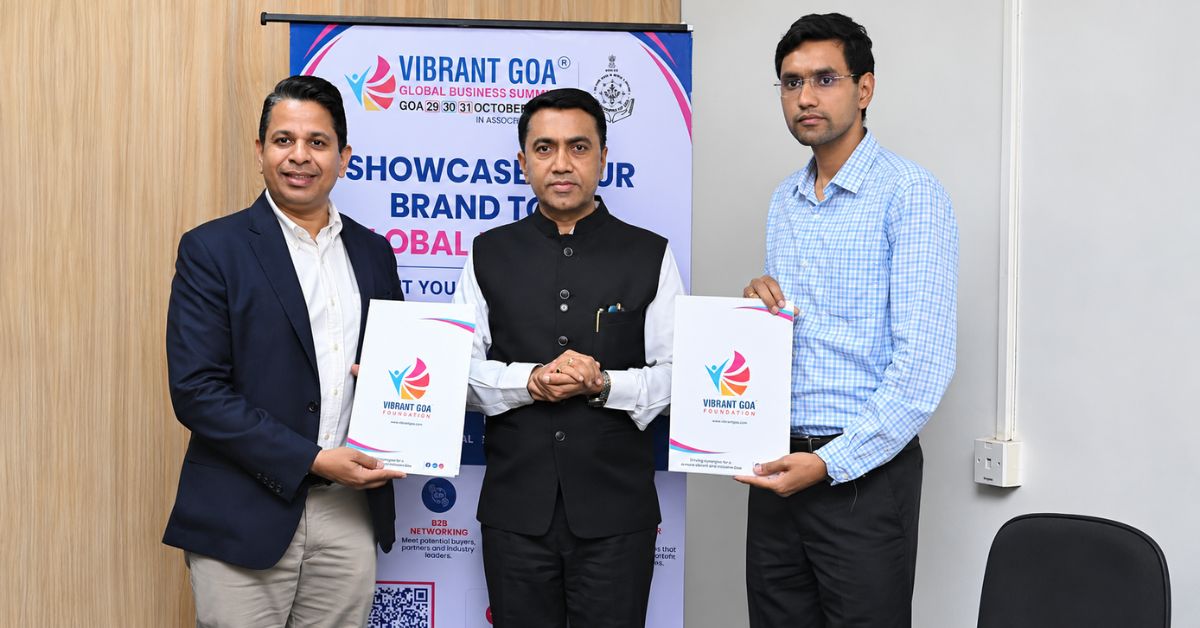

The Goa government and energy trading group ANVI have signed a non-binding memorandum of understanding (MoU) for a proposed ₹5,000-crore liquefied petroleum gas (LPG) import, storage and distribution terminal at Mormugao Port.
Announced at the Vibrant Goa Global Business Summit 2026 in Panaji, in the presence of Chief Minister Pramod Sawant, the project would create Goa’s first dedicated LPG import and storage facility. Development remains subject to land selection, detailed engineering, statutory approvals and definitive agreements.
What infrastructure is proposed at Mormugao?
ANVI, an India- and UAE-based group founded by Ashutosh Verma, proposes to develop the terminal in two phases.
The planned facilities comprise a dedicated LPG berth at Mormugao, storage on nearby land and an underground pipeline connecting the waterfront with the terminal. The proposal also includes a Goa Institute of LPG and LNG Technology, covering liquefied petroleum gas and liquefied natural gas skills.
At full development, the terminal is planned to handle approximately three million tonnes annually, with storage of about 258,000 cubic metres. This would comprise 230,000 cubic metres of refrigerated storage and 28,000 cubic metres of pressurised storage. All figures remain planning estimates.
How would the terminal strengthen Goa’s LPG reserves?
According to ANVI’s proposal, Goa consumes approximately 80,000–100,000 tonnes of LPG annually, with supplies currently arriving by road, mainly from Mangalore.
The first phase envisages refrigerated storage of around 65,000 tonnes, equivalent to approximately eight to nine months of the state’s stated consumption. This describes storage capacity relative to demand, rather than a commitment that every tank would remain permanently full.
Within that capacity, the proposal provides for a dedicated state reserve of approximately 7,500 tonnes, representing at least 30 days of demand. Release would require government instructions, with local consumers receiving priority during a declared emergency.
Which markets and shipping routes would it serve?
The terminal would initially serve Goa, followed by north Karnataka and south Maharashtra. The proposed distribution network also includes coastal shipments to other Indian ports and overseas markets such as Sri Lanka, the Maldives and East Africa.
ANVI plans to move approximately half the terminal’s throughput by coastal tanker. It is also developing a supply corridor from the US Gulf Coast, intended to broaden sourcing options beyond Middle Eastern suppliers.
Space is proposed for a small-scale LNG facility, although that component would require separate approvals. It should therefore be distinguished from the principal LPG development.
What safety and employment measures are planned?
The proposed design includes full-containment refrigerated tanks, mounded pressurised vessels and a buried, continuously monitored pipeline. Road tanker operations would use approved routes, tracking systems and certified drivers.
ANVI estimates approximately 2,450 direct, indirect and induced operational jobs. At least 80% of permanent direct positions would be reserved for Goans under the proposed arrangement. The training institute is intended to accommodate up to 500 people annually.
These employment and training figures are projections and will require refinement as the project is developed.
What must happen before construction begins?
A joint working group involving state agencies, Mormugao Port Authority and ANVI would coordinate further development.
Immediate tasks include identifying land, confirming a suitable berth and agreeing the pipeline route. ANVI would then commission a detailed project report, safety studies and front-end engineering and design.
Statutory approvals and public consultation would precede construction. Phase 1 is expected to require 30–36 months after those processes, while Phase 2 would depend on throughput and offtake commitments. The final investment and schedule will be established through the detailed project report.
 Join our WhatsApp channel for more updates:
 Subscribe to our YouTube channel for more updates: