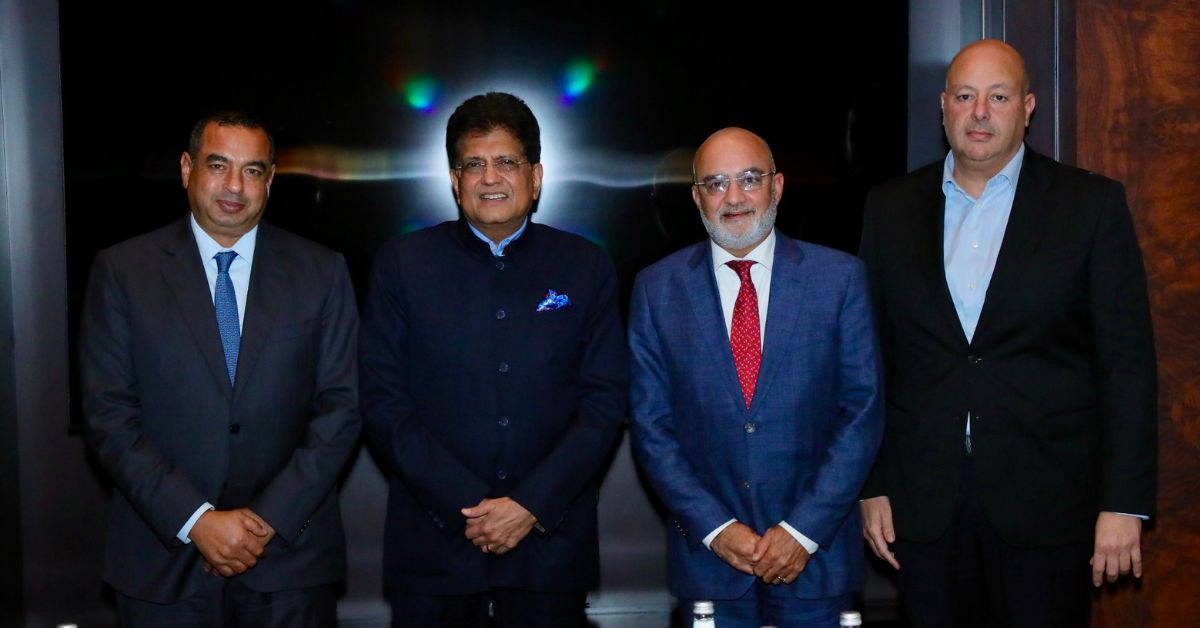

Commerce and Industry Minister Piyush Goyal has discussed potential cooperation in automobile manufacturing, electric vehicles and supply-chain services with Mohamed Ismail Mansour of Egypt’s Infinity Energy, as India seeks stronger investment ties with Egyptian businesses.
The meeting took place on 16 November during Goyal’s two-day visit to Cairo. Discussions covered automotive components, renewable energy, logistics, warehousing, financial technology and digital payments. The engagement remained exploratory, with no manufacturing investment or project agreement announced in the meeting update.
What opportunities were discussed?
Goyal identified India’s manufacturing base, domestic market and skilled workforce as areas of interest for Egyptian investors. He said leading Egyptian businesses were showing greater interest in expanding their engagement with India.
Automotive manufacturing and electric vehicles formed part of a wider discussion on industrial cooperation. Logistics, warehousing and supply-chain services were also identified as potential areas for collaboration.
Goyal led a business delegation of more than 100 members during the visit, which included meetings with government representatives and private-sector companies. Participants included Aqeel Panaruna, Chairman of Tamil Nadu-based Florence Shoe Company, and Uttam Singhal, Group Managing Director of TWI Group, who highlighted opportunities for business partnerships.
What capabilities does Infinity bring?
Infinity’s activities span renewable energy and electric mobility. Its corporate profile identifies Mohamed Ismail Mansour as the company’s co-founder and Chief Executive Officer, as well as Chairman of Infinity Power, its joint venture with Abu Dhabi’s Masdar.
Founded in 2014, Infinity has expanded across solar, wind and other energy-related services. Electric vehicle charging is another established business, providing a connection between its renewable energy activities and the automotive sector.
The European Bank for Reconstruction and Development’s Infinity eMobility project outlines plans to separate Infinity Energy’s non-generation businesses into a new entity. These activities include charging, electricity distribution, solar engineering and construction, and operations and maintenance services.
The bank’s project disclosure provides for $7.5 million in additional funding to expand charging infrastructure, primarily in Egypt and Jordan, with other regional markets potentially included. Its stated objectives include addressing limited public charging availability and developing skills for the emerging electric mobility industry.
How does the meeting fit wider India–Egypt trade talks?
Goyal’s visit also included the seventh India–Egypt Joint Trade Committee meeting, co-chaired with Egyptian Minister of Investment and Foreign Trade Mohamed Farid Saleh.
Both governments agreed to establish a working group to examine the framework and terms of reference for a possible trade agreement. The discussions covered options ranging from preferential trade arrangements to a broader agreement encompassing goods, services and investment.
The two sides reaffirmed a bilateral trade target of $12 billion and emphasised market access, investment and a more diversified trade basket. The proposed working group represents a preparatory step towards a possible agreement.
Where do ports and logistics feature?
Ports, infrastructure and logistics were among the priority sectors discussed at the accompanying Joint Business Council meeting. Other areas included automotive manufacturing, chemicals, renewable energy, food processing and digital services.
According to the Commerce Ministry, bilateral trade reached $6.5 billion in FY2025–26, while Indian investments in Egypt exceeded $5.5 billion. More than 300 Indian and Egyptian companies participated in the business forum.
The council also examined customs and trade facilitation, business visas, sectoral working groups and reciprocal trade missions. These discussions address the practical requirements of cross-border manufacturing, including the movement of components, machinery and finished products.
The Infinity engagement therefore sits within a broader effort to connect industrial investment with energy, transport and trade services, while specific commercial projects remain to be developed
 Join our WhatsApp channel for more updates:
 Subscribe to our YouTube channel for more updates: