





Summary
The GST Council has proposed a 5% GST rate, without input tax credit, on delivery services linked to e-commerce platforms. Government sources say the rate will apply to goods delivered through all modes of transport, ending an exemption for some shipments moved by goods transport agencies and reshaping tax costs across India’s e-commerce logistics chain.
Article
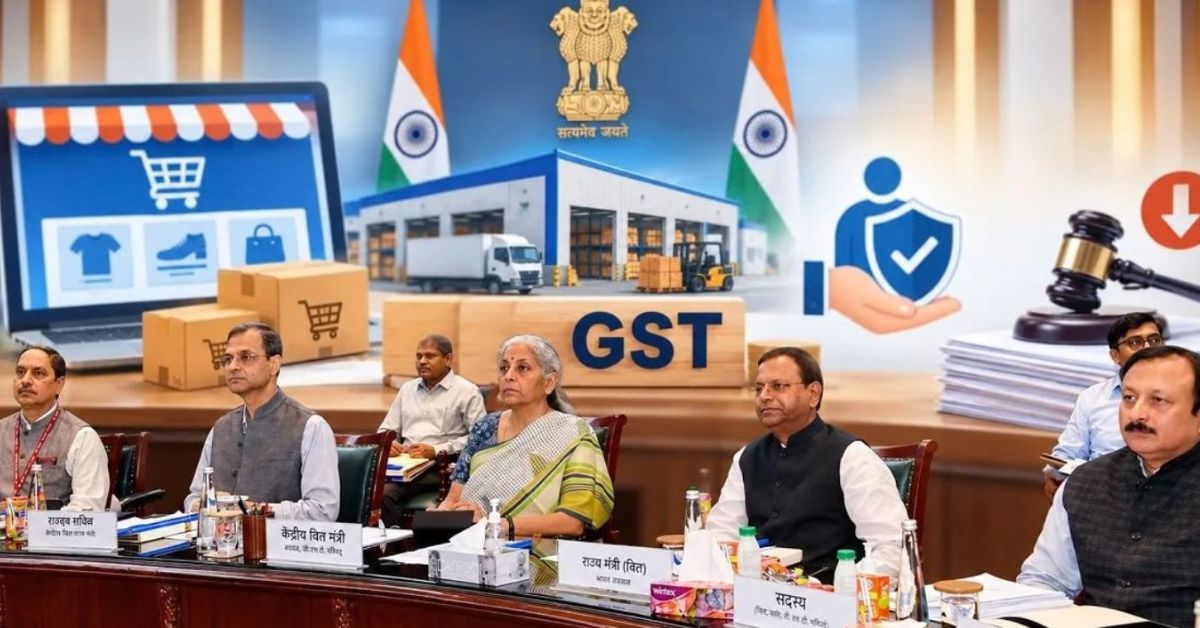
The GST Council, at its 57th meeting on October 8, has proposed levying 5% GST on e-commerce deliveries without input tax credit (ITC), a change that could alter how platforms, delivery partners and logistics providers are taxed. The meeting was chaired by Union Finance Minister Nirmala Sitharaman.
What has the Council proposed?
The recommendation has two parts. The first covers delivery services, other than courier and postal services, supplied through an electronic commerce operator (ECO) under Section 9(5) of the CGST Act, where the actual service provider is not required to register for GST under Section 22(1). In such cases, the platform pays the tax on the supplier’s behalf.
The second applies a separate 5% rate, also without ITC, to delivery services for goods that are supplied or ordered through an ECO. The Council has also recommended withdrawing an existing GST exemption linked to transportation.
Why did the government issue a clarification?
Government sources clarified that the 5% rate will apply to e-commerce goods regardless of how they are moved. “Delivery of e-commerce goods through any channels will attract 5 percent GST,” the sources said, adding that goods carried by goods transport agencies (GTAs) had earlier been exempt from GST.
The clarification is aimed at removing ambiguity over whether shipments routed through GTAs, rather than platform-linked riders, would fall outside the new structure.
How were these deliveries taxed until now?
The proposal revises a framework set only a year ago. The 56th GST Council meeting, held in New Delhi on September 3, 2025, brought local delivery through ECOs under Section 9(5) and placed it in the 18% slab. From September 22, 2025, platforms became liable to pay 18% GST on local deliveries carried out through them by unregistered suppliers, and such deliveries were taken out of the GTA definition.
That change had raised costs for food delivery apps. Morgan Stanley estimated at the time that the move implied an impact of roughly Rs 2 per order for Zomato and about Rs 2.6 for Swiggy.
Ahead of the latest meeting, officials had indicated that a cut from 18% to 5% for delivery services by unregistered riders to platforms such as Swiggy and Zomato was on the agenda, along with extending the 5% rate to all delivery services for goods.
What does it mean for platforms and logistics providers?
For deliveries currently taxed at 18%, the headline rate falls sharply. However, the absence of ITC means platforms and service providers cannot offset GST paid on their own inputs, such as vehicles, fuel, warehousing and technology, against this liability. Conversely, e-commerce shipments that previously moved tax-free through GTAs would now carry a 5% levy, potentially raising costs for certain transactions.
The net effect will depend on each operator’s delivery model, the share of registered versus unregistered partners and how much of its logistics runs through transport agencies. Detailed notifications will set out the effective date and precise scope.
What else did the Council decide for e-commerce and logistics?
The 57th meeting also offered relief to small online sellers. With the platform’s consent, which will be granted automatically through the system, a small seller will be able to declare an ECO’s warehouse in another state as its principal place of business there. The seller must retain a physical presence in a home state, and the additional registration will cover only supplies made through the platform.
For freight movement more broadly, vehicles carrying goods can now be stopped only on specific intelligence and with prior authorisation, and states along a route will no longer be able to stop consignments routinely. The Council also cut the refund acknowledgement period from 15 days to 10, and said 90% of refund claims will be system-sanctioned based on risk assessment.
FAQs
What GST rate has been proposed for e-commerce deliveries?
The GST Council has proposed 5% GST without input tax credit on delivery services supplied through e-commerce operators and on delivery services for goods ordered through such platforms.
Does the 5% rate apply to courier and postal services?
No. The ECO delivery category under Section 9(5) specifically excludes courier and postal services.
Will goods moved by goods transport agencies be covered?
Yes. Government sources said the 5% rate will apply to e-commerce goods delivered through all modes of transport, including those earlier exempt when moved through GTAs.
What was the earlier GST rate on local deliveries through e-commerce platforms?
Since September 22, 2025, local delivery services through ECOs by unregistered suppliers attracted 18% GST, payable by the platform.
When will the new rate take effect?
The effective date will be set when the government notifies the Council’s recommendations. No date has been announced yet.
 Join our WhatsApp channel for more updates:
 Subscribe to our YouTube channel for more updates: