



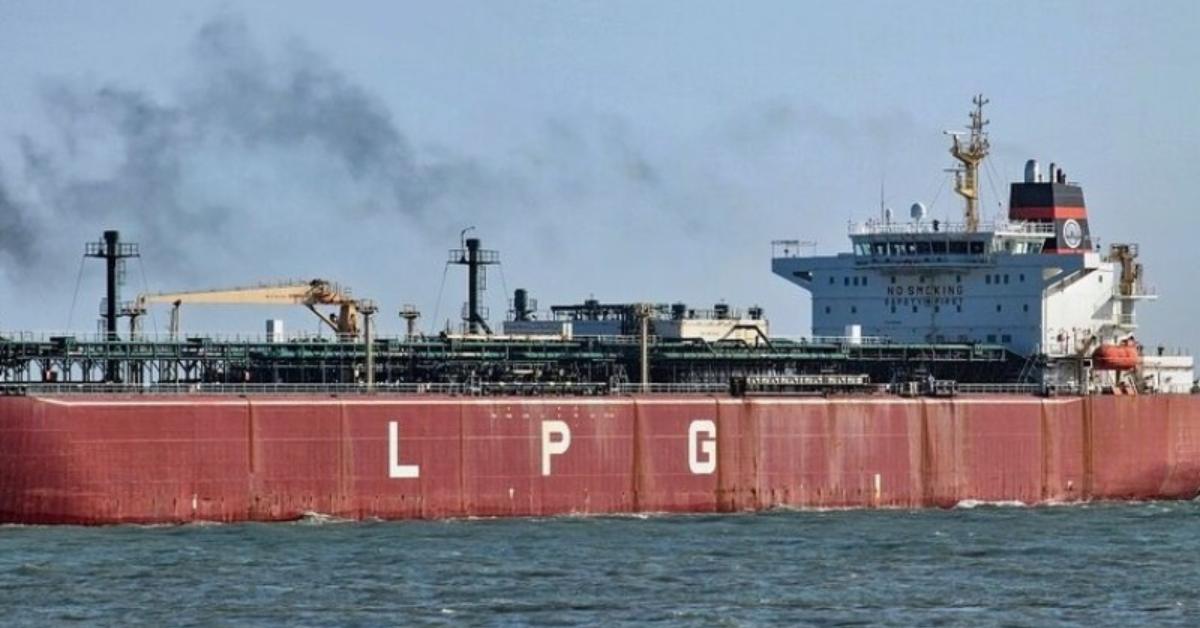

LPG carriers from the Persian Gulf are experiencing prolonged idling periods after completing discharge operations at Indian ports, while foreign-flagged vessels increasingly handle incoming cargoes from the United States, industry sources report.
The shift reflects evolving freight economics and route disruptions in the global liquefied petroleum gas market. Gulf-based ships face delays securing backhaul employment after unloading, reducing fleet utilization and pressuring charter earnings. Meanwhile, overseas carriers capitalize on available tonnage and arbitrage opportunities to transport U.S. LPG to key consuming markets like India.
Indian ports handling Gulf LPG imports, including Kandla, Hazira, and Mangaluru, report smooth discharge operations for recent arrivals like the Jag Vikram, which marked the first post-ceasefire transit through the Strait of Hormuz. However, the return leg remains challenging, with carriers lingering for 7-10 days seeking employment amid volatile war-risk premiums.
U.S. cargoes, transported primarily by mid-sized VLGCs from Texas Gulf Coast terminals, benefit from economies of scale and longer-haul positioning. Foreign operators like Pyxis Tankers have secured multiple charters to western India, bypassing Gulf tonnage delays. Mangaluru’s recent 16,714-tonne delivery underscores the trend, stabilizing commercial and household supplies during seasonal demand peaks.
Market dynamics favor the shift: U.S. LPG production hit record 1.2 million bpd in Q1 2026, while Gulf exports face Hormuz uncertainties despite recent reopening. Charter rates for U.S.-India routes hold at $80,000-90,000/day versus Gulf-India spot rates dipping to $50,000/day amid idle time.
For Indian gas infrastructure, the pattern poses dual impacts. Kandla’s Oil Jetty No. 1 maintains 25% national LPG throughput (5+ million tonnes annually), but idle tonnage strains jetty utilization. Strategic reserves at 13.5 million tonnes provide buffer, while ethanol blending offsets 5.5 million tonnes crude equivalent.
Western DFC rail evacuation—now at 70% capacity post-CONCOR records—handles redistributed cargoes efficiently, feeding northern bottling plants. Gati Shakti’s green corridors target 30% rail LPG shift by 2028, reducing truck dependency amid NH-41 congestion.
Industry executives note overseas carriers’ flexibility in Pacific positioning gives them edge over Gulf-focussed fleets. ULIP dashboards and PORTLIVE AI optimize berth planning, holding container dwells to 4 days despite dual crises. As Hormuz normalizes (traffic +80%), repositioning pressures may ease, but U.S. arbitrage sustains foreign vessel preference.
The scenario underscores India’s diversified sourcing maturity: Russia (40% up), U.S. shale (25% growth), and SPR buffers mute supply shocks. For shipowners, it signals fleet redeployment urgency—Gulf carriers must pivot to intra-Asia or Europe trades as trans-Pacific tonnage captures India-bound volumes.
 Join our WhatsApp channel for more updates:
 Subscribe to our YouTube channel for more updates: