
Summary
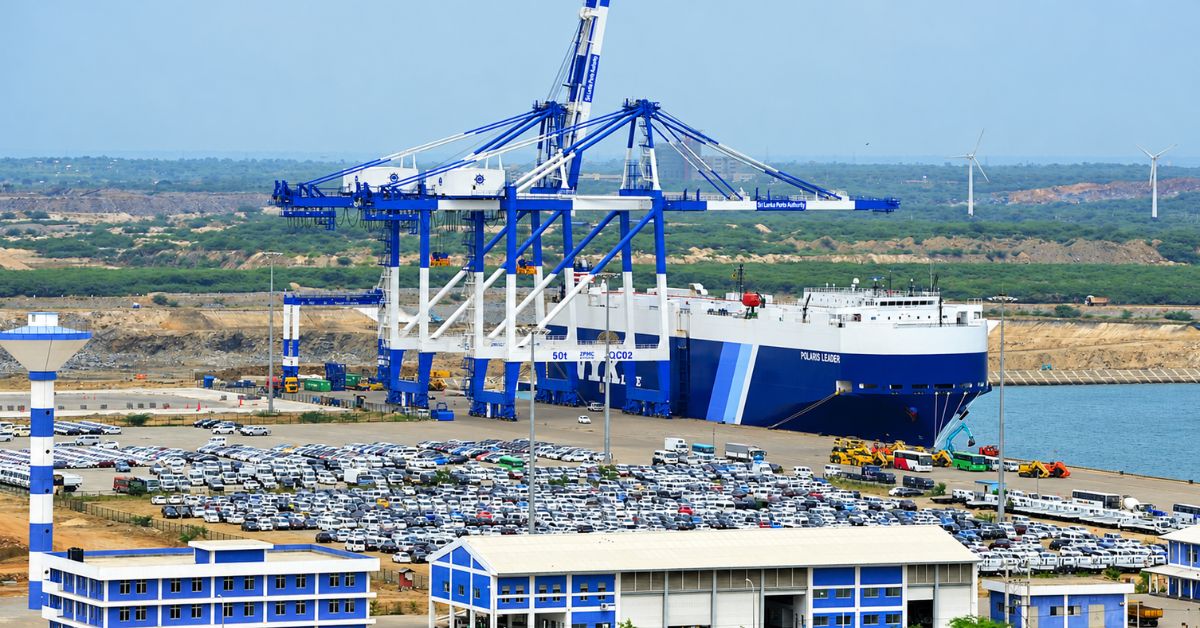
Hambantota International Port expects a sustained return of shipping through the Suez Canal to create opportunities for container transhipment, bunkering and marine services. The Sri Lankan port is expanding capacity while developing a domestic cargo base, seeking to retain business gained during disruption and attract additional shipping services.
Suez return could support the next phase
The Hambantota Port growth strategy is entering a new phase as its operator assesses how recovering traffic through the Red Sea and Suez Canal could affect demand for its facilities.
Hambantota International Port Group (HIPG) believes a sustained return to the established Asia–Europe shipping corridor would bring vessels closer to the port, strengthening opportunities to attract calls.
Bindu Ranasinghe, HIPG’s General Manager for Commercial and Marketing, said the disruption had accelerated the development of its container business. Congestion at Colombo created demand for additional handling capacity, encouraging Hambantota to accommodate overflow cargo and subsequently expand its operations.
Container operations have developed since 2024
Hambantota’s container business began with the arrival of MSC Ingrid on 9 April 2024. The vessel discharged more than 500 TEUs of transhipment containers, establishing an additional cargo stream at the multipurpose port.
That inaugural operation marked the beginning of Hambantota’s participation in container transhipment, where cargo is transferred between vessels before continuing to its destination.
The development provided a foundation for subsequent investment and closer engagement with shipping lines. It also broadened the port’s activities beyond its established role in handling vehicles and other cargo.
Throughput milestone provides a commercial base
An earlier announcement on 5 October showed how far the container operation had progressed.
Hambantota handled 428,036 TEUs during 2025 and a further 574,196 TEUs in 2026 up to that announcement, bringing combined throughput to 1,002,232 TEUs.
The one-million-TEU milestone therefore represents cumulative traffic across the two reporting periods. It should be distinguished from annual throughput or installed handling capacity.
HIPG Chief Executive Officer Wilson Qu attributed the development to shipping-line relationships, operational reliability and responsiveness to customer requirements.
Equipment expansion targets two million TEUs
The next stage involves six additional quay cranes and 16 rubber-tyred gantry cranes, scheduled for commissioning by the end of February 2027.
The equipment forms part of a US$108 million investment in container-handling machinery and supporting assets. Associated works are intended to bring another 1,300 metres of berth space into container use, taking the total container quay length to nearly two kilometres.
A planned 30% expansion of the container yard will provide additional storage space. Together, these improvements support the ambition to reach annual handling capacity of two million TEUs.
The capacity target describes the scale of infrastructure being developed; actual utilisation will depend on cargo demand and service commitments.
Gateway cargo becomes a strategic priority
Alongside transhipment, HIPG wants to build a stronger base of Sri Lankan imports and exports.
The strategy draws on the port’s industrial park, nearby Board of Investment zones and proposed industrial development. These activities could provide cargo originating from, or destined for, businesses in Sri Lanka.
A container inspection centre planned for early 2027 is intended to support that effort. Ranasinghe identified gateway cargo as important to attracting additional shipping lines and services.
Commercially, this would give the port another source of demand alongside cargo moving between international shipping services. It would also connect terminal development more closely with industrial activity around Hambantota.
Marine services offer another opportunity
HIPG also expects increased vessel traffic along the Suez corridor to create demand for bunkering, ship supplies and related services.
However, the operator acknowledges that improved access to Gulf ports could lead some cargo to revert to earlier arrangements. It believes commercial relationships and alternative logistics networks established during the disruption may persist.
For Hambantota, the practical challenge is to convert proximity into repeat business. Shipping lines will assess handling performance, connections and service costs alongside location.
The expansion gives the port more resources to compete for that business. Building regular services and a broader cargo base will determine how effectively the additional infrastructure translates into sustained throughput.
FAQs
Why could a return to Suez benefit Hambantota?
HIPG says vessels using the traditional Asia–Europe corridor pass closer to the port, creating opportunities for cargo handling and marine services.
When did container transhipment begin?
The inaugural MSC container operation took place on 9 April 2024.
Has Hambantota handled one million TEUs in a year?
The announced milestone was cumulative: 428,036 TEUs in 2025 and 574,196 TEUs in 2026 up to the October announcement.
What capacity is being targeted?
The expansion supports annual container-handling capacity of two million TEUs.
Why is gateway cargo important?
Sri Lankan imports and exports could broaden the port’s cargo base and help attract additional shipping services.
 Join our WhatsApp channel for more updates:
 Subscribe to our YouTube channel for more updates: